#275 Jeremy Birdsall - Synachrome
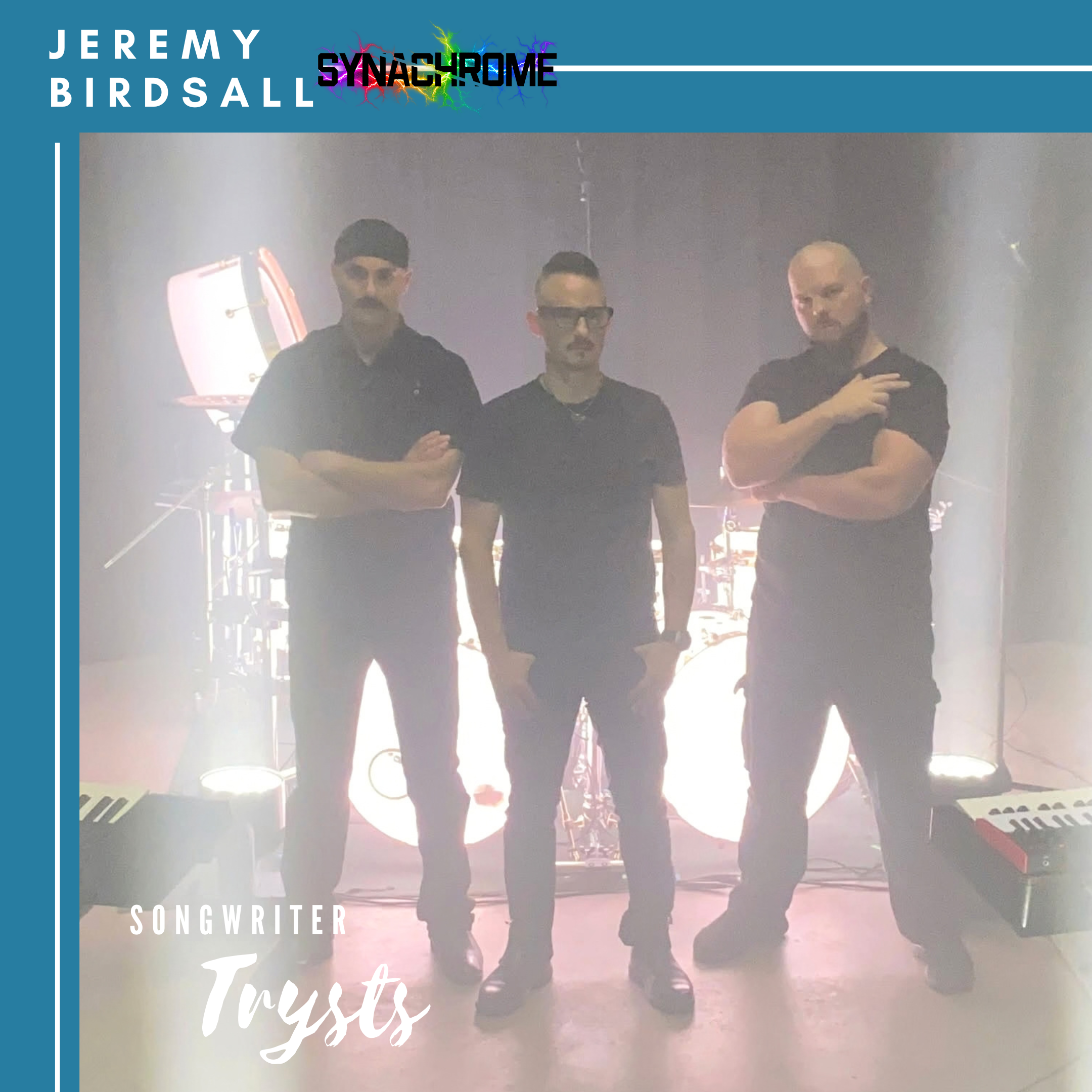
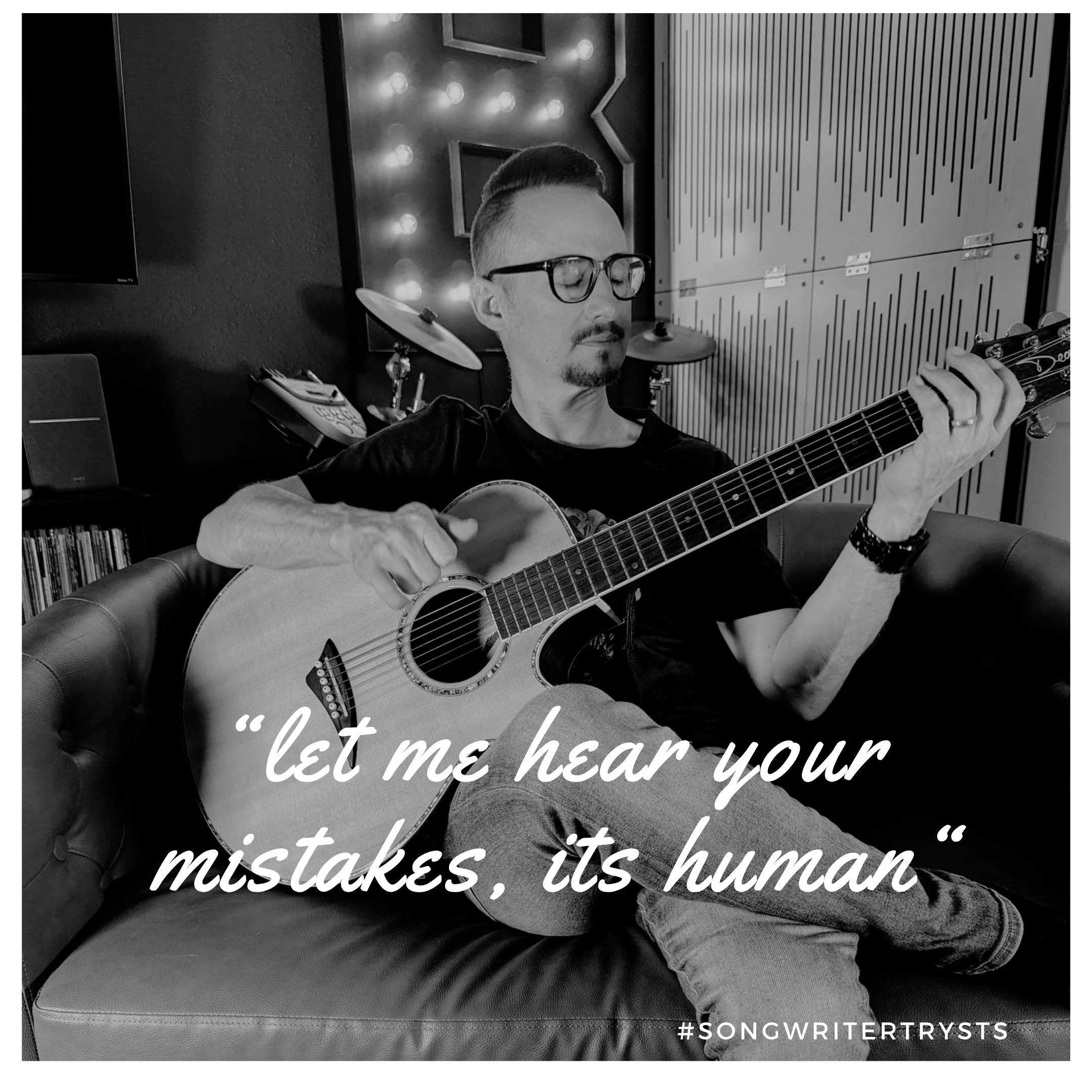
In this episode of Songwriter Trysts, Rae Leigh welcomes Jeremy Birdsall, an inspiring musician, creative and the visionary behind Synachrome.
Rae first met Jeremy at NAMM 2025, with their connection continuing through the Recording Academy. In this fascinating conversation, Jeremy shares his passion for music, his musical upbringing, the experiences that have shaped his creative journey, and the lifelong ambitions that continue to drive him forward.
Jeremy also opens up about his unique ability to see lights and colours in sound and how this extraordinary way of experiencing music has inspired his new project, Synachrome — bringing together sound, light and visual experience in a truly creative way.
From his early musical influences to his dreams for the future, Jeremy offers an inspiring look at what can happen when you follow your curiosity, embrace the way you experience the world, and turn that perspective into art.
Check out Jeremy - Synachrome here:
Transcript
Rae Leigh: Welcome to another Songwriting Tryst, the intimate connection between lovers of music. And I am with one of my beautiful lovers who I've actually done it with, I've actually sung with in a Mexican dive bar at a karaoke which is, can't say I've done that with any other guest on this show. So you are one in a few hundred.
Jeremy Birdsall, welcome to the show. We've talked about this for years now. We're finally doing it. Thank you for joining me.
Jeremy Birdsall: That is so cool. Hey, thank you so much. You're right, we have been talking about this for years now. I know.
Rae Leigh: I believe in divine timing, though. Everything happens exactly when it should.
Jeremy Birdsall: Yeah. Exactly. Yep.
Rae Leigh: Yeah.
Jeremy Birdsall: I think this is perfect timing, actually. I am a composer. I'm a producer. I've been writing and playing music for a long time. And the timing of meeting up with you and talking about this is pretty perfect, actually, because the catalyst of all of this is I've been [00:01:00] producing for other people.
I've been composing for other people, for film and TV. I've been playing bass in other people's bands. And this project that I'm doing right now is finally my thing with my name on it. Yay. Yeah,
Rae Leigh: and it's so hard to do that. It is so easy to be a ghost writer or be behind the scenes and not be attached to any success or failure.
But let's take it right back, 'cause I like to start- Yeah ... 'cause in... I know in America it's all about what do you do? But in Australia it's all about where are you from. So- ... let's start with that. Tell us who you are, but tell us where you come from as well.
Jeremy Birdsall: Okay, my name is Jeremy Birdsall, and I am in Orlando, Florida, in the United States.
Rae Leigh: So
Jeremy Birdsall: much better. It's pretty great, gotta say. Been here for 20-something years, so I guess that counts as me being a local.
Rae Leigh: I'd say so.
Jeremy Birdsall: Yeah. But [00:02:00] pretty much been here longer than I've been anywhere else, actually, so I guess I'm from here.
But I grew up in Indiana, and then lived in Northern California for a while, lived in Seattle for a while. Grew up, really, high school and college time, in Idaho
Rae Leigh: been really around ...
Jeremy Birdsall: i've been around a bit. And then moved to Miami in '99-ish, and then up to Orlando in 2002, and been up here ever since.
And it's been great. I'm a composer, like I said. Also a multi-instrumentalist.
Rae Leigh: Yeah ...
Jeremy Birdsall: mostly paid to play bass, but pretty competent piano player and guitar player and percussion, and I'm good at conducting and arranging and orchestrating for all kinds of groups.
Rae Leigh: That's amazing ...
Jeremy Birdsall: that's what I do for a living.
I've written for ESPN, and I sang on a Grammy no- nominated, choral project last year, so-
Rae Leigh: Wow.
Jeremy Birdsall: Okay ... Grammy stuff, so
Rae Leigh: you've obviously got a very illustrious career. Take [00:03:00] me back to the very beginning. Why music? What sucked you in- ... in the beginning?
Jeremy Birdsall: Ouch. What a great question.
I know for sure that, my parents were... are still both very musical people. My mom sang a lot growing up, my dad would sing and he was a good piano player. So music was, around and they made everybody take piano lessons, growing up,
And I hated it. Just whatever the teacher I had at the time, she was just real strict and I don't know, I didn't- ... didn't like it. But anyways, there was something about playing music though that I did catch the bug. And so when I begged my parents to quit lessons and they finally said yes I got a job at 12 years old.
Is that legal in America?
Rae Leigh: And just for clarity, this was a long time ago. It was legal then. Put that on, it was like five years ago, right? Yeah. [00:04:00]
Jeremy Birdsall: Sure. Back in the day, you could have a paper route and deliver newspapers So I did that, getting up at 5:00 in the morning and jumping on my bike and, flinging the papers.
And I did that and saved up enough money to buy a keyboard and I started a rock band at 12- ... with-
Rae Leigh: Wait, so you convinced your parents to quit piano lessons if you got a job? Was, that a part of the deal? Or-
Jeremy Birdsall: No.
Rae Leigh: So-
Jeremy Birdsall: No. I don't actually remember-
Rae Leigh: So why would you quit lessons and then go buy a piano, or a keyboard?
Jeremy Birdsall: Because I loved music.
Rae Leigh: You loved music- Because- ... but you hated the teacher. Is that-
Jeremy Birdsall: I did not like that teacher And it's not that I don't like lessons or learning, it's just that particular- That particular one ... lady was not cool. But since then- ... I've had lots of wonderful teachers in my life. and just to tie it all in, it's... Your, your question was why music, what happened, and I guess I'm not really answering that other than to say, yeah, [00:05:00] something happened, right? I know very clearly when the something happened, right? You
Rae Leigh: do. Yeah.
Jeremy Birdsall: I was taking lessons. And something about that was a big yes and a big no at the same time.
I knew music was great, but I also knew whatever I was doing here with these lessons wasn't my thing. So- ... got a keyboard and had a radio in my room and I was listening to Depeche Mode and Mötley Crüe and, whatever was on the radio at the time. By the way, that tells you what-
Rae Leigh: Yep.
Jeremy Birdsall: And so what happened was my ability to read just went in the toilet, but my ear got really good. 'Cause I was listening to stuff on the radio and trying to work it out, and then I was writing, just writing. I didn't know anything about what I was doing-
...
Jeremy Birdsall: Music theory-wise. I just knew what I liked, and I was listening to a lot of pop radio, so- Yeah
it was kinda poppy.
Rae Leigh: So you're a composer?
Jeremy Birdsall: [00:06:00] Yeah.
Rae Leigh: Yeah.
Jeremy Birdsall: Yeah. All right. Composer and I started a rock band to be the lead singer, right? So I was playing keys and singing and, singing the songs that I wrote and-
Rae Leigh: Yeah ...
Jeremy Birdsall: When I got to high school they had a jazz band, and I thought that sounded cool.
So I go to audition for the jazz band. And the band director was like, "Hey here's... read this."
Rae Leigh: Yeah. "
Jeremy Birdsall: Here's a chart." Yeah. "We're gonna pl- play this piece of music."
Rae Leigh: was like I don't re- ... how to do this." I think it's, is it F-A-C... E.
Jeremy Birdsall: Yeah. It was like- How
Rae Leigh: do I work this damn
Jeremy Birdsall: thing? ... terrible, right? So- Terrible ... I don't know what the twist of fate w- was that happened there, but my dad was in the room. He drove me to the audition, but he was in the room when I was auditioning, right?
Rae Leigh: Yeah.
Jeremy Birdsall: So he saw this deer in headlights moment.
Rae Leigh: He's
Jeremy Birdsall: like, slight rebirth of me. Yeah, and he's like, "Hey Jeremy, why don't you play Mr. Walton something that you just wrote?"
Rae Leigh: Oh, [00:07:00] like one of your originals. Yeah.
Jeremy Birdsall: Yeah. He knew. He's like, "Hey, pivot.
You obviously suck at reading, but why don't you do something?" So I was like, "Hey, I wrote this yesterday," as I started playing. And so number one, I have to give my dad a lot of credit there in that moment- I would've lost that audition. And then I also have to give the band director credit, too, because he said, "All right.
You can clearly play. You're obviously good. But this is jazz band. You have to be able to read. You can't just fake this." the deal. Our first concert is, October, 5th or something. Learn how to read by then. Learn these songs and you're in my band."
Rae Leigh: So how many- ... months away was that, or weeks or days?
Jeremy Birdsall: A couple of weeks. four weeks maybe.
Rae Leigh: Okay.
Jeremy Birdsall: So I got a piano teacher that day.
Rae Leigh: different one ... you know
Jeremy Birdsall: I'm a diff- different look in my eye. A couple of years has gone by and I'm like, "Nope, I want this so bad." And then I got connected with a [00:08:00] great teacher, and she just threw me in the deep end.
She's like, "All right. You're reading today." ironically now, I love reading. It's fun. It's really fun.
Rae Leigh: See, the
Jeremy Birdsall: difference- So anyways,
Rae Leigh: that- ... a great teacher can make
Jeremy Birdsall: Seriously, that is really the truth. It's somebody who's more interested in, trying to help you as a person as opposed to just, "Nope, we're doing it this way because that's how I was taught."
Rae Leigh: Yeah.
Jeremy Birdsall: Anyway. That's
Rae Leigh: really-
Jeremy Birdsall: Yeah. It was a good experience. That somewhere in there I got bit by the bug, and I'll tell you one more story about that.
Rae Leigh: Go on.
Jeremy Birdsall: So I was doing some pretty... I'm not sure what you'd call it in in Australia, but in the United States it's honors classes or AP or also advanced placement is what they'd call it.
So it's not... Yeah. It's not just smart kid classes. It's like some of them were college placement, like you'd get credit for college for [00:09:00] doing them, right? So my parents, my dad's a doctor, right? So immediately it was like, "You're doing all the hard stuff." And some of it I was great at. Yeah ... and some of it, calculus, that sucked.
I died. I'm like, "Nope, can't do it." I'm so- "Sorry, I'm out."
Rae Leigh: I'm super- Yeah ... idiot at calculus. I actually did calculus at university just so I could get easy good marks.
Jeremy Birdsall: Oh.
Rae Leigh: I didn't even need to do it. It's so stupid. That was the easy subject for me. I don't... my brain ticks differently to everyone else.
Jeremy Birdsall: Good for you ...
Rae Leigh: I can talk, but writing and I was dyslexic, and even texting now.
Jeremy Birdsall: Yeah.
Rae Leigh: I never know how to take people, and I feel like I'm... Like, my biggest talent when it comes to words is pissing people off via text message. I just I have no tone. I don't know how
Jeremy Birdsall: to do it.
Rae Leigh: Yeah. I'm so dorky when it comes to words, but patterns and numbers, my jam. Which is why I think I like music so much. I think I can understand verbally in music, [00:10:00] and I can communicate verbally in music way better than I can communicate in person. It's weird. I don't know. So we're different in
Jeremy Birdsall: that
Rae Leigh: way.
That, it
Jeremy Birdsall: makes, that makes a lot,
Rae Leigh: yeah. Different way. Okay, so-
Jeremy Birdsall: It's funny because I love numbers and patterns myself-
Rae Leigh: Yeah ...
Jeremy Birdsall: but there was, let's just say in high school I very much realized quickly that nothing against what my dad had planned for me, no, I just don't care."
Rae Leigh: It's funny.
I actually had the opposite. My mom's a nurse, and I was gonna be a doctor. And, Yeah ... she was like backhandedly complimenting me. She's like you could try," but she didn't believe I could do it. So I- Sure ... I went to university, and I finished my degree just to prove to my mom that I could if I wanted to.
Jeremy Birdsall: You
Rae Leigh: But I worked my butt off to do it. And then I- Sure ... by the time I finished, I was like, "Yeah, but I'm a creative, so it's not really for [00:11:00] me."
Jeremy Birdsall: Yeah. There, there's something about that about making something out of nothing, right?
Rae Leigh: Yeah. I think it ... you just have to. If it's in you, you have to
Jeremy Birdsall: You have to get it out of you, and I'm sure you've had this experience too wherein Nashville they make that joke all the time. You show up in Nashville and you're like, "Oh, yeah, I'm gonna be a songwriter." "Oh, yeah? How many songs have you written?" "Oh, 50." "Cool. Come back when you've written 500."
Rae Leigh: Yeah.
Jeremy Birdsall: "We can't even talk to you till you've written 500." That doesn't mean 500 hits. That means 500 pieces of garbage because you don't even know what your tone is, what your voice is, what you're about until you write a bunch of stuff.
Yeah. Take it all the way to the end and then at that point okay, this is good or nah, it's not really my thing, but at least it's done. Now I can think about the next one, right? It's kinda like mining. I
Rae Leigh: don't know about you, but I find I... Over the period of songwriting in my [00:12:00] life, the more I've started intentionally doing it rather than...
Before I would say songs leaked out of me when they had to, 'cause that was my- emotional expression. Whereas then there was like a flip when I went to being like, "I'm gonna write songs and I'm gonna push myself to do this." And it's almost like you get the surface ones out and then there's this deeper stuff that comes out and I think it's beau- it's like mining for gold within yourself.
And yeah, I think you're right. I think maybe it's 500. I don't know what the statistics are. Everyone's gonna be different. But you gotta get it all out before you can look at it all subjectively and go, "Actually, you know what? These are the ones that are meant for the world," and then all the other stuff isn't junk, it's just, I needed to process that.
Yeah. That was for me.
Jeremy Birdsall: That right there is such a good piece of wisdom because for a long time... I'll be real straight with you 'cause- Yeah ... you understand emotional trauma and how you [00:13:00] process things differently- Lived
Rae Leigh: experience, I believe are the words.
Jeremy Birdsall: Yeah. That's the one.
Yeah ... there was a time when I was young and innocent and before anything bad had happened to me where I could just b- brap out an album worth of music, lyrics and chords and everything, in a couple of days. And it was just great and wonderful. And then some bad stuff happened and, when your life gets kinda turned up and do- or, upside down- Yeah
Rae Leigh: my process changes. It's not that I couldn't write anymore, it's that I became a little bit perfectiony and I had trouble finishing stuff. I could start 30 things- Yeah ... but seeing it through- That became really difficult. Yeah. Yes. honestly-
Jeremy Birdsall: 19.
Rae Leigh: Okay.
Jeremy Birdsall: 18, 20. And basically, [00:14:00] struggled with it and I can power through.
Money is a good motivator, but Get
Rae Leigh: off the streets. Yeah.
Jeremy Birdsall: The best thing that had happened to me in the idea of finishing something was ESPN. When they first reached out to me, they said, "Hey, we'd like an album of emotional, inspirational pop stuff from you." And I'm like, "Okay, great. When do you need it?"
And they said, "We need it in one month." 10 original songs with original lyrics-
Rae Leigh: That's a
Jeremy Birdsall: short turnaround ... and mixed, mastered with stems and metadata and all of that. And so yeah, at that point there, it's like, "Okay, this is a serious opportunity and great client." Everything I've gotta do it-
Rae Leigh: And how long ago when
Jeremy Birdsall: Oh, this was five years ago. Not too long ago.
Rae Leigh: Oh, more recent. Yeah. Okay. Yep.
Jeremy Birdsall: Yeah, correct. this was more recent. And what happened was my first thought when I got that opportunity is I could [00:15:00] do all of this myself. And my second thought was, I could also give myself a brain aneurysm-
that sounds less fun. why don't I reach out to some people? And I did. So I got with my friend Asa from Miami, who is just one of the best melody top liner guys that I know. I got with my brother Aaron, who is an excellent top liner and easily the best lyricist that I know.
Rae Leigh: Yeah.
Jeremy Birdsall: These guys live in a certain niche that for me, I used to write lyrics all the time, but lately, the last many years I've spent writing notes, not really focusing on lyrics. So I'm like, let me get some people that I trust who I know can write in that area that I'm not so great at.
And so I basically had a melody guy, a lyrics guy. I was basically all of the chords, all of the notes, all of the tracking, like I recorded all the parts. [00:16:00] And then I hired 10 different singers. Every song had a different vocalist.
Rae Leigh: Oh, wow.
Jeremy Birdsall: And I had a mix engineer and a mastering engineer, and like I could have done every bit of it.
Rae Leigh: Yeah.
Jeremy Birdsall: But I wouldn't have slept. And having the
Rae Leigh: And then the quality of work can't, you can't say that the quality of work wouldn't have been impacted.
Jeremy Birdsall: So c- for sure. Some of it would've been great some of it would have definitely been lesser than it ended up being, right?
You're 100% right. So I learned a couple of things from ESPN, which was working with a team, get over yourself and collaborate with someone. It might be way better- than you think. And then also there was no compromise or argument. It's like there's the deadline, deliver.
Finish these. It's gotta be finished because they need it. They want it, so that started me on a process of getting back into can you write and finish a song in a day? [00:17:00] And the answer is, ah, for sure. Amazing. Gotta focus, but- you have to.
Yeah. But it's such a better feeling, when you have the thing and it's in its completion.
Rae Leigh: Oh, I can't let it go. It's so frustrating when I have a song half written. I had one of my songs I had half written for five years, There was just this idea, it was a chorus and a verse, and I'm like, "I love this idea. Think it should be a duet." Every time I got anywhere past it, I was like, it was like hitting a brick wall. And it took five years. And I was in Nashville and I was in a co-writing session and, we're talking about our ideas and I was like, "Oh, I've got this one."
And they loved it, and then the song was written in like the next half an hour. And I was like, "Oh, like, why did it take me so long?" But sometimes you just need that extra missing spice-
Jeremy Birdsall: Yeah. Yeah, somebody coming along with just a different perspective, a third objective, third party comes along and is "What about this?"
You're like-
Rae Leigh: Yeah ... "
Jeremy Birdsall: Yeah.
Rae Leigh: Okay. So [00:18:00] you- you've had this incredible journey. You've been through some really difficult times, and you've had the blockers, but you've also then had to... you've learnt work ethic with deadlines and stuff like that. And I love that you shared that because I do find that it's a very common belief from people who are new to the industry or behind the scenes think that they have to do it all themselves.
And I am a big lover of collaboration where appropriate because it does, not only does it help elevatethe quality most of the time and also obviously speed up the process and not exhaust yourself, but I think it also allows other people to show what they're good at. You don't have to be the best at everything, and I know that there are people out there who are way better guitar players or piano players than I am that do it full time.
Like I'll sit at a piano or pick up a guitar and write a song, and I'll even perform live with it.
Jeremy Birdsall: Yeah.
Rae Leigh: But to sit in a studio that's recording something that's to be immortalized for radio and for future use to live on hopefully for [00:19:00] a gazillion years, I want someone who they live and breathe this instrument, and they can put their touch on it and, so tell me about- Yeah ... how you got to what you're doing now because it is also very different, and I know you've had a few different band projects, and you've learnt the hard way like the rest of us. We live by our learning and our failures. What's going on now? What's changed?
Yeah. How did this all come about?
Jeremy Birdsall: So my last band I was in was a perfect example of I was pouring my heart and my soul into a thing that I thought was my baby, my passion project, and come to realize, nah, no, i- all my efforts, that the other people in the band thought it was just not something they wanted at all.
I had spent year, two years of my time and leveraged a lot of connections- ... spent actual money, [00:20:00] hired people. I even roped my wife into doing social media work for them and marketing work, and all of that was free. And it just came to a point where I'm like, "Guys, I'm do- I'm doing all of the work.
Even my wife, who doesn't play the music with you guys, is doing your jobs."
Rae Leigh: Yeah. "
Jeremy Birdsall: What's up?" And their response was not, "Oh, dang, you're right. Yeah, let's change that." It was, "Yeah what's the problem?" Yeah. It was like- Yeah ... it was so shocking. Anyways, it ended pretty terribly. I wish it was better, but-
They're doing their own thing, and there just came a realization after that. Like everything I said earlier, like I've done so many things for other people I feel like I've got a song in my heart. I feel like I've got something to say to the world, and it's now abundantly clear. If I don't do the thing that's my thing, if I don't do that now it's never going to happen.
So [00:21:00] that's what happened here. So here it is, the project to sum it up. It's called Cinechrome, and that name came about because I have synesthesia. I have what they call grapheme-color synesthesia, where I see letters and numbers in colors, right?
Rae Leigh: wow.
Jeremy Birdsall: I always have, andI just thought that's how everybody was.
Rae Leigh: Yeah.
Jeremy Birdsall: I didn't know that was weird,
Until having a conversation with my wife about 10 years ago. I was like you know how A is red, and E is-" "... blue."
Rae Leigh: She's
Jeremy Birdsall: looking at you like, "What the?"
Rae Leigh: And she looked
Jeremy Birdsall: About- Let go. So- Yeah. It was like, oh, you don't have the...
Oh, okay, so F is not green then. Okay. And I'm the weirdo. She goes, "All right." So then I learned, yeah, synesthesia. It's it's a blending or confusing of the senses and a lot of people have it in various ways. It presents in [00:22:00] all kinds of ways.
Rae Leigh: Yeah.
Jeremy Birdsall: And I've always, since I've realized this about myself, about 10 years ago- i've always wanted to do a musical project based on the colors that I experience in my life. So the way it works for me is if I'm thinking about the letter E, I'm seeing blue, right? And if you play an E on the piano, I'm gonna see blue.
Rae Leigh: Okay.
Jeremy Birdsall: Now, the really...
and so- a lot of things happen. The minute you tell me you're gonna play an E, I can see an E on the treble clef. It's, I can see the color blue. And then you start playing anything, I can see the whole thing on a staff and- Ah ... and in color. It's all
Rae Leigh: When people say paint a picture with your music you actually are, like, painting with colors.
Jeremy Birdsall: So that, that's what I've always wanted to do is I have this experience, and I think it's pretty cool, [00:23:00] right? Yeah. And once I realized that-
Rae Leigh: I'm jealous, yeah. I wanna see it, because I wanna see what
Jeremy Birdsall: so that's what this show is we've all seen cool shows.
We've all been to concerts and had great... seen great lighting or seen a DJ with amazing lasers or something.
And I love that, but I didn't want to do that, right? If you've seen a great show, it was either done with pre-programmed tracks- ... where the whole band or whatever is playing along to a click track, and the lighting cues are embedded in the click track, so everybody's playing along and- The lights happen
you get to the chorus, the lights happen. Great. I think that's great. I didn't wanna do that. Yeah. Or you have a LD, like a lighting director that's back at the front of house soundboard, who is firing the tracks manually-
...
Jeremy Birdsall: A DJ would live. Going, "Oh, we're going to the bridge. Boom. Go to scene two.
Okay, back to the chorus." That's cool too, but again, I didn't want that. So I wanted lights that actually [00:24:00] listened to what we're doing and would respond in real time. And number one, we did that. We have that. But number two, the kind of fun part about this is- it's live, so even the mistakes have a light.
Rae Leigh: That's strong. That's really good.
Jeremy Birdsall: Even if you play the wrong note, the light's gonna be like, "Bro-
Rae Leigh: Yeah ...
Jeremy Birdsall: that's a C-sharp, not a C. Yeah ... you meant it to be yellow. That's like a dark, dark yellow, light orange. Not the same. So
Rae Leigh: There's real humanity behind it, and there's no, none of this IA fake everything tied into something.
Yeah. And as much as I know a lot of people love the click tracks, and I've thought about it and people have said I should do it, I've also been to concerts where it's messed up and they've had to start again. And it's like it's only in the mistakes where those things become so evident.
Because you can be listening to music and it sounds like what you've heard on the radio, and the band is playing and, [00:25:00] even if it's a 200 venue room or whatever, you can't really tell. And so it doesn't really matter until they mess up and everyone stops playing but the music's still going.
And you're like, it ruins the illusion and the experience and-
Jeremy Birdsall: Yeah. Yeah ...
Rae Leigh: I think if I'm honest I would feel more authentic, and I've actually done this plenty of times. I have made plenty of mistakes. I even had a gig last year which I was recording for a live album, and I forgot the lyrics of a song halfway through and I had to do the whole thing again,
But I sat there and I just laughed with the audience, and I'm just like, I just have no idea what the next line is." And it was like halfway through the song. And I feel like that experience though for me is more authentic than stopping, making a mistake, but then "Oh, I have to...
Now I have to tell you that I have to stop the click track," and now everyone knows that it's not really me playing that music. Anyway.
Jeremy Birdsall: It's... I think, like you say, they have their place. I've played in a [00:26:00] lot of churches and several bands that used backing tracks and, okay, great, there's a place for that.
But my feeling for this project and really just it's my feeling of your aesthetic in general is with the way AI is, right? There's already this kind of aesthetic perfection that is being pushed on us.
Rae Leigh: Yeah.
Jeremy Birdsall: And it's not sexy.
Rae Leigh: No.
Jeremy Birdsall: It's not attractive anymore.
Rae Leigh: In our live though, with the tracks they don't tell you they're doing it And I think that's what I find- No?
it's like this deception.
Jeremy Birdsall: Oh.
Rae Leigh: And-
Jeremy Birdsall: Correct, yeah ...
Rae Leigh: you know how now everyone has to put, even if your artwork on your album is AI or anything to do with your track is AI, you have to label AI was used for your music? Yeah ... I think that if I was buying a ticket to a live show and I expect to see live music, if they're gonna be using a click track, fine, but I think I would like it if they just tell me.
Just don't pretend- ... like you're not. Just- just be- ... honest about it, just put- ... a little label in front. [00:27:00] It's "By the way, we're gonna be using some AI fake music stuff. We're not gonna have all live musicians." That's- Yeah ... but that's me personally, and I feel like I'm weird, 'cause I love watching people play live music.
Jeremy Birdsall: Yeah, me too and I think I hadn't been able to put it into words really until this year but I know exactly what it is. I would rather see you mess up than listen to some fake AI nonsense that you were saying, "Oh, yeah, I did this." No. No. I'd rather see you as a human being be human-
...
Jeremy Birdsall: And lay your heart out-
even if you've got mistakes, 'cause that's human. That's real, and there, there's a value to being real, even if it's not perfect.
Rae Leigh: Yeah.
Jeremy Birdsall: So that's
Rae Leigh: It's hard to decipher now these days, because we've been using AI and Auto-Tune and lots of stuff for so long, we're used to hearing everything so perfect.
And now AI's come along and creating perfect music and even [00:28:00] my sister the other day, she's like, "Oh, I heard this new song, and I really enjoyed it, so I went to look up the artist to see if I could find more stuff, and then I found out it was AI." And it was only when she dug in that she found out that it was AI, and then she was really disappointed, 'cause she- she felt lied to. It's the same thing. You're feeling lied to. Anyway, we need to... let's go onto- we... Yeah, really ... the next section. We've already gone way longer than I said I would. Oh, my goodness, and we've actually only got two minutes left.
All right. Give me some advice. If you could speak to yourself 20 years ago or whenever you started, and you could... you've learnt one thing that you really wish you had have known sooner, what would it be?
Jeremy Birdsall: Don't ever stop and really don't pay attention to what other people say. They all are flamingly jealous. And I used to think when people would give me that advice, it's like, "Oh, you're just trying to pat me on the head and patronize and placate me." No, it's the truth. I'm not God's gift to anything, but you know [00:29:00] what?
I've earned my place in a lot of rooms, and there's a lot of people that are jealous of what I've done, and I don't have to be ashamed of anything. All I know is I should be practicing more 'cause I wanna get better. So there.
Rae Leigh: I think you're amazing. And I've had a lot of fun every time I see you.
It's always such an easy hang, and I know that you're incredibly talented as well. So I wanna work with people that I can have fun with and hang out with, as well as who have talent and passion. And I think Kit said something like the same thing. He also had an extra caveat, which I won't put on the podcast.
But I think that it's- amazing to be able to work with people that you love and have- fun doing what we love,
Jeremy Birdsall: I think about that quote a lot.
Rae Leigh: Yeah.
Jeremy Birdsall: But all of that is to say he made a strong point, is he wants people in the room producing with him that elevate the room- Exactly
make a good vibe happen.
Rae Leigh: Exactly. So
Jeremy Birdsall: makes sense.
Rae Leigh: Thank you so much for coming on the show. I'm gonna put a podcast together on the website, Songwritertrysts.com, and I'll have all of your links so people can contact you and check out your new project, and get in touch and follow you. [00:30:00] Thank you so much.
And we'll catch up soon. See you at the Grammys. Thank you. See ya.