#276 Jeff Hyman
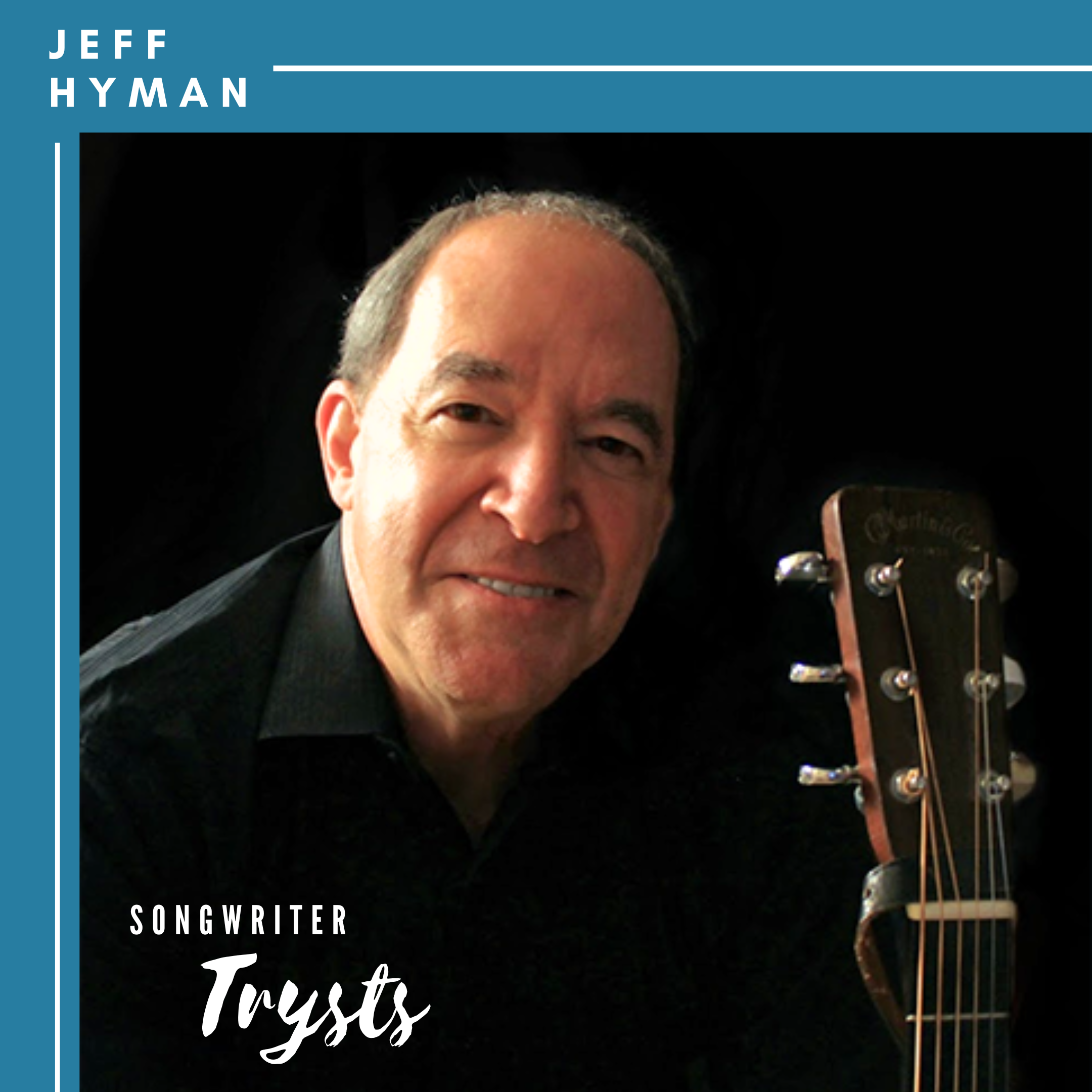
From Folk Stardom to Grammy Dreams: A Lifetime in Music with Jeff Hyman | Songwriter Trysts
What happens when a young folk musician sharing the stage with legends like Bob Dylan, Peter, Paul and Mary, and Mama Cass finds himself at the crossroads of a musical revolution?
For Jeff Hyman, it meant leaving the spotlight behind when The Beatles changed everything. But his musical story was far from over.
In this inspiring and entertaining episode of Songwriter Trysts, host Rae Leigh sits down with her dear friend, recording artist, radio host and music industry advocate Jeff Hyman for a fascinating journey through more than six decades of music, creativity and reinvention.
From his early success with The Gaslight Singers and Mercury Records to rediscovering his musical passion decades later, Jeff shares the experiences, friendships and unexpected opportunities that have shaped his remarkable journey.
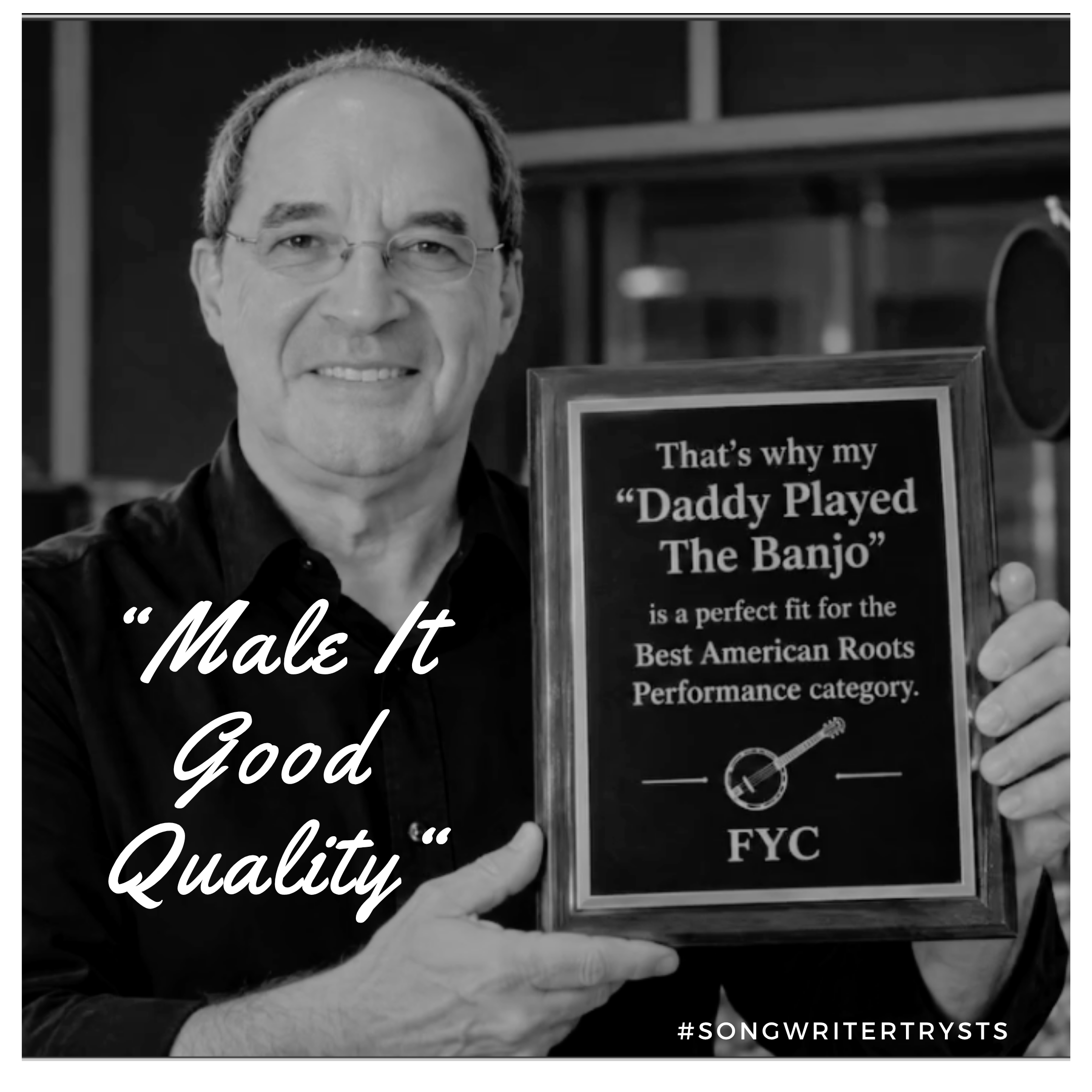
Rae and Jeff also reveal the heartwarming story behind their international collaboration on “Daddy Played the Banjo”, featuring extraordinary young banjo player Johnny Mizzone and his brother Robbie. What began as a chance encounter between neighbours became a joyful musical collaboration spanning generations and continents.
But this conversation is about much more than music.
Drawing on his experience as an artist, businessman and founder of Somewhere in Time Media, Jeff offers invaluable insights into the realities of today's independent music industry. From Grammy campaigns and creative marketing to the importance of collaboration, quality, budgeting and getting your music heard, Jeff challenges artists to think beyond simply making great music.
Is winning a Grammy really the ultimate measure of success? Or is reaching the hearts and ears of listeners around the world the greater achievement?
Filled with laughter, personal stories, industry wisdom and a shared love of supporting fellow musicians, this episode is a celebration of the power of music to connect us at every stage of life.
Whether you're a songwriter, an independent artist, a music industry professional or simply someone who loves a great story, this is a conversation you won't want to miss.
Connect with Jeff
Transcript
jeff hyman
Rae Leigh: Welcome to another episode of Songwriter Trysts, the intimate connection between lovers of music and songwriting, and I'm here with one of my beautiful friends, Jeff Hyman. I have been wanting to do this with you all year. We finally are doing it. We're here. So thank you so much for making time. I know it's a really busy season for you at the moment.
Both of us have been out there supporting the music community as much as possible at the moment. But what I like to do, and I find this the most interesting, because it's always different what people say about themselves, is as the artist, tell us a little bit about who you are, where you come from.
Jeff Hyman: Okay.
Rae Leigh: Okay.
Jeff Hyman: As an artist or as a person, or both?
Rae Leigh: To me it's the same, so if you- I'm kidding. That was a joke ... you can be the same if you like.
Jeff Hyman: That was a joke. Okay. As you probably can tell when I talk, that I'm from New York. Now people get that pretty quickly.
I'll be speaking to them and they say what part of [00:01:00] New York are you from?" So I was born and raised in Queens, New York. And then lived there for, a, a good amount of time, and eventually moved to a place called Rockland County, which is about 35 miles north of Manhattan on the eastern side.
I lived there for 30 years. Moved to Stamford, Connecticut, and in October of 2016, I retired from my career and moved to California, and th- and that's where I am now. Now, I started out in music, believe it or not, A long time ago
Rae Leigh: We don't have to say dates if you don't want to.
Jeff Hyman: I don't care. I'm not like that- Okay, good.
I'm not like that. I'm here, and that's all I care about. I'm so happy for that. You should be proud of it. Exactly. I started in 1962, believe it or not when folk music was really the [00:02:00] rage- ... here in the United States. Groups like the Kingston Trio Peter, Paul and Mary. I was in a group called The Gaslight Singers, which we started v- very young, obviously.
And we were fortunate enough to have been signed to Mercury Records at the time. So as a result of that we were all in s- college and we took a hiatus. Which we would never know how long the hiatus would be, but we took one.
Rae Leigh: Yeah.
Jeff Hyman: And Just wanna see you better. So we went out on the road, and we had an amazing amount of success.
We were on national television just playing to big audiences, college... Selling out college campuses and things like that. Doing very well, having the best time because there we were very young, so we were living the life of- ... in the '60s. In those days they were called folk stars. And [00:03:00] we were very good friends we were g- very good friends with Cass Elliot, Mama Cass, John Denver- Chad Mitchell, Wow ... Peter, Paul and Mary, Judy Collins Bob Dylan, we worked with him. Amazing. So we we were really in that top tier, and then in 1964 tragedy struck.
Rae Leigh: Oh.
Jeff Hyman: And the tragedy was called The Beatles.
Rae Leigh: Yeah, I've heard about this one.
Jeff Hyman: And so they came out with I Want to Hold Your Hand in 1964- and that was the end of folk music. So I s- I saw that coming, and I left the group. I saw it coming after it happened. I couldn't have predicted The Beatles, but I knew what was gonna happen to my music.
Rae Leigh: Yeah.
Jeff Hyman: And so I left the group, and immediately went from being a folk star to a clerk in an import-export house.
And I went back to college, and I finished up, and I went on to a career in healthcare [00:04:00] finance, and I did that for, all that time up through 2016. But we had a reunion, The Gaslights in Toronto. I forget what year it was, maybe it was 2009. We hadn't seen each other in so many years. It was just great.
It was a weekend- Yeah ... and we sang and we laughed, and it rekindled my interest in music. Some years later I decided that I would do it on my own, and in 2015 I recorded my first album, Old Dogs, New Tricks. And on that album cover is my beloved collie, Cody, who's not with us anymore, but I put him on the cover- That's great
because I figured that might attract people to buy the CD. I didn't know whether the music would. But Cody was so gorgeous.
Rae Leigh: It's good to have a combination of the two.
Jeff Hyman: Yeah it worked perfectly. And so that was that, so I'm off to the races, and I put the [00:05:00] album out. I made it in Connecticut.
And I come out to California, and shortly after I get here I'm introduced to a fella by the name of Brent Fisher. Now, Brent.
Rae Leigh: I think Brent was the one that introduced us.
Jeff Hyman: Exactly. That's my point. Yeah. I go- I wind up going to lun- lunch with Brent. This is early 2016 and- ... 2017.
And he has my album, and he says, this is great. You're really good. You're very good. It's a great album. You ought to go for a Grammy."
Rae Leigh: Ooh.
Jeff Hyman: And I looked at him like he had two heads. Me? Me?
Rae Leigh: Yeah.
Jeff Hyman: A Grammy? That's ridiculous. And he says, "Look, it doesn't matter whether you win, you lose, you get a nomination, you don't, whatever.
The process- ... of going for it," which as you know we're deep in the heart of it right now- Yeah ... the process of going for it will introduce you to the family out here- Yes ... the music [00:06:00] family. And all I really wanted, I wasn't looking to become a a star or anything like that. I just wanted to have the respect for my music- from people who I respect. And that was, that's all I was looking for. I just wanted to be a respected member of the club.
Rae Leigh: Yeah.
Jeff Hyman: And so I took his advice, and I went for the Grammy. And as you well know, it's a process. It's, it's all that campaigning- ... that you have to do, and it's a great way for anybody to introduce themselves- to, to the players, you know- ...
Rae Leigh: to the family. To the family. Yeah. And I love that you call it a family, because that is such a great word for the members of the Recording Academy that I have met so far.
Jeff Hyman: Some siblings get along better than others, and some fight and some don't.
And it's the same kind of a dynamic because we all have our own personalities. But the one thing that [00:07:00] we do share even if sometimes we have run-ins or- Yeah ... whatever, which is very rare, very rare- ... fortunately. We a- we respect each other, and that's
Rae Leigh: absolutely- We have a mutual goal, don't we?
We all love music. Different styles of music. Whatever style we, is we do ourselves versus what we like to listen to, but we all love music. And because we have that in common, I think, like a family, we all have to live in the same house of music. We all live in the same house. And you may squabble over little things like whose turn it is to do the dishes.
But That's right ... we just, we live together. We live in this world where we all love music, and I, yeah, you- you've done a great job at describing that. And I, my experience has been very similar.
Jeff Hyman: Exactly. So as time goes on and you're, you're... the family gets bigger Because you meet so many people.
So I'm at a point now I got 4,500 followers- ... on, on Facebook alone, [00:08:00] and most of them are colleagues. And so that's how the family expands, and so I consider myself very fortunate to do that, and grateful to Brent, who's one of my best friends. And then about two years or so after I got here and I've been doing all of this, I put out an album called Pick Yourself Up.
It was my second album. And the- ... the title song was written by Mary K Burke in Glasgow. She's a singer over there. She's very good songwriter. I loved the song, and so I recorded it, and I wound up naming the album after it. And lo and behold, one day Mary calls me and she says, I'm gonna start a radio station, and I'm looking for presenters.
Do you think you'd like to do a show?"
Rae Leigh: Ooh.
Jeff Hyman: A- and I'm one of those guys that never says [00:09:00] no if it's a, a creative opportunity to expand and have some fun. I said, "Okay, sure." And I started the show called Somewhere in Time with Jeff Hyman, and that was about, I don't know, seven or eight years ago.
It's on 20 stations now globally. It's on somewhere in, somewhere every day. Just a
Rae Leigh: bit of fun, hey? Just a bit of fun.
Jeff Hyman: It's- Look how it grows. ... a bit of work now because I'm- ... so busy with other stuff that I've had to, do repeats. I've done 210, no, 216 shows. And I really like it. It's been very well received because it's very unusual.
Rae Leigh: Yeah.
Jeff Hyman: It's not a Top 40, it's not this whatever, it's every show has got a different concept.
Rae Leigh: Yeah.
Jeff Hyman: It could be a genre, it could be an artist, it could be a moment in history. You know- ... I did the day Elvis died. Did a, a show about what's his name? Phil Spector. His story.
And it [00:10:00] could be anything. This week it's iconic rockers.
Rae Leigh: Yeah.
Jeff Hyman: And what I do is I combine with the music in between the... Each set is two songs, and in between each set I talk about- what's going on in the set. So I can provide some intellectual entertainment as well as just playing music, and it's been very well received.
And I really enjoy it. Yeah.
And then I started doing these newsletters, t- for promotion for FYCs,
Rae Leigh: yeah, for your consideration, Grammy considerations, yeah.
Jeff Hyman: Yeah. I started out working with Greg Skelza. Do you know Greg?
Rae Leigh: I think I do because you told me about him
Jeff Hyman: He's a... He's very well known.
He's Now he's, they call him the Grammy whisperer because he's had a lot of success with his working with artists- ... with that. So we started doing that, and then one day he comes to me, he says, "Look, how [00:11:00] would you like to do these news- these e-blasts?" "And I'll send you business.
You can do them." I said, "Okay." I said, "But I'm not gonna call them e-blasts. I'm gonna call them newsletters." Please. "I like the sound of that better. And I'm not using FYC in the header."
Rae Leigh: Yeah.
Jeff Hyman: To me, it's like trite.
Rae Leigh: Yeah.
Jeff Hyman: And people see FYC, it's, "Oh, another one of those. So I'm gonna do it my way if that's okay with you."
And he says, "Yeah, I like the way you design stuff." Long story short that was, I don't know, s- seven years ago maybe. Wow. I've done over 200 clients. I am now so busy- ... at that this moment in time that as soon as we're done, I have to go back to work because I'm overbooked for newsletters, commercials, and things like that.
Rae Leigh: So I- But your passion for helping other people is beyond just you're talented or it's a job that you do. It's a passion that you have, [00:12:00] and that just seeps through into everything that you do, which is why I was attracted to you. I love passionate people. They're the best people on the planet.
I don't... If you have life without passion, then why not? And you are just filled to the brim with it, and it's so inspiring.
Jeff Hyman: Like you and most of our colleagues, I just love to create. So I'm a very creative person. I think about it constantly.
Rae Leigh: Yeah.
Jeff Hyman: I go to bed, I s- I think about it.
I'm the same. About a year and a half ago I got up. A- about a year and a half ago and I thought to myself, one thing I don't see- ... is commercials- ... for our group." I... You see a lot of these e-blasts, newsletters, whatever you wanna call them, the messages. But I never see a commercial, and a commercial would be so good because it's only a minute and a half, maybe two.
Rae Leigh: Yeah.
Jeff Hyman: And if you have a good script with good images, people will pay attention and they'll watch it because the biggest problem that we all have is getting [00:13:00] people to pay attention. They have- the attention span-
Rae Leigh: Other than that Yes, and I can't say I'm not guilty of that too.
We do... We just... We're getting flooded with so much information, w- we always need something fresh to keep our attention. So tell me about... 'Cause we did a song together this year, which kind of was so beautiful and I was so honored to even be invited to be a part of it, to be able to collaborate with you.
But also, I was inspired by the song choice. I'd actually never heard the song before, so you introduced me to Daddy Plays the Banjo. I would love to hear your story around what connected you to that song, and how it all came together.
Jeff Hyman: It's very simple. I came across that song about four or five years ago.
Steve Martin, the comedian-
Rae Leigh: Yes, I've done his masterclass actually ...
Jeff Hyman: he also, he's a world-class banjo player. And he and Gary Scruggs, who is e- a, a son, I think, of Earl Scruggs, who was a legend- ... a legend for banjo, wrote the song [00:14:00] Daddy Played the Banjo. So I heard it years ago, and I said, "Wow, I, I really like that song.
It's catchy, and I just like it." It-
Rae Leigh: And so I- My daughter said, "Oh, I can dance to that one, Mommy. I like that one."
Jeff Hyman: Did you see the video I released with people dancing to it?
Rae Leigh: Yes. Yes, I did. I thought that was really creative.
Jeff Hyman: When I record, which isn't as much as I would like to the first thing I do is make a draft copy here in the house.
Because I've learned that just because I like a song doesn't mean I can do it well. That's true. So about four or five years ago, I did a copy, I did a little draft of Daddy Played the Banjo. And then I forgot about it. It was there. Now, you know the story- Yeah ... but I'll tell it for the folks that don't.
Rae Leigh: Tell it for everyone else. Yeah, go on.
Jeff Hyman: Yeah, so- I like the
Rae Leigh: story ...
Jeff Hyman: not that long ago, I don't know, maybe three months, whatever it is, I go out to take the garbage out. Tuesday night is open door night, we call it. And we take the garbage out and put it on the driveway, and who's coming out- [00:15:00] There's... He, his apartment is upstairs.
I have a bi-level that has two levels to it, and then to the side there's an upstairs ... and the people that lived there had just moved out, and I hadn't met the new neighbors yet. And so there I am, and there's this young kid taking the garbage out. I said, "Oh, hi. I'm Jeff. I live next door.
How you doing?" He says, "Hi, I'm Johnny." I s- And we start talking, and he... I forget how it came out, but he told me about his banjo work.
Rae Leigh: Yeah.
Jeff Hyman: And I thought, "Oh, that's pretty cool," and I said, "What's your last name?" And he said, "Mizzone." I said, "It was great meeting you, Johnny," whatever. So I go back in the house, and I'm curious.
And he's a kid. He's 25, say, and I go in the house and I start googling him, and I say, "
Rae Leigh: Oh, my God." 'Cause that's what we all do these days when we [00:16:00] meet
Jeff Hyman: someone. Yeah. I said, "Oh, my God. This kid- ... was on David Letterman when he was eight years old. He is one of the top banjo players in the country.
If you google whatever- ... he's got a ton... I can't imagine how many followers he's got.
Rae Leigh: Yeah.
Jeff Hyman: And so I see this, and I'm so fascinated because he's such a young kid. And I start looking back at videos when he was eight, five, and he's rocketing- ... so then I said, "Boy, I'd love to do something with him," you know- Yeah
a collaboration, and then all of a sudden the dots connected. And it was, hey, wait a minute, I g- I got a good banjo song. Why- ... not maybe we should do Daddy Played the Banjo?
Rae Leigh: Yeah.
Jeff Hyman: Then I'm thinking to myself, I think by that point I think you and I'm not sure the timing, decided we wanted- I
Rae Leigh: think you were helping me out with the release of my song Living for Today.
I was going through my process of [00:17:00] releasing and I... Yeah, you were helping me out through... Brent highly recommended to work with you for some newsletters and commercials and things yeah.
Jeff Hyman: So those dots connected
Rae Leigh: also.
Jeff Hyman: So I connected the dots to him, I connected the dots to you, and I thought- I, this could be good, right place, right
Rae Leigh: time. You never know. Yeah. Yeah. You
Jeff Hyman: never know. So you did your thing- ... which I, blew me away. It is a- Thank you ... perfect. I wouldn't change one thing about it, not one note, nothing.
Rae Leigh: Thank you.
Jeff Hyman: It is perfect for the song, perfect for us together to blend with. I think our harmonies are great.
It was so much fun. And Johnny did an a- Johnny did an amazing job, and his brother Robbie is the fiddle player, and- ... the rest is history. I can't tell you how many compliments I get on that video. A, a ton.
Rae Leigh: Oh, it's so good. Look, I, my daughter is autistic. She's 11 years old, and she's so honest.
She's un- impolitely [00:18:00] honest. And she's always "Mummy- God bless her ... Mummy, I don't like your music. It's not my jam. You're a good singer, but, I don't like your music 'cause I can't dance to it." And most of my music's not really dance music. Daddy Plays the Banjo is the first song that my daughter goes, "Mummy, you should make more music like this, 'cause I can dance to this.
This is good."
Jeff Hyman: You know- ... that is, that's so amazing because and with the FYC campaign- ... I'm trying to be creative-
Rae Leigh: Yeah ...
Jeff Hyman: and k- and keep it a little different. So- ... I had put the video out, I didn't see a a, a point to putting it out again. And so I thought to myself, "What...
this is a great song to dance to," just like your daughter- yeah ... felt. And I thought to myself, "Maybe what I ought to do is show people dancing- ... to to the song."
Rae Leigh: Yeah.
Jeff Hyman: And that's what I did. I, I had... I found this great footage of, people, country dancers-
Rae Leigh: Yeah ...
Jeff Hyman: dancing to it, and [00:19:00] then another f- set of footage of just a couple-
Rae Leigh: Yeah
Jeff Hyman: that were dancing to it, and what they were doing, the rhythm of what they were doing fit the song so perfectly that it looked like that's exactly what they were dancing to.
Rae Leigh: It's a fantastic video, and people should go check it out. I've definitely shared it on my socials with with the people who are following me as well.
And I do think that there's a kudos to Johnny and his brother and all the musicians and the engineers and producers who actually put... that you pulled together. You produced this whole thing. Sometimes we do projects, like you said, we like to be creative, and they just fall apart for whatever reason.
It, the universe doesn't like it. But for some reason, this one really just came together so seamlessly. I'm sure you had a lot to do with that, but it also sounds like there was just a matter of good timing, good place, good opportunity, and good ideas. But- I'll tell you what it was
congratulations for pulling it off together.
Jeff Hyman: Thank you. It's... We both did this, and the truth of the matter is everything you said is correct, but you left the most important part out.
Rae Leigh: Okay, what am I missing?
Jeff Hyman: Good artists.
Rae Leigh: [00:20:00] Oh. Yeah.
Jeff Hyman: Good artists, you mentioned everything else.
But the truth of the matter is that all of those components could have been there, and if the artists weren't that good, it wouldn't have worked. It's collaborative. And I- Yeah ... I think that if the artists are good, if the music and the art is good, you can be a little bit more forgiving with a video or something- Yeah
but not the other way around. And so- Very true ... I just think that it was, I don't know what the word is. It was meant to be that the stars aligned this way
Rae Leigh: It's been beautiful and for an international collaboration as well it's not easy. The internet, as much as it's crashing on us all the time, does allow us to do things like this together, and for me to do stuff- Right
in a studio in Australia. And to collaborate with you in your studios in LA, it's yeah it's amazing how things have changed probably since you started in, in the gaslights all that time ago.
Jeff Hyman: Oh but forget the gaslights. I [00:21:00] mean- ... we barely had electricity back in those days. Yeah. As a matter of fact, I remember when our first album was being edited.
I was there. I was curious. I wanted to see how it was done, and back in those days it was done with a razor blade. It was tape. Wow. And so it was reel-to-reel, and as the music played through, the editor is listening and he wants to make an edit, so he takes this razor blade and he slices the tape in just the right place, and then he splices whatever he wants to put in place of it.
He splices that back in. Nowadays, you can do that in two seconds- ... digitally.
Rae Leigh: Oh, it's, it's-
Jeff Hyman: Digitally.
Rae Leigh: So I'm grateful- If you think about it that way, it gives you more appreciation for how they made music once upon a time.
Jeff Hyman: Oh, absolutely. Absolutely. But, on the other hand, there's something to be said for those times.
Everything is built on whatever comes before it. [00:22:00] And- That's true ... so I'm grateful for the tools. I couldn't do the things that I do without them, for commercials and things like that.
Rae Leigh: Yeah.
Jeff Hyman: All the tools that I have. And,
Rae Leigh: It's the wisdom and connections. You've been doing this for a very long time.
I know you've been in and out, and you've done a lot of different things as well, which is, it's different to a lot of people I ask. Most people I speak to are songwriters who have a very their artistic trajectory and not often having to work with other artists as much as you have.
So I do wanna ask you the question of out of all the things that you've learnt and all the people that you've worked with, and all the things that, you've experienced over your lifetime in this career, what is it, do you think, are the biggest pieces of advice that you could give to people who are just entering into the industry or, maybe they're going through their first entering to the recording academy or, or making music even for the first time?
What do you think are the most important things for these people to be aware of?
Jeff Hyman: To me, the first thing that's important for me, [00:23:00] and the most important, is quality. That whatever it is that you do, I don't care if you're acting, you're singing, you're a carpenter, it doesn't matter. The competition is exponential- to what it was when I was with the Gaslight Singers. And when you look and that 160,000 new tracks are added onto Spotify every day and you- ... you look at that. Number one, quality. W- what you... Your work has to be really good. The second thing is that to, to whatever extent possible, it has to be unique.
You don't wanna sound... I'm a cover artist. Yeah. And it's very important to me. If you look at my songs or listen to my songs, they never sound like the originals They are different and they're unique. The last thing I want is to be a bad copy of somebody else's song.
Rae Leigh: Yeah.
Jeff Hyman: So I try to make mine unique, okay?
So if you're an artist that [00:24:00] wants to be successful, number one, you have to have high quality. Which means a lot of work.
Rae Leigh: Yeah.
Jeff Hyman: You've gotta be willing to work hard and pay attention to every detail.
Rae Leigh: And invest where you need to invest.
Jeff Hyman: That's... ... the money is difficult, but th- thank God it's not that expensive today.
You can have a, a, a studio in your house and- ... and make a fairly decent recording.
Rae Leigh: Yeah.
Jeff Hyman: You wanna be unique. I wish I could write a song, but I can't. I can sing them, but I can't write them. So if you're a, an artist it's really best to be a singer-songwriter, to do your own stuff.
Yeah. And when you're writing music, it has to be good. It has to be written well, different, eye and ear catching, and the quality of the recording itself, okay? Another thing is promotion. People have to know you exist. You- ... you could make the best album that was ever created in [00:25:00] the history of man- but if nobody knows about it, what's the point?
Rae Leigh: I love this. I actually spoke to someone about this recently, 'cause people who aren't in the industry, they go, "Why don't you just put it online? Just put it online." And it's it's I told them- Along with another two billion people ... it's it's, I said it's like getting a sous chef to make an amazing roast.
They, the quality's there, the, the talent is there, the taste, everything about the meal is amazing, right? And then putting it in the bin, sending it to the tip, and then telling people to go eat it. They, if they can't find it, they're not... No one's gonna go looking, by the way. Even if it's, if you tell them it's the best meal they'll ever eat, no one's gonna go to the tip to eat a meal that's the best meal they're...
They w- it needs to be served up in a way that people can eat it, like at a table with- they need
Jeff Hyman: to taste it, so-
Rae Leigh: They need to taste it ... since we're talking- They need to know about it ...
Jeff Hyman: since we're talking about music, it's- Yeah. Since we're talking about music, it's easy. Listen, that's the taste.
Rae Leigh: But how do you get people to listen to it? But- You can't just chuck it
Jeff Hyman: online ... it's not just a matter of knowing about it, [00:26:00] okay? Y- you have to create an interest- ... in why should I listen to this when there's 10,000 million others that I could stream and this and that? It's- ... extraordinary difficult.
Rae Leigh: Yeah.
Jeff Hyman: I never prom- the only thing I can promise my clients, and I'm not talking about the FYCs, although this, it does apply to them as well-
Rae Leigh: Yeah ...
Jeff Hyman: is, Eyes and ears, okay? I can't promise that people will follow. I can't promise that they'll listen. I can't... i... But I can put it in front of a lot of people and try to do it in a way that maybe will attract them.
Now, we all... I've been telling people what I'm about to tell you for the longest time, and I believe it so sincerely as an artist, never mind a promotion guy, an artist- ... okay? I'd like to win a Grammy. I'd like to, I'd like to get this nomination, but you know what I'd rather? I'd rather the people around the world knew who I was- and listen to my [00:27:00] music, because I could get the nomination. I could get the, I could get the Grammy. What do you think that's really gonna mean? If I told you, for example, that Elvis only won a Grammy in gospel and nothing else- ... that Tom Jones only won Best New Artist- ... that ABBA never won. I say to people who would you rather be?
Would you rather be Bob Jones, who just won an, a, a Grammy for, whatever- ... or would you rather be Tom Jones?" I'd rather be Tom Jones. So the fact that you win a, a Grammy, a lot of people think that, "Oh, man, now I got it made."
Rae Leigh: Yeah. Yeah.
Jeff Hyman: But let me ask you this.
Now, would you rather be a guy who's very big in the business, in, in the indie family, very well known, won a couple of Grammys, very well known- ... but if you went across the street nobody would know who he [00:28:00] was?
Or would you rather be somebody that didn't win something but people know you?
Rae Leigh: That's a good question 'cause there are a lot of... There's always been people in the industry who are behind the scenes. They aren't the front person who is known by everyone, but in the industry people know that they're the person to work with because of their talent and because how good they are at what they do.
And they... And it is two different things. It depends on, what you're doing it for, and if you wanna get paid or if you want fame or whatever it is that you're after. We all- ... we all love the music, and we all have our own- That's true ... part to play. Some people hate being on stage. I love being on stage, and I've learned being the middle child of six children- I do too
that I need the attention. I never thought of it anymore but I love it. But it's not just for the attention. We all have our own gifts, and I've noticed that when we all get to be ourselves and play our own gifts, we get to do amazing things together and be okay with the parts that we have to play.
And I think it's beautiful. But then you have to... You need to get the gig so that you can get out there and tour. Exactly. It's a lot easier said than done. Yeah. I do see the Grammys [00:29:00] as a, a really good review essentially. It's a... Like a food critic I guess, going back to that chef response.
A food critic saying that this is the best in the world. You get a Grammy, the Grammys are saying, "Guys, this is, the best that we're able to offer in this area for the last 12 years" kind of thing. And that does c- it carries the weight of people are going, "Oh then maybe I will listen to it."
And so then it goes back to the you get more eyes and ears. But you're right, it is depending on who's winning the Grammys and- No, I
Jeff Hyman: agree ...
Rae Leigh: and what for.
Jeff Hyman: I agree what you said. Being able to say that you won a Grammy will attract more eyes and ears. And I didn't mean to suggest that there...
That I think that, that one is better or whatever than the other. I would... My opinion, I would rather be well known- ... and not have a Grammy than the other way around, but I think there's plenty of room in the equation for both. That you could make the argument that having won one-
Rae Leigh: Yeah
Jeff Hyman: will help you on that- With the other ... other side.
Rae Leigh: Yep.
Jeff Hyman: So what I has... What I [00:30:00] started doing about a year and a half ago- ... was I started doing brand and music campaigns to the public at large- ... as op- as opposed to my FYC work. Yeah. And the strategy and on that is three things. Number one the promotion has to be high quality.
That's- If you have a bad promotion, you're better off not promoting Yeah, like just get a good photo and, hire a photographer maybe.
Good quality, whatever. It's not just about- Yeah ... the photo, it's about the approach, the message. Yeah.
Rae Leigh: Yes.
Jeff Hyman: Okay? Secondly you have to have a good reach.
So I have a very good reach between my social media, and on my emails I've got extensive lists- ... email-wise for music lovers, people who buy tickets to shows, people who subscribe to streaming platforms- Yeah ... things like that, so that the emails, they go out not only to the voting [00:31:00] members, but at the same time they also go to all these other people to try to catch some fish- The ivies
on that side.
Rae Leigh: Yeah.
Jeff Hyman: So the reach is important, and for brand recognition and music recognition, to me the third piece is the most important and that's repetition. You can't... People need to see something more than once. Okay? Like I could sing a jingle for some of the ...
Rae Leigh: Yeah
Jeff Hyman: Some electrician out here, I could sing his jingle.
Rae Leigh: Yeah, and that goes with most marketing. I think they say it's some- it used to be something like 12 to 24 times to gain trust, and now I think it's something like fi- 50 to 100 because people's... We're so bombarded with marketing and advertising all the time, we've become numb to it. And so now, we have to get spammed by these companies for them to- Right
build that relationship with us through the internet
Jeff Hyman: Well gaining trust is one thing. I'd like to at least just get in front of them.
Rae Leigh: You've done so much, and you've been doing it for so long, and like I [00:32:00] said, I think in this industry that does have a very short lifespan for a lot of people who come in and they go qui- very quickly, like within a few years they go, "Yeah, not for me," and then they leave and go and get a job.
You have consistently and passionately done a lot of different things. With the voice that you have and with the voice that you will have with your music and what is it that you want to say to everyone?
Jeff Hyman: The o- I'm in this for essentially two reasons. The music that I make, that we made- ... I want people to hear it. I'm proud of it, me too. I'm, I would never put something out there- ... that I thought was just okay. And if you go to my website, www.jeffheinemanmusic.com-
Rae Leigh: Yeah
Jeff Hyman: A lot of my music is there. My last album, Legacy, had about eight or nine tracks. I did a video for every one of them. Yeah. I'm proud of every song-
The [00:33:00] second thing is I want to help my colleagues As an artist, we've talked about the importance of being known, and that costs a lot of money. Yeah. And we're talking about indie artists that don't have a lot of money.
So what I have done, the reason that I've, I founded Somewhere in Time Media- ... was that I brought into that umbrella Somewhere in Time Music News and added that in. And under the umbrella of media, we do not only the newsletters, we do websites, we do, the commercials, we do all music videos.
Yeah. All kinds of things, and they're all priced well below the market. Yeah. And the reason for that is- Absolutely ... I want my colleagues to have access to high quality tools at prices they can afford because I'm not in this, you know- Oh, you do such an amazing job, [00:34:00] and definitely worth it, and I can recommend it to anyone that wants to or needs assistance with this.
And marketing is such a hard thing. As an indie artist, we are doing everything that the record labels used to do for us, and it's so hard because I'm definitely guilty of this, and I know a lot of people are guilty of this, is we spend our entire budget on making the music and making sure that it is wonderful.
And often it's an afterthought or we forget that at the end of the day, once we've made this wonderful thing that we're very passionate about, that we need to get eyes and ears on it. And sometimes we forget or we don't know when we're first doing it that actually is gonna be more expensive than making the music.
And I've definitely made that mistake a lot of times where I've spent all or 90% of my budget on the making of the project, and I'm left with very little money to actually then get it in front of people. And that's a big mistake as a rookie artist that I've definitely made in the past, and I'm trying to get better.
It's not only the rookies- But I still do it. I still do it. It's not only the rookies that make that mistake, right? It's so tempting [00:35:00] though, isn't it? And- 'Cause you want it to be better, and if you can be better... Yeah, but see, here's the thing. I'm a businessman, okay? I spent my whole career in healthcare finance.
I was the chief financial officer of three hospitals in New York- ... and a medical practice. I'm a businessman. I was the guy at the ga- with the Gaslight Singers with the checkbook. Okay. That's how far back- So you're good with numbers. That's a good thing to be. A lot of artists- And- ... are not like that.
And one of the things that I have o- offered, as part of a service under the media umbrella, is helping people with budgets. Because if you know that you've got $1,000, $5,000, whatever the number is- ... you can't just blindly start to spend it. You need to have a budget that says, "Okay" This much for that, this much for that, whatever.
Now, if I know that I only have X for recording or whatever, how can I get that done for X? Rather than [00:36:00] just go ahead And do it and then say, "Okay, I've got, gold nuggets." But I don't have any way for people to know it. Yeah But- how do I get that thing to the place where it needs to be to do what I made it do?
But if you have a budget, if you have a budget that has all of that in it- ... when you have the nuggets, maybe they won't be as golden as they could've been, but they'll be good. You can make great music, you don't have to spend a lot of money. Yeah. They'll be good, and then you'll have these other nuggets left in that other pouch- Yeah
to get it out into the world. And that is like business. You've gotta be careful on your ROI, 'cause when you're starting a, any business, we've gotta balance between spending and investing along with how much you're earning. And if you can't earn from what you're investing, then there, there is no business.
So it is, it's a really difficult balance. That's called, in the business world it's called ROI. Yes, yeah. Re- return on investment. That's another another conversation. But- Yeah ... the [00:37:00] tagline for Somewhere In Time Media is music is a business. That, that's the message that I try to get across to my f- my my colleagues because they're focused only on the art and they don't focus enough on the business.
But it is- Yeah ... a business. The art, by the way, is just a product. You could be selling pillows. It doesn't matter. You've got to be able to sell them. Yeah. So- You have to be able to get your money back so that you can do more, otherwise the business dies. And, and- That's where the promotions-
and then we don't get to do what we love, so yeah. That's where the promotions come in. You have to- ... let the world know that y- you've got this product that you're selling, and that's- ... that's part of what we do in the off FYC season. And I do think that there is- Yeah ... there is definitely a need for some more education in that space for people like myself and others.
I have a history in marketing and advertising, so I understood and I have that understanding of marketing. But honestly, Jeff, I have heard some of the most talented singers, [00:38:00] songwriters, beautiful songs, beautiful projects that have never been heard by anyone, and n- sometimes never even just released online because they just didn't know what to do next.
They're really talented. They're really good at what they've done or what they do. They're not business people. But they're just not. No. And that, and in tho- in those types of scenarios, record labels us- used to be the people that would go in, pick up the talent once they were discovered and turn them into a product that could be sold and made.
And then that, but that whole world has just been flipped upside down, and we are trying to do it ourselves, but we still need to have that- label mentality of community that can support each other and lift each other- ... up and carry the weight on what we're good at. And, you're doing that in such a wonderful way.
And I think if we all just collaborate and work together and maybe not be so competitive, but also be more supportive and as a family maybe we'll find a little bit more unity in getting our music out there. But you have been so generous with your time, so thank [00:39:00] you so much. I'm gonna put together- Thank you for having me
I'm gonna put together a, a page on the website songwriterstrust.com as well, as long as the description of this podcast, with all the ways that people can get in contact with you, listen to your radio show, listen to your songs and music, Daddy Plays the Ban- Banjo, your website, so people can find you if they have found this podcast.
Thank you. So I am here to support you 100%, and I cannot wait to see you again at Grammy Week- Yeah ... in 2027. It's gonna be great. And yeah, I'm really looking forward to seeing all the results of everyone's FYCs, 'cause it, it is a really intense time, but it's also a time of celebration to celebrate everyone's hard work this year.
Yes, it is. It is. And I appreciate you so much and I'm so grateful- You too ... for your collaboration. And there'll be more. Absolutely. You're a beautiful person. This is not the only one. There'll be another one. I'm actually working on writing a new one 'cause my daughter has told me I have to now, so we're gonna have to do another one.
It'll be an ongoing thing. Okay. All right. Thanks, Jeff. Thank you, Rae. Bye. Bye [00:40:00] bye.