#272 Baba Kuboye
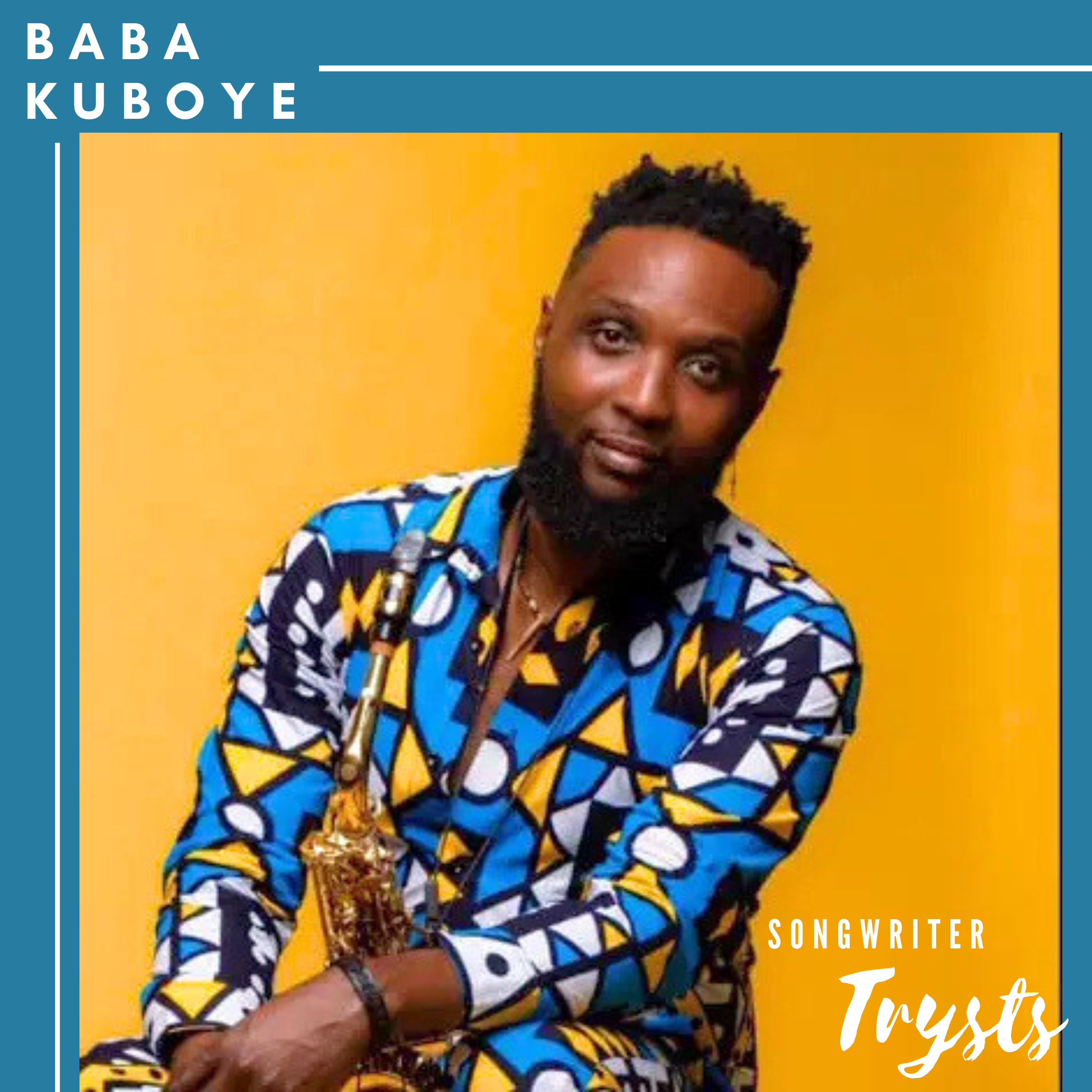
In Episode 272 of Songwriter Trysts, host and singer-songwriter Rae Leigh sits down with Nigerian Afrobeat artist and songwriter Baba Kuboye for a conversation about songwriting, culture, identity and building a life through music.
Born in Nigeria, Baba Kuboye’s musical journey has taken him across continents, from Nigeria to the United Kingdom and now to Dallas, Texas, where he continues to develop his career as an artist and bring the energy and storytelling of Afrobeat to audiences in the United States.
Afrobeat has always been about more than rhythm. It is music grounded in culture, community, storytelling and lived experience. In this conversation, Baba shares how his Nigerian heritage continues to influence the music he creates while his experiences living in the UK and United States have added new perspectives to his songwriting and artistic identity.
A Songwriter Shaped by Different Cultures
One of the things we love exploring on Songwriter Trysts is where songs actually come from. Every songwriter carries their own collection of experiences, influences, places and people into the writing room.
For Baba, that creative journey crosses Nigeria, the UK and the USA.
During our conversation, we explore how moving between different countries and music communities can influence the way an artist writes, performs and connects with an audience. Baba discusses the importance of staying connected to his roots while continuing to evolve as a songwriter and performer.
We also talk about the realities of developing an independent music career, collaboration, finding your individual sound and creating music that can connect with listeners beyond geographical and cultural boundaries.
Afrobeat and the Global Music Community
African music and Afrobeat have become an increasingly significant part of the international music landscape, connecting artists, producers and audiences around the world.
Baba Kuboye represents a generation of artists taking those musical traditions into new communities while maintaining a strong connection to where the music comes from.
Now based in Dallas, Baba is part of a diverse American music community where genres, cultures and creative influences continually intersect. His story highlights something that sits at the heart of Songwriter Trysts: great songs can travel far beyond the place where they were first created.
For songwriters, independent artists, producers and music industry professionals, this episode offers an opportunity to hear directly from an artist whose career has been shaped by several very different musical environments.
Connect with Baba:
Transcript
Rae Leigh: Welcome to A Songwriter's Tryst. And today we have a very special friend that I met just l last week actually. Baba Kuboye. Did I say it right?
Baba Kuboye: Yes. You said it perfectly right. Oh, yay. How you doing, Rae?
Rae Leigh: I'm good. So glad to have you on the show. I like to start by, getting you to introduce yourself.
Tell us a little bit about who you are and where you come from.
Baba Kuboye: Sure. Sure. So hey, everyone. My name is Baba Kuboye. I'm an Afrobeat artist, singer, songwriter, multi-instrumentalist. My name is from Nigeria. I'm born and bred from Lagos, Nigeria in West Africa. I live in Dallas now. I met Rae two weeks ago in Oklahoma, but also last year as well.
Rae Leigh: Yeah.
Baba Kuboye: But yes, that's who I am and where I'm from.
Rae Leigh: When you- you start to go to the same events as a lot other [00:01:00] people, you do start to feel familiar, but we don't often get time in those big events to really sit down and get to know who we're speaking to. Yes. How did you end up from Nigeria in Dallas?
Like, when did that happen?
Baba Kuboye: Ooh. So that's a good question. So I've lived all over the world, to be honest with you. I lived in the UK before, in a previous life. Before I went full time into music, I studied engineering, electrical engineering- Wow ... my first degree.
Rae Leigh: Yeah.
Baba Kuboye: My master's is in mobile communications.
So I was born in Nigeria, went to the UK for university-
...
Baba Kuboye: And came to the US for love actually about- Aw ... 12 years ago now, 13 years ago now. Dear heaven. 2013 that I moved to the US, so I've been here ever since.
Rae Leigh: Okay married, children, and music. Yes. Yes. I remember we were chatting and we had a very similar timeline as around that type of-
Married, children. I didn't do engineering though, I did medical science, but I feel like it's a similar path of education- Yeah ... then love- Yeah ... then passion.
Baba Kuboye: Yeah. In, in between the middle. Different plan, but that, different plan that helped, [00:02:00] yeah, helped the way we think today. So true, same path.
Yeah. Similar to yours. So- And you've been back to the UK I think.
Rae Leigh: I have. I married someone from the UK, but I made him come to Australia. Yes. I didn't make him. We actually met in Australia. But, ...
it's a nice lifestyle here as well, but we do go back there as much as we can, but it is hard, as it's hard to travel with kids.
Probably- Yeah ... not, I think you've got more direct flights from Dallas to the rest of the world than we have, but,
Baba Kuboye: Probably. You are much further away. Not just a day and a half, Yeah ... distance as well, so yes.
Rae Leigh: Exactly. Exactly. Okay, so you did engineering. Was that a passion of yours?
What was the plan behind engineering, and when did music start for you?
Baba Kuboye: So music started for me, I'll answer the second question first. Music started for me from the very beginning.
My parents were Afro jazz musicians.
Rae Leigh: Oh,
Baba Kuboye: wow. Both in Nigeria. My mom was born in the UK.
But moved back to Nigeria for love.
And she, like you with me- And I guess maybe in the setting of Nigerian parents, you're told to get a degree-
...
Baba Kuboye: And do something else [00:03:00] afterwards. You can run around naked, as they say- ... literally. But,
Rae Leigh: Get
Baba Kuboye: a real job. Yeah, get a degree, get a real job. And that's where, the doubt was first cast in terms of doing music.
Yeah. And they were musicians as well. My mom was a- ... prolific singer. She passed away about 29 years ago.
Rae Leigh: I'm so
Baba Kuboye: sorry. My dad was a bass player. No worries. Thank you. And my house was a nightclub. ... In Nigeria in those days, the courtyard in front was turned into a stage with chairs.
They did put some kind of curtains to block the house behind. Wow. But behind the stage there's a nightclub. So it was the spot for live music back in the '80s and '90s, and some of the most renowned artists in Nigeria would come and jam or sing and play and promote, 'cause that was the- I love that ... that was the scene back then.
So that was what got me into music.
But following the blueprint of my parents, my mom studied dentistry in Sheffield, actually, and, Oh ... my dad did engineering in Manchester. Okay. In the UK. I wasn't sure what I wanted to do.
Rae Leigh: Yeah.
Baba Kuboye: But engineering was like okay, I'll try [00:04:00] that out. Yeah.
And the great thing about that was with engineering, it's intuitive. There's a discipline in thinking and logic, but there's also frequency, which is very similar to music. Well- ... which is the fundamentals of music, if you think of- ... the physics side of it.
Rae Leigh: Yeah.
Baba Kuboye: So it makes me think of music in terms of patterns- in terms of waveforms sometimes, but also the creative part- ... of emotion, messaging, and performing. So that's how I've been able to combine positively that experience with doing engineering with the passion of doing music now.
Rae Leigh: I love that. So you're kind of infrastructure and engineering music that is for the soul in a different way, and I I love that.
And I use my... I used to say that my medical degree kind of just gives me a way of creating music that's meant to be like surgery for the soul instead of like- I like that ... they're tenuous connections, but they do relate, especially if you are good at maths. Okay, so y- your family was very musical, but it wasn't like a career [00:05:00] path.
Music was like a, a side thing, I totally relate to that. When was the first thing for you when you were like, "Oh, I wanna play music"? Were you... do you even remember when you first went, "This is something that I really love"?
Baba Kuboye: Oh, yes.
Rae Leigh: Yeah?
Baba Kuboye: As a child. It's maybe when I got older that I realized the economy of music and a career outside that.
Where if I s- what I saw them practice, rehearse, on stage, and some of the most popular artists in the country at the time come and play and perform.
I always wanted to. I grew up to the likes of Michael Jackson, Tammy Campbell. Yeah. I guess they were very big in the, in West Africa in those days, and I saw them as kids. So- Yeah ... I thought if they can do it, I can too." And I got a stage right outside my front door. So I've always wanted to but the folks said, "You know what? Do as we say, not as we do." "We've done this. Now it's a passion. Before we got here, we did this, so-
Rae Leigh: Okay ...
Baba Kuboye: just to help- Yeah
do this first." And I said, "Sure. Okay." So I did that. Yeah.
Rae Leigh: All right. Cool. So did, so while you did your degree you [00:06:00] still were learning instruments, but you also were, like, getting your job as your parents were encouraging you to do.
Baba Kuboye: Yeah, so even the, the instruments started when I was still maybe elementary.
And because they got the musicians in their band to teach us-
...
Baba Kuboye: On the side, so trained from earlier on, but not to actually... And I would perform with them actually-
Rae Leigh: oh, wow ...
Baba Kuboye: when school allowed. Yes. Okay. And s- unfortunately or unfortunately sometimes we'll have events during the school week which can relate to you though you got kids.
Yeah ... but I was used to sleeping through the noise-
Rae Leigh: Yeah ...
Baba Kuboye: having a little crowd around me. So yes, been happy to perform from a very early age. And for me, in all earnest-
Rae Leigh: Yeah ...
Baba Kuboye: I was putting out my own music, to answer your question, probably in my last year of university. Oh, wow. Or college, as they say in the USA.
Yeah. I was always writing, I was always recording, I was on their albums.
Rae Leigh: Yeah.
Baba Kuboye: But I started experimenting with my own sound and style as university. So I said, "I'm gonna get the degree." Yeah. "And when I finish-" Yeah ... "I'll put out my first album." And that's what I did [00:07:00] there,
Rae Leigh: wow. Okay. So you got to the end of your degree, or near the end of it, and what was the...
Was there a turning point or a realization for you that like, "Yeah, okay, I've got the job, but no, I really wanna follow my passion." What happened? Was there someone or something that happened that kind of helped you take that big leap of faith?
Baba Kuboye: So the big leap of faith didn't really come till about four or five years ago.
And I got my first degree almost 20 years ago now. Yeah. I went back for a second degree, 'cause, one degree is not enough- No, yeah. ... from where I'm from in Nigeria. You need to specialize.
So I was always doing music, and then I'll be doing my studying or my work, and I would see if the music had taken off the way I wanted it to, then I would've definitely left it.
But honestly as well, because I didn't put that conviction and energy into it, it was almost like testing the waters as opposed to going with confidence and faith and conviction.
Rae Leigh: Okay.
Baba Kuboye: I realized about five years ago during the pandemic that I think I've crossed all the boxes for those I owe any responsibility [00:08:00] obligation to.
And I've done engineering, I've got a degree, run a successful business as a consultant. I have my own company.
And I said, "Now it's time for me to do what I want to do." 'Cause I don't enjoy doing the consulting as much anymore.
I love writing, I love singing, I love performing. It's therapeutic.
Yeah. And more and more I realize it's more of a purpose, actually.
So I didn't wanna be behind a desk anymore, rather be on stage.
Rae Leigh: That's totally
Baba Kuboye: fair. And this
Rae Leigh: is where you'll see- I think a lot of people during COVID had that moment of reflection of- Yeah ... what am I doing with me life?
And why. 'Cause life is short. And there was a lot of death around that time as well. And when there is- Yes ... that does, when someone gets sick or unwell and people's mortality is questioned it, it raises really big questions that sometimes we need to ask ourselves. And it sounds like you had one of those moments as well.
Tell me about your songwriting process. When did you first start writing songs? Did that also come when you were really young, or you said it was a very therapeutic process. Tell us about that.
Baba Kuboye: [00:09:00] Ooh. That started young. I really was in the beginning imitating singing my favorite songs. The Michael Jacksons, the Seven Campbells, the rap reggae songs, highlife Afrobeat, Afro jazz at the time.
I started writing when I listened to Tupac for the first time. That was the first rap album I ever listened to. Yeah. And I was a teenager. And I was like, "Wow, he's telling a story." Now, I honestly thought it was a persona for music for a career. I didn't realize that's how he lived, but that's how artists do.
They really tell their story. So I started writing. I would rap along to instrumentals. I didn't feel as strong or confident in my singing voice then. I wasn't as trained. I didn't focus on that, so I decided to do more spoken word, more storytelling. And I was very good at speaking in front of people, so that came across.
I did theater as well at one point. Oh, wow. So that was, that came across easy. This is all, this is still in elementary and middle school era. Yeah. But I realized that I could speak [00:10:00] and articulate. I said, "Okay, let me start with rapping." So I started writing from about 12 or 13, and I put my first official stuff on record when I was in the UK at university, 'cause then I was away from the folks.
I had a bit of freedom, and I could do what I want. So I started writing and rapping over... in those days, CDs would have baby instrumentals at the, after the 10, 12 track album of the same songs. If it were- Yeah ... the popular song. So I would take those and
Rae Leigh: then write my own stuff over
Baba Kuboye: it. A karaoke version.
Yes. Maybe that too.
Rae Leigh: Yeah.
Baba Kuboye: And I write my own chorus, get some people to sing it. So take that song and make it my own. That's cool. And then that gradually went from that to creating my own music. And now everything is done totally in-house. Wow. I use computer software to program, create, simulate the music.
Rae Leigh: Yeah.
Baba Kuboye: And then take it to the band if I wanna go for a live band feel. Yeah. Get musicians in to, to do that. But music has changed in a sense. Some people like the live sound, some people like that [00:11:00] repetitive programming, computer energy. I'm glad I can do both-
Rae Leigh: Yeah ... with my music. And it's entirely what you, as the creative songwriter, I think for me, y- you have to be the one that makes that choice.
It's, you know- Yes ... you get to make all the... It's like a painting a picture. You have to pick the colors that you're gonna paint with. And whether it comes with live or whatever you're using that's, they're your colors. And I think that's, Yeah ... beautiful, because everything means something, even if you don't realize it.
I think that's, for me, I've realized with songwriting, the more confident you get in your decisions, the more pure- Yes ... and authentic your music gets. Okay. So was there a moment, Can you tell me about your first song? A moment where you felt like that was you and you may- maybe it wasn't a massive hit or anything, but you were really excited about it because you felt like you'd cracked something with your artistry through songwriting.
Baba Kuboye: Oh, yes. My very first album, I was very proud of it was back in 2005.
Then my name was just [00:12:00] Baba, not the Cool Boy on the end.
Rae Leigh: Okay.
Baba Kuboye: And I realized I added the name at the end for two reasons. There were lots of Babas out there, if you are searching on- Yeah. ... streaming platforms now. There were not many streaming platforms then.
But that first album got me thinking throughout my college what I wanted to rap about, what I wanted to sing about and just expressing myself. That was very invigorating. It was great to do, and definitely proud of that. And ever since, I did take a break after that-
... '
Baba Kuboye: Cause I was expecting fireworks- Yeah
in terms of the release. And when that didn't happen, I said, "Okay let me focus on other things. Let me, get my act together with life and surviving." And then I realized that with music, and many independents will get this, I thought in- initially writing a song, putting out there organically, it would grow.
And then you become- ... the next thing, and you can then take off from there. Yeah. I then realized that there is a method to consistency, to marketing-
...
Baba Kuboye: Outside just creating the music.
And as a s- independent artist, that's something that I've [00:13:00] also had to focus on- Yeah ... as part of the journey of creating it, especially who you're gonna tailor the marketing to.
Yeah. And if I could tell this story, every day in my house I'll hear all the jazz songs. I'll hear my parents' songs. I'll hear the famous artists that'll come. But when I'm with my friends or when I go to parties, when I go to radio, I hear a different set of songs. And they were not live. So early on my subconscious was like, "Okay computer music," as they called it then, "is the way to go," because...
or maybe no one was pushing live music-
...
Baba Kuboye: At the commercial level, so that made me think that, okay, maybe live is not... L- live is good for credibility, like eating your vegetables, like exercising. You can do that, but Yeah. But pop or that sound, radio sound, which is the rest of the world, which is everybody outside who comes to the live music venue.
The TikTok live.
Yeah. Is what it's about. Or knows. And what's the point of doing music if they don't know it? So- so that was an idea behind that.
Rae Leigh: Okay. So you've, You've definitely come at it from a different point [00:14:00] of view. The, the album that you said was your first proud one, and it obviously had that- Yes
that initial independent artist rollerco- emotional rollercoaster. I call it Bridezilla. We go through this moment of like- ... "I'm gonna be famous. Get that Grammy award ready for me," when you're releasing your first track, right? What ... was it just called Baba or was it called something else?
So just so that we can reference it.
Baba Kuboye: So it was called Down For Whatever, which is the name of my label. Ah.
Rae Leigh: Yep. Okay.
Baba Kuboye: And so the, the artist was Baba. The s- the album was called Down For Whatever. Okay. And I really wasn't after a Grammy or being famous at the time, but I don't know why I thought that automatically I could make a living off it, and that way- Oh, yeah
Inc- income streams would come. I could be on the road performing or- Yeah ... be able to sell or license it so I can focus on doing more of that. And that didn't happen. I remember loading up on SoundCloud at the time and getting a few nice comments.
Rae Leigh: Yeah.
Baba Kuboye: But that was it. And I don't know why I thought then that it would automatically just-
Rae Leigh: It's a sobering-
Baba Kuboye: transform ...
Rae Leigh: sobering exercise. And it's a, it's [00:15:00] something that every- it's like a rite of passage. Everyone has to go through it. Even if you don't expect world fame, you kind of- I think we idolize people who have done it. We idolize our Michael Jacksons and, if we put ourselves where they were, say if they're on Spotify, we're gonna put ourselves on Spotify.
Yeah ... we expect, yeah, because we don't see, regular people don't see the amount of work that goes into the marketing and promotion- Yeah ... of music. No. And and that's a big journey. What has been your biggest aha moments as an independent artist for okay, yes I can just make good music, but it's so much more than that, and what's been your process or your biggest things that, lessons that you learned as an independent artist of what to do with your music and get yourself out there?
Baba Kuboye: So as an artist, and I must say this as well, even though I didn't get the recognition or the fame I was looking for then, I felt it was successful because there was also a personal journey of being able to conquer that fear of being able to put yourself out there.
Rae Leigh: And
Baba Kuboye: with every album or song I put out since, I wanted to get better at that.
I only [00:16:00] picked up a saxophone five years ago. Yeah. I learned keyboards as a kid with w- 'cause my parents and guitar 'cause, they suggested doing that, but I dropped it as soon as I got a chance to.
Rae Leigh: Okay.
Baba Kuboye: And then I realized that I can write music. I'm writing and recording other people's music.
If it's not popular songs, I'm getting producers to make songs for me. And sometimes they'll say, "This is a beat I made. This is my vibe. Vibe to it." And I'll challenge myself and do that. Yeah. But I'm like, okay if I wanted my own vibe and I cannot articulate it at 2:00 in the morning to someone who's not there to do it or might take weeks 'cause they're working on something else- Yeah
how do I get to that? So success for me has, I feel I've been very successful. I'm the most successful now because I know how to create the music that I want.
Rae Leigh: Yeah.
Baba Kuboye: And I'm fine- That's such a
Rae Leigh: big journey.
Baba Kuboye: It is. Yeah. And on, on its own. The survival factor is there, but in terms of being true to myself as an artist and articulating and creating everything I want- Yeah
I'm better at that. Yeah.
Rae Leigh: Awesome. And what would you say is the biggest advice, if you were to, say, speak to yourself back in [00:17:00] 2005 with all the wisdom and knowledge you have now with what you've done so far, is there something that you would tell yourself? Be like, "Hey"- Don't forget this
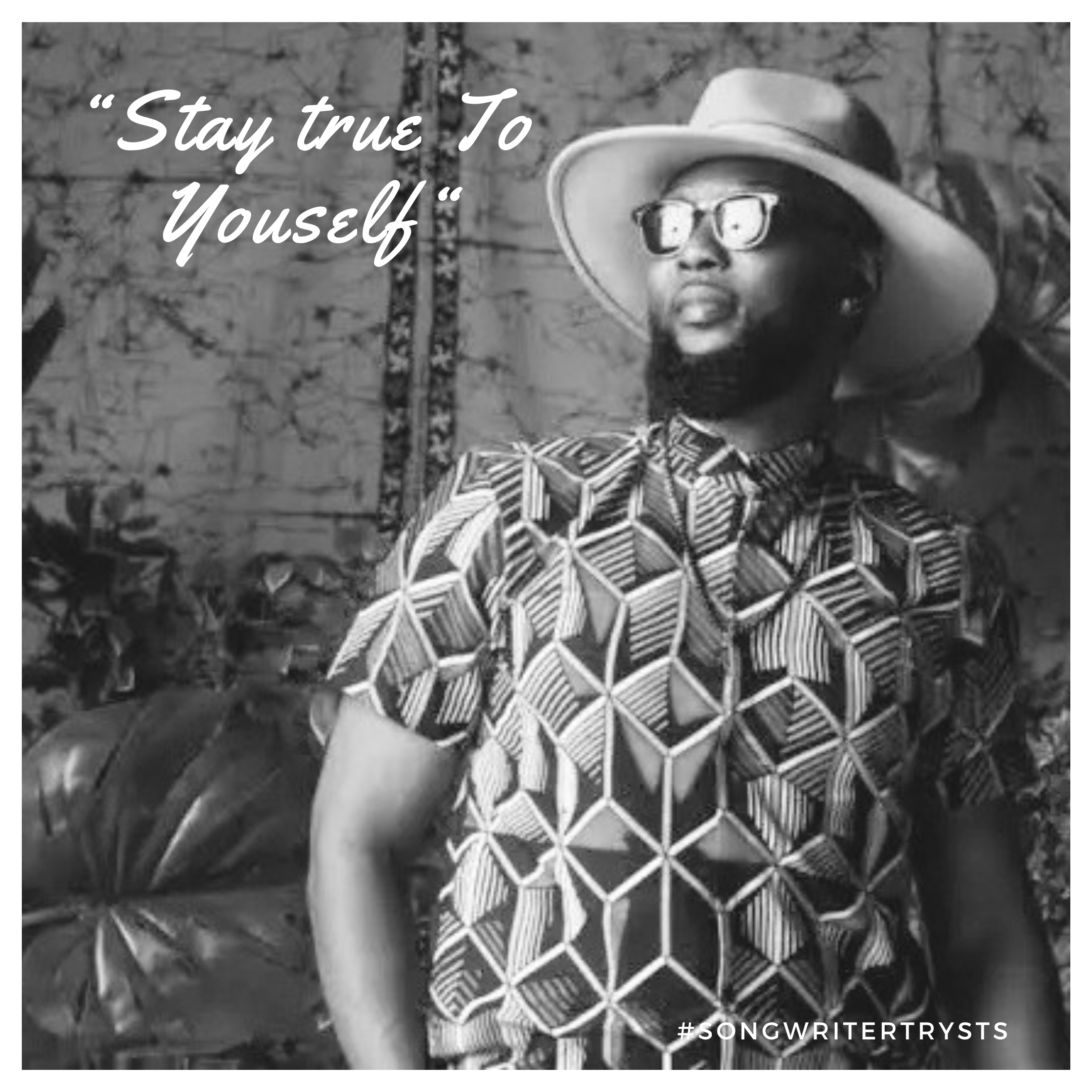
Baba Kuboye: Yes. Stay true to yourself.
I think I didn't finish the thought with that, with the last question. Stay true to yourself. It's funny, not too long ago I did something called five things I wish I knew before I started doing music.
Rae Leigh: Oh, yes.
Baba Kuboye: And focus, focus is very important. Belief in self.
It all stops and starts with you, the artist, no matter what level you get to.
If you don't have that belief some people will project out, some people will not believe in you.
So focus on yourself. The second thing was focus on the people you have around you to create and build the music and the vision you have.
Rae Leigh: Yeah.
Baba Kuboye: Focus on being consistent was the third thing.
Because with consistency, you get better. Lil Wayne is one of my favorite rappers. He said recently, or I found out recently, he said, they say assumption's the mother of all F-ups." But the father repetition is the father of all [00:18:00] learning. So when you repeat repeat, could be one time, a million times.
It's like rehearsing for a show.
Rae Leigh: Yes.
Baba Kuboye: If you repeat, you get better. And when you get better results. Yeah. So you just have to keep going. So I would say focus, and because in everything I mentioned in that video I did about five things I wish I was told, focus was always part of it.
So I would express or encourage any artist independently to focus on what you want and stick to that goal. It's okay if it changes- You calibrate in the field, as I say, 'cause of my engineering background. Things might change.
Rae Leigh: Yeah.
Baba Kuboye: If you have to change it, just remember what your initial goal was and keep checking or tapping back into who you are- what you want, why are you doing this, your why, and just focus on getting it done, because that's the only way I've seen personal growth- Yeah ... in myself as an artist. Yeah.
Rae Leigh: I love that, and I think I would reiterate the knowing what your why is which you just skipped over. But if you don't have a why, then you'll follow anyone else's why.
... And I do think you've gotta be able to fi- not a, just be able to do a check-in and go, [00:19:00] "Everything I'm doing, is this aligned with my why?" And it's- Yeah ... to me, it's such a helpful yes or no. And that way it helps me make decisions, 'cause I am so indecisive. I don't know about you.
But once I was able to work out what my true why is and what I'm doing it made deciding to do certain things so much easier. It doesn't mean I don't- ... still make bad decisions, but- Yeah. ... But they're still learning and we've gotta just keep going on. Okay, so tell me about what you're doing now.
What is the next big thing? What's your focus?
Baba Kuboye: Ooh. Ooh. So I put out an album called Afroverse-
...
Baba Kuboye: Which is a living universe of Afrobeat. I put that out just about a year ago, and it's meant to introduce Afrobeat's gaining traction outside West Africa. It's becoming a lo- a global genre.
It was the leading song at the last World Cup this summer.
Rae Leigh: Yes.
Baba Kuboye: And so I want to... And I'm thankful to come from a family that, created the genre or started it in the first place. Even though my parents were Afro jazz musicians my [00:20:00] uncle Fela Kuti started the genre Afrobeat.
Rae Leigh: Yeah.
Baba Kuboye: But before him, two generations before that, is a guy called J.J. Ransom Kuti, who was the first African Nigerian to put out an album in 1925. Wow. I steer that to say now I'm going on the road. I'm creating a residency, or a local series, of live performances where I live called Afroverse Live.
Rae Leigh: Okay.
Baba Kuboye: The journey of Afrobeat from its inception through the legacy of my family to the current sound of what people know and hear now- Wow
in the public space, to the future with my sound, because I'm combining both. Fabulous. So it's a combination of legacy. That also helps with the why and the purpose. It's legacy for me while also continuing the journey. So that's the next big thing for me now. My first show will be- next Sunday actually, not this Sunday-
Rae Leigh: Yeah
Baba Kuboye: but the following Sunday. And with that, I take Afrobeat and I fuse it. Yeah. So in the album Afroverse, I worked with people from Latin America.
Rae Leigh: Yeah.
Baba Kuboye: I'm working [00:21:00] with people from India and Asia, so fusing that with Afrobeat. So I'm enjoying almost taking the roots of it and taking it around the world and showing the world that you can be part of this Afrobeat journey too.
Yeah. If you don't know how to, we can work on it together, 'cause I know how to create and massage the music, and then we can collaborate and make it happen from there. So- That's
Rae Leigh: amazing ...
Baba Kuboye: the Afroverse series is a live residency. Every month, new music-
Rae Leigh: Yeah ...
Baba Kuboye: for as long as I can, at least for the next year.
Yeah. And I bring somebody new from a different part of the world. This- Amazing ... first song will be from a guy from Mexico called Roger Velazquez, who I think you met. He was at the thing last w- as well. Oh, okay. Yeah. Yeah, so he was the, it's a fusion of Afrobeat and merengue.
Rae Leigh: Yeah.
Baba Kuboye: There's a bit of, there's a big overlap between Afrobeat and Latin music.
Rae Leigh: Okay.
Baba Kuboye: So merengue, guaguanco, which is really more reggae, Tejano, in the sense of the dating of the genre. But we're using, I'm [00:22:00] using, trying to make it more updated with Afrobeat. Yeah. So we take old school sounds with Afrobeat, and then I'm working with Roger. So that'll be the first artist, and then I have Ricky Kej- Oh
three-time Grammy winner- yeah ... on the song as well.
Rae Leigh: Amazing.
Baba Kuboye: Yeah. So yeah.
Rae Leigh: Same with the It was his birthday yesterday ...
Baba Kuboye: Manuel. Happy birthday, Reggie. I know. I sent him- yeah ... a message. Yeah. Yeah. Yeah.
Rae Leigh: I'm sure. He's very popular. Yeah. I, Yes ... I love the, the historical... i'm a big history buff.
I love museums. I love Europe and going to places where it's got, extended history that's been preserved and learning about original cultures and things like that and traditions. And the idea of a show also, not just b- being awesome new, original music, which I always love original music, but the idea of being able to go to a show and actually learn something about history, learn about a genre, be educated on historical stuff along with live music like I would be your target audience.
That sounds amazing, and I've actually never heard of anyone doing that. Yeah. So well done for yeah, the ingenuity of that. Sounds fantastic, and I love storytelling obviously and that. I hope it's really successful for you. [00:23:00] I'm sure it's going to be a lot of fun, and I know that you put in, Yes
110% into everything that you do, and I've loved what I've heard and seen of your stuff since we spoke in the hotel lobby at midnight I think it was. Yeah. It's been, I've done, I've been able to do a deep dive, and it's been it's been really educational for me because it's not a genre that I know a lot about.
But it is really culturally rich and beautiful, and I wish you all the best. Is there we're gonna put all of your links and music and everything in the description of the podcast, and it'll be on the website along with the blog, songwritertrust.com. But is there anything else that is coming up that you want people to know about?
We'll put the shows in there. New music or what do you want people to know?
Baba Kuboye: I would like people to know what-- thank you, first of all, for giving me the opportunity. What else would I like people to know? Over the next 12 months or more it's like my own offering. I'm putting the world on a Saturday, a new song every month.
Which leads to my next album, [00:24:00] Afroverse 2: Global Cycle. Ooh. So that will be around this time next year. So it's thought out to be almost like the Godfather series. I'm a big mafia guy, like all that gangster-
Rae Leigh: Yeah ...
Baba Kuboye: stuff. So this will be part two. The beginning was the origination.
I did take some of my culture, some of my folk phrase poetry from the village. I had to go to my village, which is different from the city where I lived in Lagos. I had to go like, not into the bushes or jungle, but pretty close, to go to find people who could speak the local dialect of my ancestors-
Rae Leigh: Wow
Baba Kuboye: that has been watered down.
Rae Leigh: Yeah.
Baba Kuboye: And that was part of Afroverse. So that was the origination. Afroverse 2: Global Cycle is getting the world into Afrobeat. And there'll be a third installment at some point, but look out for that. Yeah. And along with that will be live performances every month to present the music with wonderful, beautiful souls around the world who are- also on their journey with music as well, who are happy to collaborate with me in Afrobeat. So that's what to look out for.
Rae Leigh: And where's the live performances happening?
Baba Kuboye: It's [00:25:00] in Frisco, Texas, not far from where I live. I live in Frisco, Texas. Okay. It's in Dallas.
It's at a, it's at a... I wanted to make it communal, so I went to a local, I won't say a pub, but it's a local bar.
Sits about 300 people. I'm also getting some local acts, local to Dallas who are in Afrobeat to give them a chance to support to give them a platform to do their music
Rae Leigh: as well. Create for the community. So they will start off. Yeah.
Baba Kuboye: And then they get Raja, like a Grammy-winner, will come and do his.
Ricky, if he's available, come does his as well. Awesome. So it's that journey of not just giving back to the community, but also sh- presenting music with global fusion global people. So- That's awesome ... it's in Frisco, Texas. It's a place called Retro Streetbar.
If you happen to be in town next time, you can come check it out,
Rae Leigh: I can't wait. I want to.
Baba Kuboye: So that's where it'll be.
Rae Leigh: Thank you so much. I really appreciate it, and I can't wait to share your story and continue to cheer you on as you make all this new community of of music and education. I love it. Thank you.
Baba Kuboye: Hey, thank you, and thanks for having me on the show.
You could do a wonderful thing for independent artists. I've gone through some of your [00:26:00] previous podcasts. I love that you give a light to shine for those who wanna tell their story in storytelling and/or songwriting. And because you are a kindred spirit, you get it, so you know. You ask the right questions, so thank you.
Rae Leigh: Look, these are conversations that I would have with someone in the middle of a lobby at the in the middle of the night because- ... I'm so passionate about it Two years in a row. You did it last year as well. Yeah. Did it
Baba Kuboye: last...
Rae Leigh: yeah, I'm, I've always been curious, and I think when I first started the podcast in 2020, I, was looking for opportunities to continue to learn myself from other people who are doing what I wanna be doing.
And and 2020 everyone was podcasting, but no one was podcasting about songwriting. Everyone does songwriting podcasts now, but it's been really beautiful to be able to connect in with songwriters from all over the world from, my office in Australia. Yeah. And I am so disconnected physically from the be- rest of the world, but through this podcast, I've been able to meet people like yourself and Kit and Marcus and travel all over the world and- not just share my music into the rest of [00:27:00] the world, but create relationships where I've been able to collaborate and create with the rest of the world, and that's been such a blessing that I think God orchestrated because I did not realize the power and impact that it would have to just have a conversation with people, and it's been a real blessing.
So I hope it blesses you. Appreciate it. And we are here to support all songwriters 100% however we can. So whenever you've got new stuff out, please send it to us, and we'll do whatever we can to promote and share and lift you up.
Baba Kuboye: I definitely appreciate that. For whatever reason, one of my songs called Soft Life is, my biggest audience comes from Australia.
Rae Leigh: Oh,
Baba Kuboye: really? And this is before I met you. Oh. So I love that there is some- So it's not just me ... connection or some, you know, interest there.
Rae Leigh: Yeah.
Baba Kuboye: It's not just you. So
Rae Leigh: you will
Baba Kuboye: have to get you over for a show. But yes, I definitely will share that with
Rae Leigh: you. Yeah, I, Hey, that was it ... I have heard that one.
I'll always remember. I listened to it a couple times. And that, it's a good one. I, I do like that one, actually. I was listening to that one. I said I was at the gym. After I saw you, I couldn't sleep, and I ended up going to the gym at 4:00 AM. ... And listening to your entire album, so a couple of [00:28:00] times- Yeah
actually, 'cause it was on repeat. But that one stood out, and I do, I like that one. All right, everyone go listen to Soft Life. And Baba Kiboye is... I'm gonna have to do it- Yes ... with the sand, with the hand signal. But listen to it and and yeah, absolutely wishing you all the best.