#266 MB Gordy

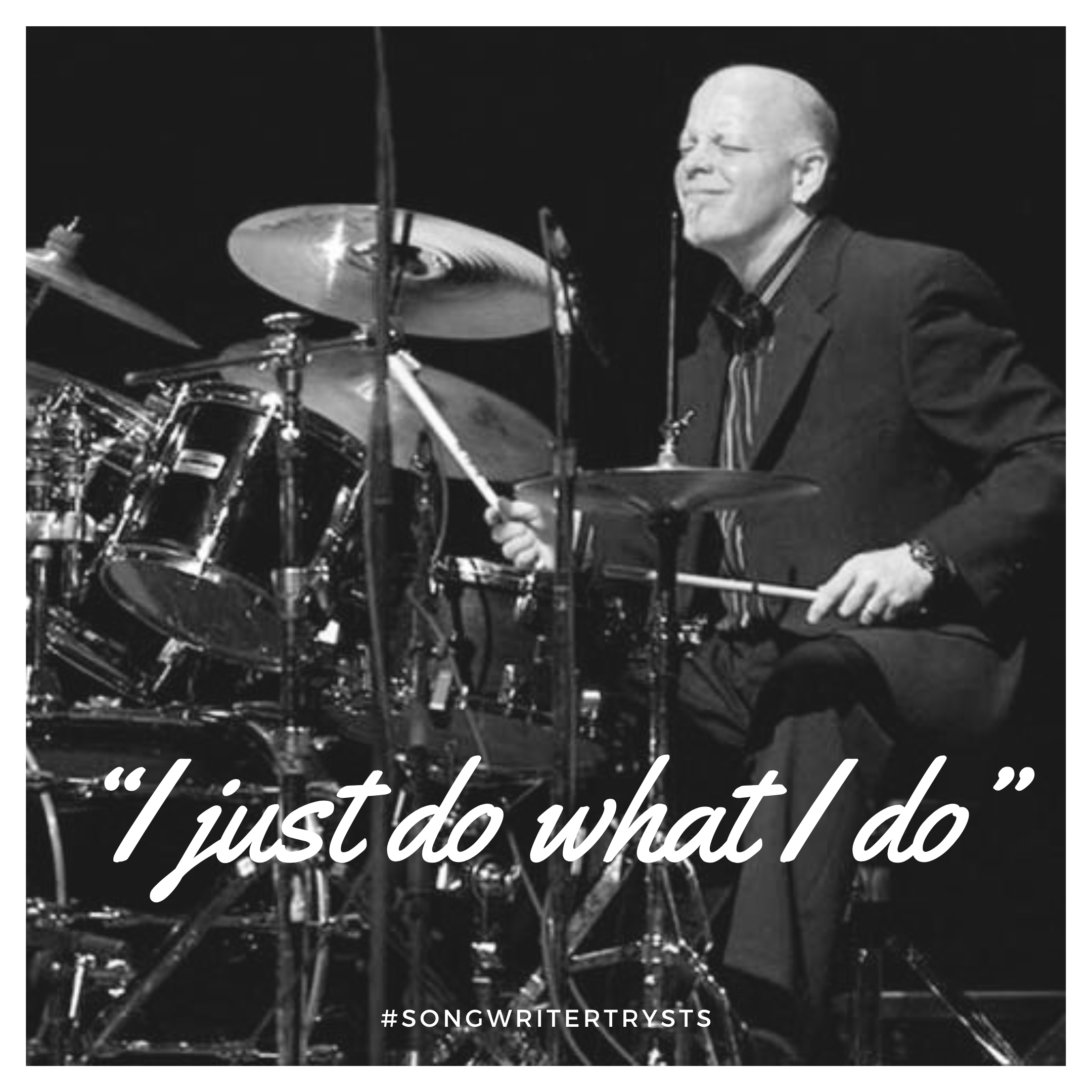
In this episode of Songwriter Trysts, host Rae Leigh sits down with Grammy-winning LA drummer MB Gordy, whose legendary career spans session work, touring, composing, teaching, and film production. After meeting through mutual friend Kitt Wakeley at NAMM and the 2026 Grammys, Rae and MB dive into his eclectic — and sometimes chaotically honest — approach to surviving and thriving in the music industry. Raw, insightful, and wildly inspiring, this conversation gives listeners a rare peek behind the curtain of a true working musician’s world. Tune in for stories, wisdom, and a whole lot of heart.
Connect with Ester:
Transcript
Rae Leigh: Welcome to Songwriter Tris and I have my new friend from this year, Vy Gordy. We met through our mutual friend Kit Wakeley during Nam. We had dinner and he brought me along 'cause I was just ghosting kit this year just around la. So yeah, so glad to have you on the podcast and hear more about your story.
MB Gordy: Nice to be here. And it was lovely to have met you back way back at the beginning of the year. That's right. It was a crazy time because fires nam, the whole thing.
Rae Leigh: Yeah. I remember flying in and people were like, are you still going? Because isn't like all of LA on fire. And I'm like, they say it's okay.
But we actually, I don't know if kit told you, but when I was at Nam in the hotel, there was one morning where the fire alarms were going off at 5:00 AM in the morning. And part of me is like, when I'm waking up, I go, oh, it's just a drill. And I was like, no, hang on. There's actually fires in this place.
I've got, I actually have to get going. But it was fun. It was a false alarm. All right. I like to start the podcast and especially in your case, because you've got so much that we could talk about and this is a songwriter's podcast, and so you, you've got so much relevant to like, so many parts of the industry.
I'm gonna let you, in your own words, tell us a little bit about who you are and where you come from.
MB Gordy: Okay, sure. Who I am, my, my official name is Marvin Bounce, Gordy ii. But I've always gone by MB just to delineate me between my father and my grandfather and, i'm originally from Salisbury, Maryland which is on the east coast of the United States.
And and through high school. And then I went to a few different colleges, but majored in music, majored in drums and percussion. And then the school that I graduated from was a school in New Jersey called Glassboro State, which is now Rowan University dur. And during that time, once I started studying of officially, like seriously in college I wasn't just playing drum set.
I had to learn, if you're a percussion major, you've gotta take everything. But I, that was my background. I really just, in fact, when I went to the first college I went to I knew literally nothing. I knew some snare drum rudiments, and I knew how to play snare drum and drum set.
I didn't know anything about piano. I didn't know anything about, I knew nothing about anything. And so all of a sudden I'm thrown into being a music major with no audition, by the way.
Rae Leigh: Wait, what?
MB Gordy: Yeah, which would never happen. Now, did they just not
Rae Leigh: have enough people, or?
MB Gordy: No, it just was a thing where I wasn't sure what my major was gonna be, if it was gonna be music or psychology.
And I had to go to summer pre-registration. This was a school named Towson State and it's in Baltimore, Maryland. And, so I go and I happen to meet with the music advisor first, and she goes, okay, so let's see. You're interested in psychology and okay, so here, let's get you signed up for some classes.
She starts signing me up for, music theory, sight singing, ear training, blah, blah, blah, blah, music history, oh, and oh, so I guess your education major, so here we're gonna flow you into a, woodwind class or string class to start with, whatever it was.
Rae Leigh: Yeah. And
MB Gordy: and then of course percussion, ensemble, private lessons, and I wanted to be in the big band, so I was in the Towson State big band but not as a drummer that you had to earn that position. So I'm like, oh, okay. I, and then she goes, oh, and then here take psychology 1 0 1.
You know what I mean? Just psych. That's helpful. Yeah. So I guess I'm a music major and she goes, yeah. Okay, so do you know your scales? I go, no. And she goes you better learn 'em before you get here in September.
Rae Leigh: Exactly. So how did you, how did I'm guessing you had some interest in music before that though there.
Oh,
MB Gordy: totally. Yeah.
Rae Leigh: Yeah.
MB Gordy: I played in bands I was in the high school band I was in I took a music. Not theory, but whatever music sort of history type class in, in high school. And then I played and then was playing in rock band. I was playing in my own bands, all through Yeah.
High school taking drum set lessons and all that. So there was a definite interest there. But, I just, I didn't know, I didn't know what I wanted to do. Was it gonna be music major? I had no idea. Yeah.
Rae Leigh: And then
MB Gordy: all of a sudden, now I'm like a music major, so it was of a weird thing.
It was like by proxy.
Rae Leigh: Yeah.
MB Gordy: And with no audition. , That whole education process at Towson lasted about a year and a half. I lived at home for a while. There was other things that had gone on in school. So I left that. And then, I lived at home and then I had a chance to travel to where my sister and brother-in-law at the time were living in Germany.
So the next fall, I went to live with 'em for two or three months. But before I left, I applied to a school in New Jersey where I finally graduated from, and that's when everything changed. So now I'm 20 years old. So all of a sudden I'm auditioning.
Rae Leigh: Yeah. And now you gotta audition.
MB Gordy: Yeah. Now I have to audition. Okay. But knew nothing about auditioning. I had no clue.
Rae Leigh: I don't, yeah. Okay.
MB Gordy: You know what I mean? And I'm auditioning the day before classes start because my, I got accepted by the music, by the school and by the music school as a major.
But I wasn't accepted by the percussion instructor yet. And he was away all that time over that break. So I didn't, I show up to it in a town in New Jersey, which I knew nothing about. I knew no one there. It was a big, change. Very brave.
Rae Leigh: Yeah.
MB Gordy: And and I was like a fish outta water.
I didn't know what was happening and so I go audition for him and it didn't go too well. And why do you think it didn't go too well to I don't know, man. I don't know that they're the kind of type, the level student that we're looking for here.
Rae Leigh: Yeah.
MB Gordy: And just I, I looked dead straight at him and I just said I know this is what I want to do, so if you're not accepting me here, I'm going somewhere.
Rae Leigh: And he was like, fair enough.
MB Gordy: It freaked me out. 'cause I never talked to anybody like that. Somebody in authority, and I guess it freaked him out too.
We're still friends, actually, he's a mentor of mine. He, I just did a big gig in New York back in September, and he's Joel is like 94 now. Wow. And he and he's still a dear friend and mentor to me. And and he came to my show and it was really special. It was really awesome. So that led to, okay you're on probation and we'll see how the juries go at the end of the semester.
And if you pass your juries you're in, if you don't, then see you later. And so then I found out what the word discipline meant at finally, at the age of 20. So I guess I, I lucked out in the sense that I did find out. You know what I mean? Yeah. Because I've, now that I've done a lot of teaching and all the stuff that I've done in my career, I've met, from eight year olds who are like.
Are you serious to, to to 45 or 50 year olds to the other side of, are you serious?
Rae Leigh: Do you know what I mean? Yeah. I feel like this year's been a little bit of that for me too.
MB Gordy: Yeah. So that was really just one of those things. And so anyway and then I had to work and then I was outta school for a year, went to graduate school at California Institute of the Arts.
And then everything since then was like, moving into town, slowly breaking in, networking, da. And then, trying to figure out what I wanted to do too. Because, before I came to California I was a record per, I was applying on records, but I was a record person.
I could tell you. Who my favorite bands and who and favorite musicians and who played on what record and everything that was done in New York or la And it's oh man, whatever. So I knew a lot about that world, but I knew nothing about the film and TV world, which is what I ended up getting into.
Yeah. I still have played on tons of records and all kinds of stuff, but. But that side of it, like playing Orchestrally as well. And because I did that in New Jersey and, but when I went to Cal Arts, there was none of that. There was no drum set. There was anything I wanted to do on my own.
It was more of a world music because they didn't have a jazz program at the time yeah. Any drum playing I did on my own. It was, I studied at K Arts, I studied Ghanaian drumming. I studied Balanis and Javanese Galon. I studied tabla and Indian music. Yeah. And so it was a lot of world music plus all the 20th century avant garde world stuff, the kind of stuff and that level.
So it's classical ish, but. More of a garde, whatever.
Rae Leigh: You've got a wide range to choose from.
MB Gordy: Yeah. And then as I broke into to el the scene in LA it was, I'm dabbling in this and dabbling in that. It's and I could look back on all that and go I could have just gone I just wanna be a drum set player, but I like too many types of music.
And now the next time you come to LA you've gotta come to my studio and see All insane in, with my collection here. But plus I've got a ton of stuff at another, at a cart company.
Rae Leigh: Yeah.
MB Gordy: It, I like too many types of music and I lo, and I love too many styles of music, and if I only played drum set, I wouldn't be in a band that in a Grammy winning band.
Yeah. Fair. But that's in hindsight, that's the other part of that whole equation of now that I'm older and it's all on the back end of all this sort of, and now I'm won two Grammys, I just got nominated for another one.
Rae Leigh: Yes. I'll be there. Hopefully winning the third one.
Yeah. For
MB Gordy: Kurt for kissing. Seven seasons.
Rae Leigh: Yeah.
MB Gordy: And it's just been this insanely awesome journey. And not without its ups and downs, that's for sure. Because being a freelance musician is it's crazy. It's a little let's face it. You could say the same thing, any of us can, it's not for everybody.
It's definitely not for everybody. Definitely challenges the heart sometimes. Yeah.
And you gotta deal with the insecurities of it because you're working and then you're not, when you're not, you don't get paid. Unless you have a full-time orchestra gig and that's a very limited, that's a finite group of people who have those kids.
And
Rae Leigh: you have to be able to keep them too.
MB Gordy: Exactly. All orchestras have tenure, the tenure process and all that. So once you're in, yeah. And that's not to say that some people, a lot of people who have tenure maybe shouldn't have it. They should, but yeah. And that, but that's the same thing with teaching too.
Teaching gigs. You know what I mean? Once you get tenure set, and I've done university teaching and all that, but but I'm a freelance musician and that's what I've done. That's what I've, I'll, I've always done. And like I said, I mean it's, it doesn't go without its ups and downs and there's some neurosis involved with that as well.
But, i, but I, at the same time, I've been very lucky and very blessed to have had these experiences and these, and all these different Cool. Like this fall was completely different from, for what I've done in a long time. Yeah. Because I did a lot of traveling this fall. I had this big gig in New York.
I was in New York for 11 days, and then we were out of town for a short trip with my family. But, and then when I got back from that, I went to Sardinia for 10, for 11 days or 10 days, whatever for another gig that I was asked to come and do. And then in January I'm going to to Dubai for a gig.
Rae Leigh: Oh wow.
Where you rocking a tan at the Grammy's This year?
MB Gordy: Next year? Yeah. Yeah. We'll see about that. But it, that's like a whole new venture because I have toured in the past. I played with years and years ago. I played with the Three Dog Knight for a minute. I then way later, 95, 9, 6 and 97, these short little tours I played in John Tess's band when he was still doing entertainment Tonight.
I don't know if you know who he is, but he was the, an announcer on the show Entertainment Tonight. Okay. Way back when. All right. And and then he, but he was a musician and he really wanted to just be doing music, so he eventually stopped that show, but he had this incredible game. This guy was making money hand over fist and Yeah.
It was amazing. But he put it, put together a great band, and so we, we would do like a, well in 95, it was just weekends 96. It was like. The be first six weeks of the summer, and then he did the Olympics in the summer. We were off all that time. And then in the fall we did another six weeks and did a live PBS special on that.
And then, okay, so then I was done with touring. My, my first son, my first child was born and I just, yeah. I didn't wanna be, I didn't really wanna be touring,
Rae Leigh: yeah. So
MB Gordy: then, my daughter's born in 99. And and then, so in, in 2001, no two, wait, 2001. Yeah. I got asked to play with the Doobie Brothers and I was like, wow.
The Doobie Brothers. That's I love that band. I grew up with that, that, sure. Yeah. So I got that gig and and I toured with them for four years. Wow. As that got to be, it was a great experience and I don't regret it. Again, there was ups and downs with it, like with everything.
But I really more or less wanted to be, I wanted to be back home with my family. My kid, both my kids were young and I was like, man, I, this is, I'm not a road dog. That's not me. You know what I mean? Yeah. Some people love the road. They love being on a bus. I do not like it at all. I love, I don't mind the road, I just don't like, and traveling, I just don't like being on a bus, it's my, yeah.
Rae Leigh: I don't know if people. Glorify the concept of it, but I think once you've done it for a certain amount of time, I think the glamor wears off. And you do go, I just want my own bed. Yeah. I haven't met anyone that's done it a lot that goes, oh yeah, I really miss it.
It's, yeah, but it is, it's a glamorous idea if you're a musician or if you're look,
MB Gordy: you worked yourself into an incredible gig. If you're traveling with James Taylor or The Stones, or, on and off. Yeah.
Rae Leigh: Yeah.
MB Gordy: That's not a bus game. A bus but Stones don't.
Yeah. They're flying from gig to gig and then they're flying back home.
Rae Leigh: Yes.
MB Gordy: You mean they go do, they're not doing a show like six nights a week. They're doing a show, two days outta the week. Yeah. Whatever. Two big shows. And then they go and they come back. And
Rae Leigh: I've heard horror stories as well though, in Australia of session music and Australia's.
Pretty massive as well for driving distances. Yeah. And the star of the show will be catching planes everywhere, but all the session music, they're on the bus and, and they'll go ahead and just relax for a few days and wait for the band to catch up. And I'm like,
MB Gordy: that happened, that's, that happened the last year.
I played with John Tess's band and it, it was a little, no, actually he did that the year before that too. So yeah, he had a plane and he rented a pri private, jet that he got the fly on him once in a while. We'd each, not all together as the band, but would get like single pick to be able to come on the plane.
And it was it was a little odd, but
Rae Leigh: yeah.
MB Gordy: Yeah, I don't, we wasn't
Rae Leigh: big enough for the whole band,
MB Gordy: I feel like the disparity sometimes when that kind of thing goes on, like what you're talking about, the stars, like over here in the bands down here, it's no, that, that's not a great work.
That's why. I'll use now Taylor Swift as an example. Okay. So like her Arrows to Eras tour, she made like $2 billion
Rae Leigh: Yeah.
MB Gordy: On that tour. And at the end of it, she paid out. Like I, I saw, just saw the number and I don't remember exactly what it was, but it was, I wanna say 168, but it could have went, it could have been 1 98, but whatever million dollars split between, as I understand it anyway, split between all the people involved in her tour.
That's insane. Yeah. And that is you want to create loyalty. There you go. That's
Rae Leigh: how you do it. Yeah. Yeah.
MB Gordy: Who's gonna go thanks and I'll see you later.
Rae Leigh: Yeah.
MB Gordy: No, she'll keep that band forever.
Rae Leigh: Yeah. They'll do whatever she wants. Yeah. You'll
MB Gordy: keep the crew forever.
Yeah. She'll keep her management forever. That's how you do it, and that's business. I have nothing but the uro utmost respect for Taylor Swift. And anything she's doing politically and in every other way too. But no that's where it's at. And you hear horror stories, and I'm not gonna name any names, but you hear horror stories about some huge stars who pay their bands like they were just outta high school.
Yeah. It's come on man.
Rae Leigh: Yeah. You're
MB Gordy: talking about the, if you're working with now, I'm just not that these names does it mean that it's the people I'm talking about. But if you're working with Beyonce or you name some name, huge name X, you're no slouch player.
Rae Leigh: Yeah.
MB Gordy: So these other people I'm talking about, it's the same level.
Yeah. So you're not getting that gig if you're a s slash player. So you deserve to be paid.
Rae Leigh: Yeah.
MB Gordy: And you deserve to be paid well, barely not. Not just barely getting by, yeah. But that's, and these, and then the artists are making an incredible amount of money. That's just, I have a hard time with that.
But you know what I'm saying? It's kinda oh, I can make more money. I don't have to pay. It's like I don't, I, I don't operate that way. I don't like being treated that way. And I don't like functioning that way. It's not it doesn't create. A sense of wellbeing with anybody that you're involved with.
It's like when you're, if you're tipping, if you do tip, and if you're in an environment where you do tip and the service was good, take care of your people, man.
Rae Leigh: Yeah.
MB Gordy: Don't
Rae Leigh: just being fair and respectful.
MB Gordy: Yeah. Yeah. So anyway. But okay, so then once I was out of college, I, like I said, I broke into the film and TV world and then that led to, and it's a just a networking thing.
And that led to being, so that's just '
Rae Leigh: cause of like your location and the people you were meeting and
MB Gordy: Yeah. And then, you wanna meet music contractors and then you meet the composers and they go, so it's a kind of a twoedged, double edged sword where if you're in with the contractors, they, hopefully will be hiring you just because, hey, I got the guy, I got the, or I got the guys or women that you need for the gig, whatever.
Yeah. And then of course the, from the composer's point of view, they have people that they like working with and they go, Hey, I want these people in my sections.
Rae Leigh: Yeah.
MB Gordy: After that, when you're hiring a 90 piece of orchestra, composers do not have the time to be thinking about how any, all their 90 friends that they want on the gig.
That's not the way they think. It's a, but I want this person as the principle, maybe a couple people, like a spotted around the orchestra like that. And then at that point it should, it's up to the contractor. But what happens a lot of times in the, this world, and I don't know what it's like in other countries, but here is they'll tell you I got, I can get you the best orchestra I got you.
When in reality, any of us could call those players,
Rae Leigh: right?
MB Gordy: So it's not just any single person who's gonna take care of somebody. Any of us could do that. So there's that little game. So you just, listen, there's a lot of stuff in the music business like that and like other things we could get into.
Yeah. That you eventually have to, if you don't have it, and please, God forbid, this would be short of becoming, cold and callous, you gotta develop some thick skin because if you take everything personally, and that's kind of me. I'm, or has been me, I'm even at this point in my life, I'm still, sometimes I go, what?
But yeah, it's, it doesn't serve you. People can be nasty. You Yeah. And you've gotta just let stuff go and you cannot go, oh, they don't like me. Oh, I'm not, but you, yeah, no, you gotta just let it go because it, there's a lot of players, a lot of people doing what you do, a lot of people wanting to do what you do.
This is the way it goes. And so you just gotta find your niche and just be secure with yourself. But again, as a performer, part, I think part of the nature of being an artist of any kind.
Rae Leigh: Yeah.
MB Gordy: Is there is it's interesting because when I was younger and all through undergraduate school even, and even through graduate school, really.
I don't even know if I understood what the word neurosis meant. I knew the definition, but I couldn't identify with that. I didn't know what that meant.
Rae Leigh: I wasn't, I didn't know what that means. What's neurosis?
MB Gordy: Neurosis,
Rae Leigh: yeah.
MB Gordy: Neurotic is you're, you're questioning everything good.
If you don't know, then you don't want to go there. You know what I mean? But I just, I can't
Rae Leigh: study psychology
MB Gordy: but what happens? And then you're like questioning everything. You're like, oh, inside your head, you're inside your head, okay.
Rae Leigh: Yeah. Overanalyzing things.
MB Gordy: Yeah. And which there's a great term which we got turned onto to which I love and I use a lot now.
Analysis paralysis.
Rae Leigh: I love that one. That's good. I understand that. You don't need to explain that one to me.
MB Gordy: So there you go. That's a little bit of that. So the whole thing is that. If so, anyway I didn't even, I just had no clue about how that, what that meant in my life, 'cause it just didn't, wasn't part of the thing until I got outta college for good, until I'm pro trying to break into the business. Until you start seeing the way people are like with the backstabbing thing. Love. Good, love
Rae Leigh: it. You're like, that's the knife, isn't it away? I've faced a lot of these in my back this year actually.
It's been really interesting.
MB Gordy: Yeah. And then of course, I was married once before, so then that adds to that. Then, I got married the second time and then I have kids and it's oh boy. Now I know what neurosis means, right?
Rae Leigh: Yeah. Okay. So maybe I'm learning that still.
Yeah.
MB Gordy: But. To the point being that, you, if you're gonna survive with any of this, look at some at the end of the day, you might, because I'm, I, the way I was raised and the way I was to be brought up is you're be nice to people man. And you treat people with respect and you'll get respected back.
But that doesn't always happen. So then it's easier to go than for you to get a little chilly with people or to have start growing a little callousness or drunk, getting an edge
Rae Leigh: and I lack of trust. Yeah.
MB Gordy: Yeah. And I, that doesn't serve you that well, but but it just happens and, but oh, and I remember.
When I was first coming into la breaking into LA scene, and I'd do rehearsals at the union, which was down in on Vine Street in Hollywood. Now it's moved, but and I remember going in there and you'd go and so there was an upstairs area where there was rehearsal rooms and then there was a basement area, and in the part of that basement area where like game tables for all the old cas, right?
Yeah. Which would be like me now, but whatever. But anyway, but like these old dudes were sitting around smoking this one, you could still smoke and, smoking cigars and playing cards, but they all looked so unhappy and miserable and they're complaining about this and that. Yeah. And I remember just one day I was walking with a buddy through there and I was, we were going to rehearsal.
I said, dude, if that is me ever, please just put the gun to my head. And he, because not to be too weird, but with Big Gun, that's not a way to
Rae Leigh: live.
MB Gordy: But no, it's no. I was like, I do not wanna be that person. The old Crotty guy who's pissed off and miserable because your career didn't do what you thought it was gonna do, or you just, or maybe it was, but you just don't have enough gratitude to be able to be thankful that you had what you had.
Because there's that issue too, right? Oh,
Rae Leigh: absolutely. You can't have it all until you learn to love it. All, I think is one of the quotes. I, yeah.
MB Gordy: Yeah. And so anyway, but that, I just use that as an aside. But anyway, so God forbid, hopefully I'm, I, of course, if you ask my wife, she'll go yeah you like to complain, but,
Rae Leigh: oh, look, I think there's a difference between discussing real issues that are happening and questioning them, and then there's there's just complaining for the sake of complaining.
And I, it can be really easy to drip into one. Yeah. Oh yeah. But I also think we have to talk about real issues. And I do think, and one of the things I've learned this year is. As artists, we're so vulnerable, and if everything is personal, we're so sensitive, and you have to stay emotionally connected to your body, I believe, to create art because that's where it comes from.
And so you're always so open, but then now we have to do business. And in business people are so that, okay. As artists we're just like, oh yeah, stab me. It's great.
MB Gordy: You bring up a great point, business versus music. Now you have the music side of the creative side of music, and you have the music business.
They're not the same. I never ever thought, I wasn't taught that my, I didn't come from a business-minded family. My, my parents were blue collar workers, and I wasn't taught that in college. Now there are music business classes you can take at a lot of different schools around the states but it's important, but not, but still not everywhere.
And which is ironic to me because all these musicians and dancers and actors and filmmakers and on coming out of all these art schools who have no sense of business because they're not taught it. But yet we're expected to graduate and come into the freelance world as business people.
Rae Leigh: Yeah. They expect you to get agents and managers and that's I think really a world of the past for most of us. Yeah. We're not earning enough money to justify agents and managers, and so you have to do it yourself and Yeah. It's, but it's, you're right. It's not taught in schools.
MB Gordy: No. And so for us, I'll include you since you've had, we've had to learn this ourselves.
Whereas now, I know some people who actually were business music business degree majors they didn't want to play, they wanted to go into the, like being producers or, or working at record companies or a and r, whatever, a different side of it. Publishing, music, publishing, whatever.
Rae Leigh: Still music there. But still all that
MB Gordy: stuff is stuff that we've had to learn. On our own. And I'm still learning. I'm learning constantly, you know about it. Maybe I should be learning more about it but sometimes, so you have to learn. And so I, I give a, when I do these a lot of workshops where I'm, I play for USC film scoring students and Berkeley and yeah.
Eastman School of Music and Columbia School of Music in Northridge here. I've done a lot of these workshops where I'm working with not just drummers and percussionists, but composers a lot. And one of the things I'll get into in my seminars or when I'm talking to them about the world of percussion as well, I get into this thing that we're just talking about now.
I go look, do yourself a favor. If you haven't taken any psychology classes, at least take one or two. Because you're gonna have to know to deal how to deal with psycho people in this business. 'cause there's a lot of 'em. Yeah. And, and how do you deal with a producer? You're the composer on a movie.
How do you deal with a producer who thinks they know something about music, but they don't know anything about it?
Rae Leigh: Yeah. They have a whole nother language from music in the film world.
MB Gordy: Yeah. And so now they're gonna get all weird with you maybe, or pushy or whatever, and saying like that and coming across they know, and you know for sure that they really don't have a clue, but you're, you can't tell them that you're gonna lose your gig.
You can't, or you certainly can't get all cursed with them or anything. Then you're done. You know what I mean? Yeah. So how do you deal with that? So there's that. And the other thing is I said take at least a business, some kind of a business class and learn something about saving money and how to deal with money and all that.
And then, and also a business law class to, so that you understand how to read a contract. Because you're not gonna walk out of USC for example. And so now they graduate, they're done in May, and they're gonna walk out into the real world now.
And I'm sorry, there's 20 students there now. Think about all the different schools around the entire country. So how many students are coming out as a Major CO in a co in com with a composition degree, thinking they're gonna break into the film and TV world. It's tough.
Rae Leigh: Yeah.
MB Gordy: Some will, but let, I'm sorry.
But the reality is you're not all going to right immediately, and you're certainly not gonna walk into the world and get an agent right off the shoot. You have to have some, you have to have some stuff have happened. You have a, have to have a portfolio and a reel and the whole thing and sizzle reels and all that world of stuff.
And then there's that side of it of pro doing the promo for ourselves, which like, I, I'm not so great at, I do, because I know a lot of people now. I'm just I'm just living,
Rae Leigh: get around. Yeah, you live long enough and get there, but.
MB Gordy: But but I am not really and I have to be, but I'm not really a social media person.
I just, it doesn't resonate with me.
Rae Leigh: I much prefer this is my version of social media. I'm just telling you like yeah. I, yeah, I really struggle with it. But I also I don't know, I just, there's something that doesn't sit right with me when people say, you have to post content on all these different platforms every day, and you have to do this.
And I'm like I don't get paid for it, so why do I have to do? You are not relevant if you don't do this every, every month you're releasing a new track and you're doing this. And I'm like, I don't agree. That's just not me. I don't, yeah, I don't, but I know that they do say that, and I see some people killing themselves, putting content out and trying to grow their social numbers.
But then part of me is but what are you actually creating? That's. Actually 'cause real let's be honest, like reels and social media content usually only gets used once and it does, it's not something that people will go back to unless it's like extremely funny and it gets shared a lot.
Sure you go viral, but it's not like that track that people will play at their wedding or it's not that movie that in 10 years time people are gonna be like, yeah, let's watch that again, because that was such a great experience when we watched it the first time. It's that type of thing that like, gets my motorboat going.
MB Gordy: No I agree. And and from the world that I came now I feel like I'm living in a couple worlds. I've always felt that way anyway, but yeah. But with the studio world is one thing. And touring. And it used to be that if you toured, you weren't a studio person.
Yeah. And if you were a studio person, you didn't tour, whatever. Yeah. And neither they didn't meet. That's all become just, amorphous and it is all washed together and no one kind of really cares. But, but it, and talk about being erotic. I lived that when I played with the Doobie Brothers.
I did not tell one person that I worked with on a regular basis doing studio sessions. My close friends, yes. But everybody else, no. It wasn't like a conversation where I'm on, I'm doing a session. I go Hey, yeah, man, I'm playing with the Doobie Brothers. I never talked about it. So that's a little crazy making.
But yet I'd show up on the Doobies gig and I'd get on the plane and go, look, Hey you guys, man, I, it was so cool, man. I played on this movie Country Bears that my friend Chris Young did the music for, and Bonnie Ray and John Hyatt did. I'm thinking they could relate to that, right? Yeah, they did The, Chris wrote this stuff that was in the vein.
I got the, it was awesome, man. I was playing drag and that they could have cared less.
Rae Leigh: Really? So it's just Worlds didn't even meet.
MB Gordy: Yeah. And I'm like, wow, okay. What am I, Charlie? You know what I mean? So you see what I'm saying? Like that kind of, I unfortunately created that. I could have just easily said, you know what, Hey, this is what I'm doing.
And I'm gonna, I'm gonna share it.
Rae Leigh: Yeah. And you can
MB Gordy: either be interested or not, but I'm not gonna take it personally. Yeah. But because I told you before, the way that I've been, is you like, oh, you don't think that's cool what, and I'd get all weird. And so I would eat, beat myself up, eat myself up too about it.
And so I was able to eventually get past that. But anyway, that's all changed. Yeah. So now people tour people. They do, you do what you do. Because we live in a world now. It's, everything's different, man.
Rae Leigh: Yeah. You have to be able to do everything. People expect you to be able to do everything.
MB Gordy: And I like doing a lot of different things like this traveling that I did this year, travel this fall that I told you about when I was in New York or when I to San Listen a lot. There's still a handful of people in town who they will not do that. They will not travel. They're not going to do that.
They do sessions. And if they don't do sessions, then they're home and they don't worry about it.
Rae Leigh: Yep. And they don't need to. And I
MB Gordy: go man. I got an opportunity to go to Sardinia and play shows and play with some cool, great musicians. It was awesome.
Rae Leigh: Yeah. And
MB Gordy: then go and make a vacation out of it too.
Yeah, I think I'll do that. Yeah. Win-win.
Rae Leigh: Yeah. Win-win. What's wrong
MB Gordy: with this picture? You know what I mean? Same thing with this gig in Dubai coming up, which is that's gonna be a great gig because it's myself there's a whole, it's an international band. Yeah. So each per, each instrumentalist is from a different country.
Rae Leigh: Oh, wow.
MB Gordy: Or their heritage is a different country.
Rae Leigh: Yeah.
MB Gordy: Hamid Sadi from that I play with here, he's here, but he's Iranian, so he'll be on center. I'm from here. There's a Chinese woman, there's a somebody from Dubai actually, who's gonna be playing cello. Yeah. And I forget all the other musicians now.
And then voter kellerman, who, yeah. Yeah. So he is from South Africa, so it's his thing. He's putting this together.
Rae Leigh: Oh, very cool.
MB Gordy: So we're going to play with voter. Yeah.
Rae Leigh: Yeah.
MB Gordy: So that's gonna be really fun. And so I'm going like, man, that's just an incredible opportunity. I, why would I not want to do that?
Rae Leigh: Yeah.
MB Gordy: When I can. Now look, it would be a issue if there was so much studio work going on for film and tv
Rae Leigh: Yeah.
MB Gordy: And records and anything else that, if there was so much of that going on that you go Ugh, I don't, I can't go, bro. I know I'm gonna be working.
Rae Leigh: Yeah.
MB Gordy: But that's not the case now.
It's all, like I said, everything's different. So you're piecemealing this hodgepodge and this, sure. Look there's plenty of musicians. Like I said, if you're an orchestra musician, you've got a full-time gig with an orchestra. That's one thing. Or if you've got you're a band member and you've got one of the late night shows and you're in that band, that's your gig.
Yeah. So you're not gonna be thinking about traveling around the world, or going on.
Rae Leigh: Yeah. Or
MB Gordy: maybe on your off days or your weekends, or, maybe you get a break in the summer or something like that. Sure. Yeah. But 'cause I know that James Genus, for example, who plays with on the Saturday Night Live band we went to see Paul Simon this summer and James Genus was playing bass
Rae Leigh: Yeah.
For Paul Simon. So I think you're gonna take a hiatus from your gig at Saturday Night Live. Yeah. If you got the opportunity, go play with Paul Simon. You know what I mean?
Yeah, absolutely. Oh look, I as like an emerging artist to try and find musicians who are good enough, but also willing to jump on for next to nothing.
Or, just equal splits of whatever were being paid can be really tough. And like this, I actually do mostly solo stuff. I've done a few tours where I've had a piano player with me or an extra guitarist with me or something like that, and I don't want to not be able to pay people either. And until I know I can afford to pay people what they, I believe they deserve to be paid, then I don't wanna be disrespectful either. And that's a hard one, I think when you're out there trying to
MB Gordy: do it. Yeah. It is. And there's an artist that I work with.
In fact I wanna hook you up with her too. Are you planning on coming to the United States anytime soon?
Rae Leigh: I'm flying over for the Grammy week. Yeah, that's my next.
MB Gordy: So you're gonna be here for just a week? Or you think you're gonna be here longer than that? Oh, like 10
Rae Leigh: days or just under 10 days, I think.
Yeah.
MB Gordy: So you'll come when .
Rae Leigh: 28th of Jan. I'm flying in on the 28th of Jan.
MB Gordy: 28th. Okay. Let me, I'm going to when we talk about this at later I'll hook you up with my friend Sam Stokes, this singer songwriter who I work with.
We got a show coming up
Rae Leigh: Yeah. Cool. Here
MB Gordy: in December on the 10th. And we haven't worked a whole bunch recently, but, she would book gigs at Katie, but she likes to put these shows together and I'd love to hook if she puts something together while you're here.
Rae Leigh: Yeah, cool. Could be cool
MB Gordy: for you to play and then we could maybe even play together.
That'd be cool. Would love that. That'd be fun.
Rae Leigh: Hang on.
MB Gordy: But but e either way. Even if you just did it solo, but like I said, she likes to curate, like this show that she's putting together at, have you heard of a place in LA called The Hotel Cafe? It's a, no, I
Rae Leigh: think Kit maybe mentioned it.
MB Gordy: Yeah. It's a kind of a showcase place for singer songwriters and bands, whatever, indie, whatever. But they are closing soon and they're gonna be moving. So I don't know where they're moving to. 'cause I don't think they have a place they're moving to yet.
Rae Leigh: Yeah, but
MB Gordy: but anyway, at the moment they're still doing shows and I, this might be one of the last shows that we do on the 10th.
Yeah.
Rae Leigh: And I've done things like that as well with songwriter Tris. We've done songwriter shows like rounds, like Nashville rounds. Yeah. And because it's original songwriting, right? Like you don't have to have the whole kitten caboodle all the time. And sometimes it is nice to, have that.
Raw. This is just the lyrics, with an instrument. It it's that real storytelling vibe which I'm a massive fan of and I know it's not everyone's vibe, but I love it. But I also love to dance and I sometimes I miss the rhythm and I need the rhythm section in there, so that
MB Gordy: exactly. Yeah. That, and that's my gig, that's right. That's your
Rae Leigh: gig. I know. Tell, I'm actually curious because I also work in the film industry and I've just finished producing my first short film, so that's gonna be a big part of my next year. But how did I know you said you just got into it in networking, but how did you find moving from a musical trained life and then having to work with these film people, let's call them film people?
Yeah. What was why you say some of your biggest lessons and aha moments were in that part?
MB Gordy: It was a natural transition because, okay, so when I was at Cal Arts, I got. Introduced it. Oh, there's that happening. Whoa. Okay. So then I was quite aware then it was obvious.
So every time, you watch TV show, you write a movie, you go, oh, I never knew that. Never thought you'd make a living doing that. You know what I mean? Yeah. Playing that music. Okay, so once I broke, moved into town and, meeting this person and Hey man, can you come play my session?
And was of course everything at those early stages was for me anyway, was non-union. And you're just, and then people are just making their way, but getting their teams of people together. Like the people they like to work with.
Rae Leigh: Yeah.
MB Gordy: And so then it was like, but it wasn't like, when I say it was an easy transition, it was because you just show up.
Here's the music and this is what you play. Now there's the other side of that, which is like a lot of composers I've gotten to work with, where they go, okay, this is written, but look, I. Here's just a basic outline of this. Do your own thing. Just do, I don't know. What do you hear here, man? So I like that creative process you have.
Be creative. Yeah. Yeah. But you're working. Not that I haven't worked with directors. I've done plenty of projects where directors came. In fact, I just did a thing on what were you doing on when was that? Thursday, this past week. I had a session here in my house. Yeah. The director, it was a little independent film.
It's actually going to Sundance oh. In January. But so they're just finishing up the music and it was an. It was, there was like an African vibe to the music that we were doing which was really fun. That's one of my, in my wheelhouse. So she had certain things written.
Oh no, sorry, my bad. This was yeah, this, I'm thinking about another project I did for somebody American. I get it all mixed up, but that's okay. Anyway so I got, so I know a lot of that material. And this is music that she was style stylizing from Sierra Leone, which is, an African country.
I did a little bit of research to go okay, 'cause I can't say that I actually know the music of Sierra Leone. I studied specifically Gade drumming, and this is a point a thing, I'm a point I make too, with people who with composers, anybody, when you're, you meet a percussions, goes look, oh yeah, man, I'm cool.
Like I, yeah, I know African music. Turn around and walk away as fast as possible. Because if you tell me, African music, so you mean, the music of 64 different countries?
Rae Leigh: Yeah.
MB Gordy: I don't know anybody that knows that.
Rae Leigh: Yeah.
MB Gordy: So different. You might find cross, references and cross things like, oh, they use that instrument, or they used to called something different.
It's in this country, whatever. That's one thing, but you're gonna tell me, those musics I wanna meet that person.
Rae Leigh: Yeah. If they haven't met them yet,
MB Gordy: not yet.
Rae Leigh: Not looking in the mirror. How many, I don't have the music in four. I can fake it pretty well, but anyway, but I would, so anyway, that's the point.
So I would sort work with someone who can be honest and be like, this is my limit, but I'll, I will work to what you want.
MB Gordy: I listen anything like in that realm, I will take on that challenge. 'cause I'm like, yeah, sure. Lemme in fact a good composer, a friend of mine, a composer, Laura Carman, she's she's in, she's doing a lot of cool stuff.
We did a movie and I don't even know what the movie was to be honest with her, a TV show. I forget now. But anyway she called me up and she goes, do you know, oh God Sega. And I go, yeah, you talking about the game company up in Seattle? She goes, no, I'm talking about the music, Sega music.
And I go. Never heard of it. So she sends me some videos and it's the music of Mauricia now. I didn't even know, I didn't even know of Maia. It's a country in Africa.
Rae Leigh: Yeah,
MB Gordy: it's an island off the east coast of Africa. And it's incredible. It's beautiful music. It's really cool.
Rae Leigh: Yeah. Okay.
MB Gordy: And they use these frame drums and with like more of like a tar kind of thing with jingles in it.
And then they got these different drums in it. I was like, oh yeah, but like rhythmically you can go. It's based it's like triplet T eight or whatever. But then with the cross rhythm thing going all that, I was like, oh man. So I studied a little bit of that, and go sure, I got that.
And I have some drums like that. I didn't have those exact particular drums from Maisha, but I have something that sounds like that. So then we went and we jumped in and did the score, the percussion that she needed. And it was a similar thing last Thursday with stuff like I might have had not, might not have had specific instruments from that country.
Some I did, but not a lot. Not all of 'em. So we may we find something like that sounds close to that, so we'll use that.
Rae Leigh: And you were like able to adapt.
MB Gordy: Yeah. And and the director was there and so I got, he had his input and it was just so I like working in both situations. I like, of course like, like when I played on, frozen for example, you're just walking in, here's the music, play it and go home.
You know what I mean? And the only thing paycheck at that point is the way is you're phrasing it and playing it the way that you do it, as opposed to somebody else, but it's not all that different.
Rae Leigh: Yeah. And in, in cases like that, would they sometimes get multiple session musicians to come in and do.
All the exactly the same thing, but in their own styles. And then pick from that or
MB Gordy: no, they don't have those budgets. They don't have time to do that. Those budgets are gone now in the old days of record making steel, Lee Dan would do that when they made a record, right? They'd have they'd go nah, let's try.
Okay, that was great. Okay, let's get Jay Grayden in on guitar. Ah, let's get Dean Parks in on guitar, whatever. And let, we'll pick. Yeah. But those kind of budgets don't exist anymore.
Rae Leigh: Yeah, they're gone.
MB Gordy: And so you know what you want to do and who you're gonna use going into it.
I did a record for a guy, this was years ago. It's an odd dude, but, but he, there was a studio that's was known in LA at the time that the guy sold it. And we all thought the studio was sold, right? And actually it wasn't that just down the street from when I lived in North Hollywood, so it was really cl I could have walked there from my old house.
Rae Leigh: Yeah.
MB Gordy: So anyway I get a, I get called by the engineer and he says, Hey man, could you come do this session for this guy and blah, blah, blah? And I said, sure. Yeah man, Steve, it'd be great to see you man. It's been a minute, 'cause we worked on a bunch of some other, bunch of other records through a friend of mine, David Campbell.
Who happens to be Beck's dad? David Campbell's a we really well known, a arranger composer, and he is Beck's dad, and I've known Beck since he was like 11.
Rae Leigh: Okay.
MB Gordy: That's when we first met, but just
Rae Leigh: full circle.
MB Gordy: But but anyway so this was an engineer who I met through him. And so I said, yeah, that'd be great.
So I go where is it? And he goes it's at the old O Henry Studios at this. But I said, I thought that got sold. He goes no, man. This dude took it over. And he's leasing, he's renting it for a year for an insane amount of money. So Hank, who owned O Henry is going, gee, what's wrong with this picture?
I could have sold it and made that. Now I get to make that and rent it wow. Per year. So hello. It didn't make a whole lot of sense for him to keep, to sell it. So he kept it and rented it back. So I go, okay, great. So I walk into this guy and this place, and man, he, everybody and their brother in LA is on this record.
I didn't know that until I show up. And, but then I also got to find out real quick why, because he was very hard to work with. And I won't repeat what he said to me while we were sitting there, and I hadn't even been there 10 minutes yet. But it was pretty obtrusive putting it saying, and I just was like, wow.
And my friend Steve, the engineer was just like,
Rae Leigh: no, I wanna know. But,
MB Gordy: so anyway, we made it happen. We got this thing done. But there was this, so you get that, you get people who go nah, I think I'll try this guy now. I think I'll try this guy now. I think I'll try that guy. And so you've got that concept.
But again, that's a rare thing anymore because the budgets just aren't there.
Rae Leigh: Budgets. Yeah.
MB Gordy: And now you could do that because so many people have their own home studios that you could just go look, oh, let's get so and and you don't have to at least worry about a studio budget.
But you still have to worry about paying people. You know what I mean? Yes. So if you're gonna hire 20 guys to do the same thing and pick one of them that got, pretty expensive. But
Rae Leigh: it's a big part of okay, so I'm a songwriter, but I don't play instruments on any of my own tracks. I sometimes I'll play the guitar or whatever, but I'm composing and then I'm taking it to people like you.
And I'm the type of person that goes, I want your creative input. Yes, here's the basic concept of here's the song structure and the chords and everything. But I love it when people bring their, in their own flavor to attract, because then collaboration is just, that's where the magic happens, exactly. And I don't wanna control that, but, again, it's like people will always show you who they are. And the only way you can learn to trust people is to trust them and just see what happens. And you do, you have to filter through and find your people. And that's a big part that I'm learning still, of like just finding your people and learning who people are.
They may not always tell you who they are, but they'll always show you who they are eventually. And that can be hard. I have projects that I absolutely love, but there's just this one, like the personality clash or, one thing that happened that kind of ruined it for me because it was like, ah, like this was a bad experience.
And usually it's actually got nothing to do with the music and everything to do with the people. Just like going back to the beginning, just not being respectful or kind or. Just basically human decency,
MB Gordy: look, when it comes to making and playing music and creating and doing everything that we do look, first of all, that's just a blessing in and of itself.
But we forget that because we go this is our job. It's easy to forget, but it's, you can't forget that, it's a huge part. And so then you're bringing because I've had friends of mine that said to me in the past he, this bass player, one bass player I'm thinking of, he would say dude, that's why I love playing with you, man, because it doesn't make any difference if it's live or you're in the studio.
You do, you, you, you play the way that you play. And it's not like you're not trying to change something because it's oh when you're in the studio, you're more reserved. And because to be honest with you, look. They, when you're in that studio scene, you're in a room with, 70, 80, 90.
If it's that big of an orchestra, whatever, or it's a small chamber group or whatever, you're not the star. You're all the stars.
Rae Leigh: Yeah.
MB Gordy: They want you, if you're there, they want you there. And so you can't forget that fact. And so you're going to automatically do what you do anyway. But you cannot go.
It can't ever be a moment of, Hey, look at me. Yeah. Not in a 90 piece orchestra. No. The only person it's about is the person who wrote it.
Rae Leigh: Yeah.
MB Gordy: That's it.
Rae Leigh: But we get to, and it's the same thing. Get to collaborate with them.
MB Gordy: Yeah. And it's the same thing if I was playing for you. It's if I'm playing for you, it's not me.
It's your show. You're the singer, you're the star. It's your music. I'm supposed to enhance that. That's my gig. And if people don't fill that role properly, that's when you can get some clash happening.
Rae Leigh: Yeah. And look it, it happens. I've definitely been out shown by the bass player, but that's okay.
But it's I don't know. I've never seen it as and maybe this is where I'm more of a songwriter than an artist, but don't get me wrong, I love to entertain, but it's not about everyone look at me. It's about, Hey, I want you to have a great night and I want you to have fun, and that's what it's about. If you are smiling, I'm smiling, like I'm doing a good job. That's
MB Gordy: it. That's what happens when we play with my friend Sam.
Rae Leigh: Yeah.
MB Gordy: This woman I mentioned earlier because it's just a trio.
It's me, a bass player, and my and her. Yeah. And it's a very cool special thing. And it's different. It's it's not of standard, straight down the road, the way songwriting. She likes to take it. She likes to do different and weird things, and I like that.
Yeah. Again, that's not everybody's cup of tea. Some people are very vanilla and that's just what they wanna listen to, and that's what they play and that's what they write but that's not, man I like so many styles of music. For, I'll use this specific, and I love
Rae Leigh: live music too.
MB Gordy: Yeah. I love Coldplay now, but when they first came out, I hated that band. Really? I couldn't stand. Really? Yeah. I just like, oh my God, seriously. But that's would be like total. What's the heresy now? Yeah.
Rae Leigh: You learn to respect people who have been in the industry for a certain amount of time as well, though.
You go, Hey, you must have some balls.
MB Gordy: Yeah,
Rae Leigh: but I also
MB Gordy: grew to like the songwriting. I didn't dig it at first, and I oh, this is, wow, this is, and he's, they've got a new tune out that I just heard recently. I was like, whoa, man, that's, wow. That's different for, okay, great. I loves Chris's voice and I love, I just love that.
And same thing with you too. When they first came out, I was like, oh my God, four chords. Come on man. Can you do something else? But no, because the world I would naturally lead to would be something along the lines of Steely Dan, which is way more interesting, harmonically and yeah, just everything about that, there was nothing for me to not like the moment I heard it.
Okay. Yeah. You know what I mean? But that's not been the case with a lot of other artists that, that I've grown to but I didn't like at first. So Yeah. Okay. We learned, Hey man, I did not like Taylor Swift when I first liked her. Yeah. When I first learned, heard her. Not at all. Yeah. In fact, I heard her on Saturday Night Live and, this was many years ago. My kids were young and I said, yeah, I'm gonna stay up. I'm gonna stay up tonight. Watch Taylor Swift, and she's the rave. Everybody's talking about her. So it was horrible. Wow. She was out of tune. It just was terrible. And that's certainly not the case now. And she's certainly grown as a songwriter and as a human and as everything else.
So there's nothing to talk about. She's incredible.
Rae Leigh: Yeah. I have I think there are different this is just my opinion, but I've noticed as well in the music world, there are musicians that make music for musicians. And then there are people who make music for people. And I like I like to make music for people.
Whether you're a musical, you make more money that way, but I, but especially being in the up and coming space, you're around a lot of other people who are up and coming and I can see in the face facial expressions of people watching me when I perform. When they have that they make music for musicians and so they go, oh, this is too simple, or this is basic, or whatever.
And I'm like I'm not trying to be over complex. I don't want someone to feel inferior when they listen to it. I want 'em to feel like they get it. And it's simple, it's relatable and everyone can get it. But yes, to a some of my songs, especially the first songs were just four chords on repeat, like a lot of the classic pop songs because it was more about wanting to relate to people and tell a story than it was around showing off my musical ability, like, of which there's no huge amount to show off either.
But it's still, it was about the story and, but it I do, I find it a funny phenomenon that like, what are you here for? Are you here to show off how good you are? Or are you here to have a good time and connect with people? ,
MB Gordy: Hey, you're the story. Your lyrics are telling. Whatever that story is, whatever that song is about. If I can't understand it or I can't hear it, then it's not coming across well for me. You know what I mean? So I'm talking about as a player.
Rae Leigh: Yeah.
MB Gordy: So I've learned I can, I can't say I was this way in the very beginning of my career, but I've learned to oh, I, dude. Pull it back, lay, just lay it down. If you get to stretch where you need to when you get a chance, but otherwise you gotta support that.
Rae Leigh: Yeah.
MB Gordy: And so now when I'm working with somebody and I, and if this has happened with Sam, actually, I go, Sam, I think we need to change the tempo.
The words are, I can't understand what you're singing and I'm playing for you, and I can't understand what you're saying too fast. So I don't know if it's, I, I can't imagine how it's translating to the audience. So why don't we change the tempo? Why don't we pull it back so you can enunciate the words so that I and everybody else can hear 'em.
Rae Leigh: Yeah.
MB Gordy: Now, granted again, it's not about me, but I'm thinking if I can't understand it. Then, I don't know if anybody else can either.
Rae Leigh: I get that a lot from a lot of people. After a show, sometimes I've had people, 'cause I annunciate, I had a, an English teacher and as a grandma she, I think that's why people think I'm British.
'cause I was taught annunciation, but I also have a lisp. So I don't know. I've got like this British accent thing going on. But I like to annunciate when I sing and I get, especially older people will come up to me and they're like, oh, I loved that. I could hear what you were actually saying. I could understand the lyrics.
At the same time, massive pop songs have taken me like 10 times to listen to them before I can understand what they say there is that. Absolutely. But so it's again, there's the learning process again of or the growing process.
MB Gordy: Let's call it the growing process because you can write something and because I'm doing some writing, not just so much songwriting, I'm doing more percussion oriented stuff. We just my engineer and I just did a project, but cool. For this company Audio network and it's production music.
But so there's, we don't get a lot of rules and regulations other than the fact that the pieces need to be short, which is a little frustrating 'cause in two and a half minutes, on the one hand you go oh God, I don't have to brainstorm this two and a half minutes. I can do that in my sleep.
But it's weird because that's not that easy actually. Opium moons, we're gonna do a project for 'em. So what was really weird to do two and a half minute pieces when none of our pieces are that short.
Rae Leigh: Yeah,
MB Gordy: they're minimum six or seven minutes.
Rae Leigh: Crazy.
MB Gordy: And so it was a challenge. We had to go oh okay, we state the theme.
We've been approved. They've lit, they've heard this stuff, they go, God, we love it. It's great. So I still have some overdubs to do. So we're in, but the now, but the meat of it will be the longer version screw, because we're gonna release those as an album for next year, which we'll submit that for Grammy for next year.
Okay. So we're excited about that. So that'll be a whole, that'll be like old school, old Scoop. Yeah. We'll see how it goes, but what, whatever. But but but anyway, as a writer. I say, I don't, I've never written for film until that's not true because there is something coming up, which unfortunately I can't say right now until it's, until it happens.
Okay. The day of, but it's a pretty, it was a pretty big gig, but again, it wasn't a song, it was writing for a scene in a show. Yeah. But I, but you had to sign an NDA so I can't. I can't.
Rae Leigh: Oh. Which is all about film. I totally get it. And I've only just, I did the production for my short film as well, and it is, it's a whole nother world of sound design and it's completely different way of writing.
If, I don't know, like a massive learning curve for me in the film space. Yeah.
MB Gordy: Yeah. But I love that. And, we had parameters. Again, the scene is the scene you got. That's the thing about with film and TV or anything visual is now that's the boss. Yeah. It's, again, it's not about you and your ego and your music.
It's like about you channeling your music to create, be what that scene calls for. And you could be, I don't care who you are.
Rae Leigh: Yeah.
MB Gordy: But it's not about you at that point. And it's not about this show it's a British show called Slow Horses.
Rae Leigh: No.
MB Gordy: And oh, it's awesome. And Gary Oldman's in it, it's, oh, it's a great show.
Rae Leigh: I've written it down. I wanna check it
MB Gordy: out. But yeah, check it out. But the theme is Mick Jagger.
Rae Leigh: Oh, okay.
MB Gordy: And. To me, this is the perfect example of what we're talking about, because you not know that voice. Yeah. If singer songwriters, if yeah.
You can't not know that. But it's still, it's not about him, man. It's like he, he had to come up with something that fit what the theme of this show is about. And he did. And it's it's just so good. Yeah. It's just so good. And you and 'cause it wasn't like, ah, I wrote a great tune and throw it in there and make it work.
Uhuh, he channeled something here, man. And it was really, it's a true lesson. And to me, in songwriting for visual or for the for what or what the concept of a TV show would be, yeah. It just works. Check it out. Just check it out and see what.
Rae Leigh: If you
MB Gordy: agree, maybe you might not agree, but I listen to it and I go,
Rae Leigh: oh
MB Gordy: my God, it's so good.
And it just totally captures the vibe of the show.
Rae Leigh: Oh, and I think it's one of the things I really like is, I love advert, like jingles, like when they're done well I've always, even growing up I was like coming out with jingles, but theme tunes for film and TV and things like that. I just think that's such a skill set and obviously a dream.
A dream gig,
MB Gordy: but yeah. And so I just went to a screening last week. I don't, it was a little weird in the fact that, 'cause this movie's been out a while, but it was a screening of F1.
Rae Leigh: Yeah. Oh yeah. About the racing. I've seen the trailer.
MB Gordy: Yeah. So that's been out for a while.
Rae Leigh: Yeah. But
MB Gordy: for whatever reason, I think that we're coming into the season where they're like, maybe that's, it could be that, that, because that theme is up.
For a Grammy. I, you know what? But I don't even know. I better look. Yeah. But that's probably the case because I know then Oscars would be coming up for after that, so that Sure. It's gonna be up for that. And Ed Sheeran wrote the song Ah the closing, the closing tune.
Rae Leigh: Yeah. Yeah. And
MB Gordy: and it wasn't, and so he was there.
He and Brett Slatkin, who were the writers Brett of whatever his name, Brad, whatever his name. I can't, I'm not sure the other guy's name, full name. But but anyway, but they were, they came at the end and did a little q and a to be an interview, and then a little Q and a about writing, writing that theme for the show, and him singing it because it wasn't necessarily at his wheelhouse.
'cause it's a really rock and roll kinda kind of slamming rock tune almost as if it would been like the Foo Fighters could have been a great pick to do that. You know what I mean? Yeah. Dave Gro or you could think of a lot of other people, but but anyway but that year got asked to. However that came down the pipe to write the theme for it at the end, the closing theme.
And and so it was really interesting to listen to that process. And he slam, he nailed it. He really nailed the culmination of what the movie was about in that tune. And it was great. And he also did, 'cause that same afternoon, I didn't go to this showing, but he had he had written a theme for also for Zootopia, which is now that is new.
Rae Leigh: Yeah.
MB Gordy: And and so he, it, he wrote that too. So he's been Wow. Truly involved in songwriting for movie, for theme. Yeah.
Rae Leigh: Yeah.
MB Gordy: So that's an art form that, that is really interesting. It's, and I loved hearing him talk about it, yeah. In his process. So it's cool. But yeah, so there's just, there's so many outlets and so many angles and.
Ways to create, make music and venues to do it in, in terms of songwriting or if you're an instrumentalist or you're writing orchestral music for the stage or you're writing film and TV music. It's huge, and I think we're also, we're in a time where it's also a, it's a weird, it's a weird business time now in, in the music business.
But then again, it's been weird for a long time. Yeah. About a lot of things. You could do stuff now that you could never do before. Yeah. If you didn't have 25 years ago or, and longer if you didn't have a record deal, an actual record deal with a record company.
Rae Leigh: Yeah.
MB Gordy: You didn't have squad happening.
Rae Leigh: Yeah. You couldn't release, you were nowhere. Yeah. But that's not true now,
MB Gordy: look, ed Sheeran got picked up. He was, somebody discovered him. He was busting on the streets of London, as far as I know. That's the story I heard.
Rae Leigh: Yeah.
MB Gordy: I should have asked him that. I took a picture with him and I talked him.
I should have asked him. I forgot to ask him that, but but that's the story that I heard. Hello. Doesn't get any more what's the word gorilla than that, no,
Rae Leigh: and that's what a lot of us are doing. Tones and I was the same. It was, she was busking in Byron Bay and Dance Monkey was, the result.
So it's just one of those things that sometimes it's the circumstance and the person, and sometimes it's just that, that right song that hits at the right time. Yeah. And I do believe that music has timing. Like sometimes a song will be released, and it's not that it's necessarily an overly revolutionary song, it's just the song the world needs at that given moment in time.
Yeah. Everyone needs a laugh or everyone needs that, whatever it is. And it just resonates and it gets shared and does well.
MB Gordy: And then of course, then there's the whole thing with being an in independent artist with all these independent artists have gone on to Fiona Apple being the first one as far as I know, to own, to do her own co, she got tired of being screwed over by record company.
She goes, I'll just do my own record company.
Rae Leigh: Yeah. That
MB Gordy: was many years ago.
Rae Leigh: Yeah.
MB Gordy: So she was like the first, and then a lot of people, Dale Swift has her own record company. Yeah. Dave Matthews has his own record company.
Rae Leigh: Yeah.
MB Gordy: And but that they're taking on other artists too. So now you're still getting that machine happening again, but in a different way.
But hopefully they're also paying their artists better. When you think about an artist like Michael Jackson, for example, who was he with? I forget whatever label he is with. And the money he made, and he's only making 10 or 15% maybe, if at best.
Rae Leigh: Yeah.
MB Gordy: How much money was the record company making if Michael Jackson was making what he was making?
Rae Leigh: Yeah.
MB Gordy: That's when a lot of these artists go you know what, no man, this is no, we need to do, we deserve to make more money and shouldn't be on the record company making all that money.
Rae Leigh: Yeah.
MB Gordy: And you've heard all the stories of they recoup all their money first, and then Yeah.
Then the artist gets paid. If they don't recoup, then you don't get paid. Yeah. So all of a sudden, and look, in the past it
Rae Leigh: was a they held all the power. You're right. If you weren't with a record label, you couldn't do distribution, you couldn't get yourself out there. And so it was a necessity.
And they held all the power. Now they're still trying to make the same type of deals, but they're only wanting to make those deals with people who have already built their audience and they've already created the sound and they've already, sometimes they've already produced and paid for and taken all that financial risk.
And then they wanna step in and be like, oh, but we wanna own it all, so we'll just give you a little bit of money and then we're gonna own it all. And it's no, that's not how it works. Like you, if you come up with your own idea in business, then that's your idea. And if you build it to something and then someone else comes in, they pay for that.
And they pay for the privilege that you've tried and tested and taken a risk and you've built something that consumers clearly want. And they might wanna upscale it for sure. Like a bigger company will come in and take a smaller company and they'll, because they know they can make it bigger, that's good business.
But they pay for the privilege and they pay a premium price because they know what they're gonna be able to do with it. And I feel like from the stories I've heard, the music industry hasn't necessarily evolved into being that same type of business platform where they're taking over established businesses.
Again, it goes back into having to put the business hat on versus just wanting to get out there and entertain people, tell me about 'cause I know that you've done so many, you've done obviously multi Grammy award winning. You've done films and musicals and. Being on the stage and touring. But you're also a teacher and you get to impart wisdom. And what's probably like the core thing that you go, after all of my experience in this industry, songwriting and also just being, a session musician and being involved in the industry, what's like the biggest thing that you want people to take away, especially like those te people that you're teaching and are coming up in the industry?
What's the one thing that you think's really important that maybe you wish you had have known earlier?
MB Gordy: I think we talked about it before. One of the things I I tend to somewhere, somehow worked my way to in these, whenever I'm talking about what it is that I do musically.
Rae Leigh: Yep.
MB Gordy: Like I said, I can get off on a tangent and one of those tangents is, understanding other stuff about music.
The business that you maybe haven't learned yet. So that when you are breaking into your career, you're not so like blindsided. Somebody took advantage of you and you go oh my God, what do I do? I didn't even see that coming. It's like you, not that you look, it's hard to prepare, be, and expect any possible scenario.
But the more prepared you are, the better. If that's even, it's just the way that goes. Yeah. So that's one of the things. And then the other thing that I get into with people is somebody said so hey so like all these things that you've done and you're like, look what you blah, blah, blah.
How did you get, how did you do that? How did you get to be where you are? And I had to really step back and think about that because I don't think about it. You're not, and maybe I should have been trained, taught that, because I do now say, I will say to people, think about, look particularly composers, but think about what you're, what it is you're trying to say musically.
So that over, where do you wanna be in five years? No one ever said that to me when I was a kid. Ever. Where do you wanna be in five years? What do you mean? What's the direction?
Rae Leigh: Yeah. Okay.
MB Gordy: I wanna do what I'm doing. When I was 20, I was a student. So in five years, so I'm saying I still wanna be a student.
Ironically I was, but okay, so let's move it to 28. Yeah. When I was finally done with graduate school and everything. Wow, okay. So now in five years, you're still gonna be a student. No. Come on, man. But that's not. It might have become more normal to think that in those five year, what's your arc?
What are you trying to say with your, what do you want to do with your career? What are you trying to say musically? And I'll get into this with composers particularly, it's okay, so you've learned this, you want write that, you want to break into film. So what do you, where do you see yourself in five years?
What about 10 years? And in John Williams' case, what about 65 years down the road? Come on man. What a career. It's insane. And I'm not so sure he was thinking about that when he was 35. No, probably not.
Rae Leigh: Most people, even if you do planets, it's five 10 movies. You don't, yeah.
MB Gordy: If the truth be, and I know I've gotten, I've had the honor of working with John Williams, so it was a, I got to plan the last Raiders movie.
And he's still doing movies. He just did, he's had sessions this month on some stuff. Crazy. But I know his bro his younger brothers who are both percussionists and one of 'em a cl I know a lot better because I've done sessions with this guy, Donna Williams. And I've never asked Don this, but and I never had the opportunity to talk to John Long enough to ask him, but but I'm I doubt very seriously in that era.
And those people thought that way. They just thought, Hey man, I'd do what I do. You know what I mean? There's one attitude of like just doing and going, and there's another attitude of okay, I'm doing this, but I'm seeing that. And you're pushing that way. You know what I mean? So there's different approaches, but either way you gotta find out.
I think you need to give it some a thought. You gotta put some energy into it and think about that. And then the other thing is that, that was asked, so anyway, so they said, you know how so how do you as well. Okay. Networking, that's for sure. And how do you network? Now it's social media and all that, but before that it was just be I visible, and so I took any gig possible. I still do that, but now, because I know the people that I know, I'm not really getting asked by people I don't know, to do something for very little money. You know what I mean? Yeah, fair. I might be asked by people I do know to do something very little money, but it's not a stranger.
Yeah. So then I got the choice. Then I can go yeah, they're my friend. I'll cut you. Yeah, no, no worries. Let's go.
Rae Leigh: Yeah. Like
MB Gordy: when I'm working with my friend Sam, we don't make a lot of money on her gig, but I love playing with her. And it's not like we're playing five nights a week I can do it, I can do Yeah, you're having fun.
So there's that. And then the other thing is that I said, but here's the thing there, and I. And I say this because I don't know that the way that I am is healthy mentally and spiritually in the sense that, I'm not saying I'm not mentally that I'm a, I need to be in an asylum.
And I'm not saying that I'm spiritually messed up. I don't mean that. But what I mean is that if your sole identity of who you are is what you do, I don't know that's healthy, and I still don't have an answer for that, but my issue. But I don't know how to be any other, I don't know how to be any other way.
This is who I am, this is what I do.
Rae Leigh: So what you're saying is that you feel like if you lost your music, you would have a major identity crisis? Yeah, absolutely. Yeah. No I I fully I actually didn't sing in public for a very long time outside of church because I was afraid that if I sang for people and I didn't like it.
I would lose it. And then if I lost it, I would die. But but I saw people go on like Australian Idol and like these big competitions, or they even went to college and they'd do interviews and they'd get, they'd audition and get rejected for college and people were giving up playing music.
Like I'm talking about like, when I was in high school, like older students and me, three, four years ahead of me. And I thought that they were really passionate about music and they quit to become an accountant or they quit to do whatever. And I didn't understand that. 'cause I was just like how do you, what?
Like, how did because Australian Idol didn't like your singing. You're not gonna be a singer anymore. Like what? And I, so I actually, I didn't do music for a long time. I was gonna be a doctor. I did a medical degree. That's what my daughter
MB Gordy: does. She, my daughter's in med school now, so I,
Rae Leigh: yeah, but one, I told my careers counselor, I wanna be a musician. And they said, yeah, but what do you wanna do with a real job? That was my guidance counselor. But for me, music was my lifeline to my soul. And I for some reason, were like, just from watching other people believed that if I share, if I shared it with too many people, I might lose it.
And if I lost it, I don't think I would've survived. I was just that connected to the music and it took me until 31 years old and a lot of psychology and counseling to realize that I could be naked and in a ditch somewhere and I could still sing. I'd still have no one can take that from me.
Yeah, otherwise, yeah, I'd die.
MB Gordy: Look, I mean these trips that I just took the both those trips, actually I was playing, so there you go. Yeah. But but I wasn't playing every day necessarily. In New York I was, but not so much when we went to Sardinia. 'cause it was literally a rehearsal day and we did two shows, but I was there for 10.
So that's a lot of time of not doing anything. And we've taken trips where we went for two last fall we went, took a three week trip to Spain and Portugal. I was a little cranky by the time I wanted to get home. You know what I mean? It's what's that?
Rae Leigh: Do you get itchy?
MB Gordy: Yeah.
Yeah. I just, yeah. I go man, I gotta play. I gotta GI gotta be, it's just like you can't go too long without that, yeah. And even though like I could and should be practicing more than I do, but fun thing is just recently I went through this. And know, you see all these videos online and you go oh God, I'm my favorite drummers.
And I'll never play that way, whatever. But at this point, but that's not true, man. I could, if I wanted to go you know what? I'm not gonna do anything 10 hours, but 10 hours a day, I'm gonna practice.
Rae Leigh: Yeah.
MB Gordy: But that's all part of getting older. This is another thing I tell students, Hey, you're 22, you're 25, whatever.
Now's the time. Get this done now. Because when you're 30 or 35, or certainly 40 or 45, and you either have a girlfriend, boyfriend, you're gay, whatever, I don't care, mortgage. But then, or you have a family now and you have kids, whatever, you have no time now to yourself. So you better take advantage of this time now.
Now see, now I'm on the other side of that. My kids are gone. I have nothing but time, so I don't have an excuse now. Take advantage of it, right?
Rae Leigh: Yeah.
MB Gordy: But I do. So I recently, so I started practicing a lot more and and it's been really fun. So what I did recently was so anyway, watching these drummers, I go so there's just, and I, the thing that you deal with as a drummer a any musician is your posture, your energy, we're where you all at physically, right?
'cause we're, I look at it as we're athletes so we need to take care of ourselves. And you need to take care of yourself. Just physically forget whether you're talking about alcohol and drugs and anything else about all that stuff. But I'm just talking about physically like how you play, are you all crunched up or are you relaxed or you, so I'm watching a lot of these video watching these people and I was like, I'm gonna switch my drum kit around, man.
So I took it all apart the other day and I just rebroke it down and just sat at the drum kit, changed my legs, changed my seat, height changed, whatever. Yeah. And I started restructuring it from the bottom up.
Rae Leigh: Yeah.
MB Gordy: And it was really cool. So I meant I'm in a new space right now. And then I started practicing in that, in this format where I have it set up now and I'm probably gonna change it again.
Yeah. Because this is just one way. Like I, I use it in this setup. It's with a kick snare hat, one mounted Tom, two floor Toms crash symbol ride, ride simple, all this stuff. If I use two mounted tops now that's gonna change all that. So I've gotta now dive into that and see how I'm gonna change that.
So you 'cause this and I know that's gonna be an issue coming up because a buddy of mine, he wanted to put together a group that like a, one of these tribute type ads and we're trying to figure out what we wanted to first. He said bad. They're very
Rae Leigh: popular here.
MB Gordy: Yeah.
And he, first he said, bad company. And I go, sure. Yeah. I mean there's stuff that is like that. Yeah, maybe, but turns out there's a ton of those.
Rae Leigh: Yeah.
MB Gordy: So what we are gonna do is a Phil Collins and there's not anybody doing that really? Phil Collins, by the way, is doing a new tour. He's gonna supposedly his final tour.
I just saw this the other day. Wow. I'm a huge book Collins fan and Genesis fan. Okay. And Peter Gabriel for me, Peter Gabriel is God, Peter Gabriel is, God, there's nothing else to talk about. But but so we're gonna do that. So I know that on this kit that I'm gonna have, it's going to, I'm gonna have to ch it'll be a bigger kit.
And so I'll have to mess with that. Because I wanna be like, when I'm playing that I'm not tired and burned out by the end of the set.
Rae Leigh: Yeah.
MB Gordy: You're playing your instrument or your instrument is playing you. And that get will be a burn If the instrument plays you, you won't last very long.
So it's you. Where are you in relationship to all that? And in command? I don't care if you're playing piano now. Piano, the only thing you can change, I'm talking about a real piano, not an electric. Piano is the bench height. That's it.
Rae Leigh: Yep. Posture on piano is absolutely like critical.
MB Gordy: Yeah. And so with guitar, it's a similar thing, you could raise it up more, you can have it down more, there's whatever, there's variations you could go with, but and drum kit, there's a ton of variations.
So it's like what works and what doesn't work. So I'm just re playing with that. And so it's really fun because now I'm like, man, I'm like, God, I'm, it's I'll go in the studio later at night, after, some lately, at least the last couple weeks.
Rae Leigh: Yeah.
And
MB Gordy: and I'll start at eight 30 or nine at night, and then the next thing I know it's 1130 and I'm like, man, I'm not even tired yet. So it's it's been fun to, to do that. Yeah. And but anyway, with this regards to the practicing thing is yeah, man, as a younger player.
Do all that now, because as you get older, you're gonna be playing on what you did then.
Rae Leigh: Yeah. Muscle memory. Yeah.
MB Gordy: Yeah. And not that you can't, you're not gonna grow as a player, but there's a very good chance that you'll grow a little less, only because your life has become more complicated as we get older.
It does. It just does. That's the reality. Like it or not.
Rae Leigh: Yeah. Now
MB Gordy: maybe it doesn't for some people but it did for me for sure.
Rae Leigh: No, yeah, absolutely. Yep. Yeah, for me as well, and I, and like I, I played a lot of different instruments growing up, but piano was my main. What we had in the house that I would sit at when everyone's gone.
I was, I'd just spend hours on the piano. But I actually picked up the guitar because I couldn't take the piano to university with me. And so I was like I'll just teach myself this 'cause I've gotta take it with me. 'cause I can't not have an instrument. But I at high school I learned drums because they didn't have guitar or piano.
It's a part of the orchestra. Oh, yeah. And so I was like, I'll do drums. 'cause like my piano teacher has said, I had no rhythm and I have to learn this. But it is, it all of the theory and all the practice and all the time I spent just playing. And it wasn't, I wouldn't say that I thought I was practicing, I was just playing.
But you do it it it seeps into you. And I draw on that now. But that muscle memory, if it, it's, it is, it's important and I don't know how like. How you could tell someone that I feel like you either, they're either gonna do it or they're not. Like with my kids, I dunno if your kids did it, but they'll, I, my son has taught himself piano and guitar, and my theory is to not push it, I just leave instruments all around my house and I hope that my kids will pick it up.
But I'm not force it, my,
MB Gordy: my kids to it with my son toyed with drums a little bit at the beginning, but they both got heavily into sports. My son was way heavy into sports, for the, until he got outta college. Wow. He was captain of the tennis team. He played junior tennis.
He, he, you know who the tennis player he, big American guy, Taylor, Fritz. You know who he is? You heard that name?
Rae Leigh: No, but I know the rocket, the tennis coach.
MB Gordy: Yeah. But Taylor Fritz was a, he was big in Southern California, junior tennis. My son played and beat him a couple times. So we could joke about that, but that wouldn't happen.
Now Taylor Fritz is skyrocketed and taken off, but, and my daughter got into sports too, but she played some piano, so they both did. I really wish, if I have a regret musically for them, I don't care that they didn't, weren't interested in going into music as a career. That's totally fine with me.
Yeah. And it's probably better, but for them, but yeah, because it's not everybody's cup of tea. It's not an easy road, it's tough and they, but they're passionate about other stuff. They're real math heads, both of them. My son's in business and my daughter's in med school, so Yeah.
Rae Leigh: They've seen you struggle and they go, Nope.
MB Gordy: Yeah. Exactly.
Rae Leigh: The one, so
MB Gordy: I've done since 1982. I think when I first started, I got introduced to the Yamaha Music Education system, which I'm, I know it's, it is in Australia as well.
And so that just grew and grew up. I, and I still do stuff for Yamaha till right now, all these years later. So if I, a joke is, if I have a, if I have a, the longest gig I've ever had is with Yama, even though it's always been part-time. Very now, very part-time. It's once in a while, but but there was a period of time when I was doing a lot of teaching, a lot of coaching with young kids and stuff.
And I know that system, I know the Yamaha Music education system and it's incredible. And I really am bummed that my kids did not get to experience that 'cause.
Rae Leigh: Okay.
MB Gordy: They would've had a whole different experience with music, whether they still went out and did what they did. Now it's fine. But they would be able to play,
Rae Leigh: yeah.
MB Gordy: Hands down. No doubt about it.
Rae Leigh: Yeah, I bet so many people that regret not
MB Gordy: learning. Yeah
Rae Leigh: like you said, we, you, you do, you run outta time, but our brains develop differently and our like, kids just pick up stuff like so quickly. And if you are gonna learn another language or a musical instrument, which is pretty much another language yeah, do it when you're a kid.
But you, you really do need to, you need to be drawn to it for some reason. 'Cause otherwise you're just not gonna dedicate all of your free time as a kid, especially these days with iPads and computers and everything that's like there to distract us from. That type of play. It's hard. Yeah.
Yeah.
MB Gordy: And I can't say too much about video games 'cause I play on a lot of video game scores, so
Rae Leigh: I know. I just saw that too. And I was just like, gosh, is there anything you haven't done? I actually feel like that'd be a quicker podcast. What haven't you done?
And we'll just no, I gotta What's still on your bucket list?
MB Gordy: Yeah, I gotta say it. I've, oh my god. When I look at like the body of, oh, I did that and I did. It's it's very wide varied.
Rae Leigh: Yeah.
MB Gordy: Which I love. I love that. It's very eclectic. And again, it's not everybody's thing, like a lot of my friends that they did, they do this or they do that, now, a lot of the guys that my friends who do, and people are and peers who have done the studio work, they've done a very wide array, a wide range wide range of stuff within that realm. Not a lot of my people that I know have not done touring like I've done, or they've not done the avantgarde world stuff that I've done.
But I it's just it, so it's it's been really interesting. It's been a, it's been a, it's a cool journey and I gotta say, oh, so when I made that comment before, I said, I don't know that you should be like me, that you wanna take that journey. Because if your life is, if your soul is based on who you, what you do.
That's not who you are. But unfortunately in our world, it is who we are.
Rae Leigh: Yeah. Or
MB Gordy: it's a big part of it. You know what I mean? It's personal mean there's to us. I hope, but that's how I relate to the world.
Rae Leigh: Why do you think you do it though? Like, why do you think you're your identity is so attached to your artwork?
MB Gordy: I don't know. It might be an addiction. I don't know.
Rae Leigh: I think music is a form of self-help. Agree. Like people can't become gym addicts and you can get addicted to the gym because it gives you endorphin kick, but that's a healthy thing to do.
MB Gordy: Yeah. And there's that, and I also like.
This is another thing that came, this is a bunch of years ago. I was going through something and I was talking to a friend of mine, and we, there was a scene that happened, which I don't need to go into, but I was bumming and I was, and I felt like I attacked and and I was talking to this friend of mine and I said man, and it just came out and I didn't ever think about it until I made the comment.
Then my whole life, prior to that I never thought about this, which is I got into music because of the communication, man. The communication happens whether you're on a stage with 90 musicians or it's you and another person jamming, or the trio with Sam or this fusion band that I play on, or Opium Moon, with the four of us.
Rae Leigh: Yeah.
MB Gordy: You are communicating and nothing the well. Not to be crass, but there's only one other thing that might become close to that. And that would be sex.
Rae Leigh: Yeah. And then you end up with a baby. So
MB Gordy: yeah. So that communication is what it's about for me.
Rae Leigh: Yeah. That's why we call the podcast is called Songwriter at Tris, and Trist is a intimate connection with another person.
Yeah. But that's why we picked that word because it's, it is, it's so intimate that I agree. It's as close as you can get to it.
MB Gordy: So I get, I have to think that is what for me is what, it's why I do what I do and what it is because, I don't know. So you're sex
Rae Leigh: addict? No. See,
MB Gordy: we won't get into,
Rae Leigh: we all are.
We all are.
MB Gordy: I, I think that's what it is, because it I'm, I can't say that I'm not happy or joyous or whatever terms you wanna use any other time, but I certainly am the most I'm certainly that when I don't know if that's the most, but I certainly am that when I'm doing that,
Rae Leigh: yeah.
MB Gordy: When I'm, and even practicing now like I'm enjoying it.
I use, I just, I hate to practice, man. I didn't like practicing. It sucks, man. But then I went through a phase of oh, I dig it and I'd like to go backwards and go you know what? I know I've done a lot more complicated stuff than, this is my life, but I'm just gonna sit here very slowly on the marimba or vibes or whatever, and I'm gonna go.
I'm just gonna work the scale very slowly, up and down and change, concentrate on my breath and my body and, and whatever. And just play scales very slowly. Most of the people I know do not do that at this point in their life.
Rae Leigh: Yeah.
MB Gordy: They don't, they could care less about that. No, they could because they could sit there and go
Rae Leigh: yeah.
And
MB Gordy: okay. But I great. But I'd just like to go, I wanna go back and talk, and I said this one other thing, and I'd still like to do this, is I'd like to find a theory teacher, a music theory teacher who doesn't know me or anything about me. And I come into them and I say, I wanna learn music theory as if I don't know anything
Rae Leigh: uhhuh
MB Gordy: and study with somebody and have them teach me music theory without them.
Because if they knew me, they already knew what I did. They go dude, you're a professional musician. You even knows your whole life. Yeah. They're gonna make assumptions that I know X and I do X and blah, blah, blah, blah, blah. And I don't want those assumptions. I want to come in tell me what I ought to do.
I wanna study theory with you. And then that would be, like, that would open a big account. So Warren's you wanna study jazz theory, you wanna study, yeah. Classical, what do you wanna do? So we could get into that but still I think that would be I still want, I wanna do that sometimes somehow.
Yeah.
Rae Leigh: The connection of those experiences and expertise come together and they get to create that incredible thing that, and I'd actually dunno what to call it, but it is, it's like a magical thing that happens when artists come together and collaborate and it's incredible to see. Yeah. I think that's why I like film 'cause film and visual and music they all get to mesh together and it's just like this ultimate art form of just like visual and sound and storytelling and the, and you look at the amount of people that are involved in like just one production.
Even my 15 minute short film, we probably had about a hundred people on it. And you go, oh my gosh. And they were the most amazing a hundred people I've ever worked with. And I dunno how it worked so well, but you just can't, you gotta sit back and go just like that has, there has to be a god somewhere, like a film God, that, that collaborates this sort of thing to, to work.
MB Gordy: It's interesting you say that 'cause this is way back in 1992. So prior to that I was working with this composer friend of mine. She had gone to CalArts before me. But yeah, we became friends and I used to do a lot of work for her and she was pretty much, I mean she had done a co personal Best that movie.
And it's really old. That movie's probably done before you were even born. I don't even know when were you born? I don't know, I, but let's see. Eight. It might've been around that time. But anyway, so she had done a couple films anyway, but not a whole lot. Mostly jingles.
Rae Leigh: Okay.
MB Gordy: Mostly jingles.
Rae Leigh: Yeah.
MB Gordy: And and one of her biggest clients was for this company in town called Shiat Day, an ad agency. And their main client was Lexus. So I got to play on a lot of le all these Lexus commercials for the longest period of time. Yeah.
Rae Leigh: So
MB Gordy: we're doing one, one time and the director or one of the creatives on the shoot, we were doing a session.
He goes, dude, Matt, sometime I wanna do a commercial featuring you. And I go, yeah okay. I'm like, I like what? And he goes no, I'm serious man. I think it would be cool to, I don't know, we gotta think of something and I gotta create something. So I have a while later, I get a phone call from my friend Jill, and she says and I knew that we had this Lexi Lexus commercial coming up Yeah.
That we're gonna be recording. And she goes, Hey, so you know about that commercial? And I said, oh, you mean the thing that we're doing next in, in two weeks? And she goes no. I'm talking about the commercial that Gary or Greg, or I forget the guy's name now, was talking about having you.
He wants you to be in. Yeah, that's gonna happen. I'm like, what? So it was a whole process. Yeah. It was the bitch in his gigs ever. We did it in 19 beginning of 1992
Rae Leigh: Uhhuh.
MB Gordy: And it was an ad that we did for, that they were doing that was gonna be presented on one of the commercials. One of the, 'cause the Super Bowl is known for its crazy commercials, right?
Yes. Yeah. I've heard about them. And it was one of those, and so it was 16 drummers all in tuxedos on a stage. But they created the stage, it looked like a concert hall stage with the premier Lexus LS 400 or whatever, black, gorgeous car. But they've got this car all taken apart so they can shoot it, but then you also see the different car.
When they're not inside of it playing. So and so I got to co-write the music with my friend Jill, and we got to co-design the instruments that we played.
Rae Leigh: That's so cool.
MB Gordy: Which was the sound. So we turned 'em into these, on these platforms, on these stands. And it was a sort of a rectangular piece that was, made out of the sound of the the firewall of the Lexus, which it's like metal, plastic and metal or whatever, some kind of whatever to help keep the car quiet. But what they don't tell you is that's also in other high-end cars. But they make it sound like, yeah, but they can't say that it's only Lexus.
They just say that's why. But anyway and then, so I ended up being the Lexus drummer. I'm the last person. I'm this feature in this commercial. You can look it up. It's go Lexus. I
Rae Leigh: wanna look it up. I'm going to, you
MB Gordy: can look it up. It's online. And so I had a ponytail on, they almost made me cut that, it was like, you can't have a ponytail.
But I did. But anyway, so I was also in the audition process for all the drummers. Okay. Because I'm the drummer and Oh. And it had not been decided just because the creative wanted me to be the feature the director was not about, he wasn't having that. Really Nobody, yeah, nobody tells him who's gonna be in his commercials.
Rae Leigh: Okay.
MB Gordy: Yeah. So he you have to so
Rae Leigh: smooshy him up as well.
MB Gordy: So it was, that part of it was stressful, but we got past that. And so anyway so what happened was, so we had to audition all these drummers, and I'm talking about premier drummers in la I'm having to give them this piece.
And like Jim Kelner, I'm having to give him a piece of music and I'm going, I'm sorry, but Jim, can you play this? Let me hear you play this. I was like, you what a joke. This is are you serious? Yeah. I'm. Jim what? Kelner audition. That's why it was crazy.
Rae Leigh: Yeah. Yeah. That would've been so cool.
MB Gordy: He didn't get picked, unfortunately.
But the drum, but a lot of drum cool drummers did. Yeah. Jonathan, Mt. Who's a well-known he was played with Madonna and the Jacksons, and, who else? It was me and then I got some other people involved in it. A good friend of mine, Jack Le Comp, who's now passed away.
Anyway, a bunch of drummers. Oh, Clayton Cameron, an incredible jazz drummer who, played with Frank Sinatra and just Wow. It was
Rae Leigh: yeah.
MB Gordy: Talent here was insane.
Rae Leigh: Yeah.
MB Gordy: And it was the coolest hang ever. We're all just sitting around, we're not shooting. Yeah. Man. Clayton's like a brush master, yeah. So we're all sitting. Yeah, man, let's go. Oh, Denny Sal, he was in this thing. I mean it, and I've become friends with a lot of these guys because of this. It was. The coolest gig ever. Still to this day.
Rae Leigh: Yeah.
MB Gordy: I've done a lot of cool gigs and that was like on the top of the list up there to
Rae Leigh: be a fly on the wall.
MB Gordy: But anyway, what was cool about it was getting back to this thing you said, all these collaboration.
Rae Leigh: Yeah.
MB Gordy: So it's a commercial shoot when we rehearsed on a Monday, then Tuesday we're in, like we're on the stage and we're sitting like, and the next day, oh, we recorded the first day, then the next day, shooting close next day, shooting all week long, all the way through Friday.
Rae Leigh: Wow.
MB Gordy: And we were only into the second day of shooting. It was Wednesday. And we're all getting, we're in makeup and getting tuxedos on and everything. And the women who were the makeup people and the wardrobe people were going like, oh, and there's a couple guys in there too, but mostly women.
And they're going like, this is like an incredible gig. Yeah. We're like, what? This is that this is their life. They do this. They said, no, you don't understand. This is like immediately, like we're on a second day of shooting and it's like a cool group of people. Everybody, the vibe is so cool.
But she goes, you have no idea. We've been on movie shoots for two months and nothing happens like this after the two months is up. And I'm like, wow, really? Like I can, I'm like, how do you do that? How are you on a set with all these actors, these famous actors? And she goes, no, because all these egos, they're all flying around, blah, blah, blah.
Like immediately. And it's and you know who's. Who's throwing their ego around. There was no egos to be thrown around here. It's perfect. We're just on a commercial tv. On TV goes
Rae Leigh: okay, go. And that's someone that's a producer or someone making sure that the culture is right. And I've been there like, sometimes you've gotta protect the culture to protect the project.
Yeah. And I've had to fire people and they're like, oh, what did I do wrong? It's it's just not a good fit. And that's all you can really say. 'cause that's the truth of it is some people aren't a good fit because it's gonna ruin the culture and the vibe of the experience. And if the experience is gone, the whole shoot's off.
Don't even do the project. You can't.
MB Gordy: So that was a real lesson in that thing that you're talking about. Yeah. Just and those are the moments
Rae Leigh: we live for.
MB Gordy: Yeah. And that's exactly what it is. So within that, so the way that we all work as musicians whether that was a gig or it was a TV shoot, it didn't make any difference.
Rae Leigh: Yeah.
MB Gordy: We're all no different coming into this situation. Yeah. We're just like, it's a hang and we're playing, even though we were and, but we weren't, like
Rae Leigh: everybody just hair and makeup and tuxedos as you do, everybody
MB Gordy: absorbed it and embraced it and made the, made it as cool as it could ever get, yeah.
Rae Leigh: And everyone puts their best foot forward, everyone just wants to get there and do it and have fun.
MB Gordy: Yeah. Here I let
Rae Leigh: not let the team down either. It's a team sport
MB Gordy: I had Oh, right here. Here you go. These are the drumsticks from that shoot with everybody. Oh.
Rae Leigh: Everyone's side.
That is so cool. Okay. They're probably, I'll probably end up in a museum at some point, right?
MB Gordy: This is, oh my God, this is, that's so
Rae Leigh: cool.
MB Gordy: I haven't looked at these in a long time. Oh my God. That's I'm almost about ready to cry. It was very special. Because I look at some of these names, some of these people have passed away.
Rae Leigh: They should be framed, man. Oh my God. Yeah. I'm gonna have to frame these. Yeah. So it was it was just an amazing experience from, putting it together to it happening to it being Yeah. Then you see it on tv. Yeah. Yeah.
Oh, look you've done some incredible things. All right. And you've given me a lot of time, I knew that we had a lot to talk about, which is why I was like, I really wanna talk to this guy. 'cause I know he is got so much in him, I could feel it. And I feel like we could talk for a lot longer, so we'll catch up. We could when I'm over, but.
I'm gonna ask you the same sort of question I ask everyone at the end of this. And I, you've mentioned so many massive names in this chat, but I ask everyone the same question, so I like to end it
this way. If you could collaborate or work with anyone in the world, dead or alive, who would it be and why?
MB Gordy: For me it would be Peter Gabriel because I don't think there's some Paul, I could think of a lot of people who I think are geniuses and I got to work with Frank Zapp. I never got to record with him, but I did get to work with him. But I, for me, it would be, I think it would be Peter Gabriel, the guy's just off the charts.
He's I love his music. I love everything about him.
Rae Leigh: Awesome. That's too easy then we can all finish up there, and thank you so much for your time because I know I've taken up so much of your time. And you, it's a Saturday for you, isn't it? My Sunday morning, I'm gonna be late to church.
MB Gordy: What a very awesome, lovely to see you. Thank you. You too. This is so great. Thanks so much.
Rae Leigh: See you soon. Bye. Okay, take care. Bye-bye.